


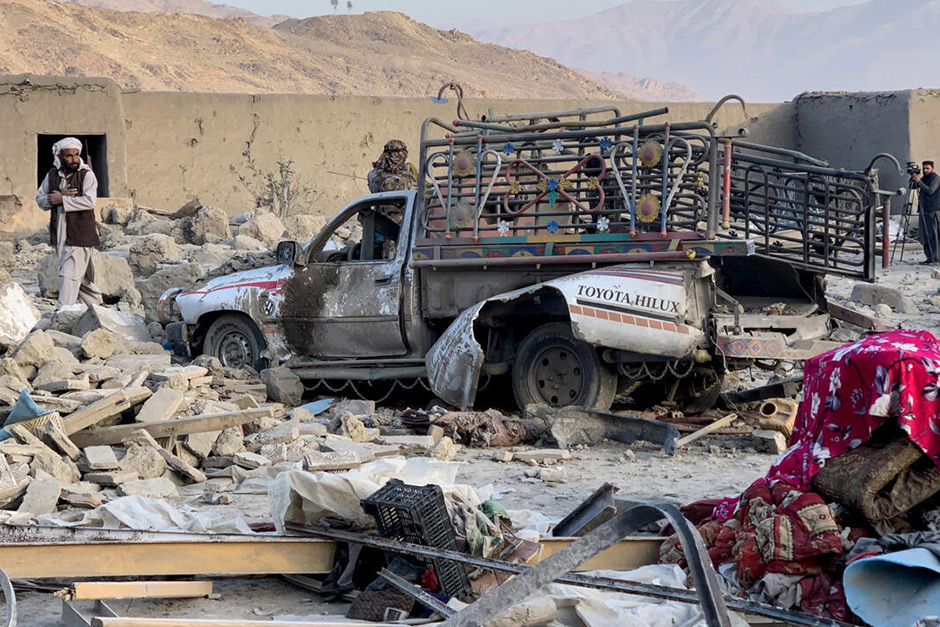
The fragile peace along the tumultuous Afghanistan-Pakistan border has once again shattered, casting a grim shadow over regional stability. In a move that has drawn fierce condemnation and sparked fears of escalating conflict, Pakistan recently conducted airstrikes deep inside Afghan territory. The strikes, reportedly targeting hideouts of the outlawed Tehrik-i-Taliban Pakistan (TTP), have resulted in the tragic deaths of dozens of Afghan civilians, including women and children, according to authorities in Kabul. This brazen act of cross-border aggression has not only inflamed an already volatile relationship between the two nations but also underscored the complex and often tragic interplay of terrorism, sovereignty, and human cost in South Asia.
Airstrikes Ignite Regional Fury, Civilians Pay the Price
The early hours of March 18 witnessed Pakistani jets and drones carrying out multiple sorties into Afghanistan’s Khost and Paktika provinces. Pakistan’s military confirmed the strikes, stating they were a response to recent terror attacks within its borders, particularly the killing of seven soldiers in North Waziristan. Islamabad has consistently accused the TTP of using Afghan soil as a launchpad for its insurgency against the Pakistani state, a charge the Taliban interim government in Afghanistan vehemently denies.
However, the narrative of precision strikes against militant targets was quickly overshadowed by distressing reports from the ground. Afghan officials and local residents claimed that the aerial bombardment hit civilian homes. The Taliban-appointed governor of Khost, Mohammad Nabi Omari, reported that six people, all women and children, were killed in his province. Similar reports emerged from Paktika, detailing a significantly higher civilian toll. The humanitarian ramifications are immediate and severe, with displaced families and a deeply traumatised populace caught in the crossfire of a conflict not of their making.
The incident highlights a disturbing pattern where counter-terrorism operations, even those ostensibly aimed at non-state actors, frequently result in collateral damage, disproportionately affecting innocent lives. This tragic outcome further complicates the already fraught relationship between two neighbours sharing a contentious and porous border, fueling cycles of violence and retribution.
Afghanistan Condemns, Sovereignty Violated
The response from the Taliban interim government in Kabul was swift and unequivocal. Zabihullah Mujahid, the chief spokesperson for the Taliban, issued a blistering condemnation, labeling the strikes a blatant violation of Afghanistan’s sovereignty. He warned Pakistan of “grave consequences” if such actions were repeated, stating that Afghanistan has “never allowed anyone to use its territory against Pakistan.” This statement, however, stands in stark contrast to Pakistan’s long-standing grievances regarding TTP’s freedom of movement within Afghanistan.
The sentiment on the ground in Afghanistan was encapsulated by an unnamed Afghan official, who, reflecting the widespread outrage, stated, “They bombed our civilian compatriots.” This powerful quote underscores the deep sense of betrayal and anger felt by many Afghans, who view the strikes not as an act against terrorists, but as an assault on their people and national dignity.
Historically, the relationship between Afghanistan and Pakistan has been marred by mutual distrust, border disputes (particularly over the Durand Line), and accusations of harbouring proxy groups. While Pakistan insists that the TTP is a distinct entity from the Afghan Taliban, many analysts argue that ideological and operational overlaps exist, making a clear distinction difficult. The current crisis threatens to further erode diplomatic channels and push the two nations towards a more direct confrontation, with severe implications for regional peace.
An Indian Lens on Escalating Border Tensions
For India, the escalating tensions and cross-border violence between Pakistan and Afghanistan are a matter of significant concern. New Delhi has consistently maintained a firm stance against cross-border terrorism in all its forms and manifestations. The instability in this crucial geographical pocket of South Asia, particularly the potential for a resurgence of various terror outfits, directly impacts India’s security interests and regional strategic calculations.
India has long advocated for a stable, peaceful, and inclusive Afghanistan, free from the clutches of radical elements. The recent events underscore the volatility that continues to plague the region post-US withdrawal, with groups like the TTP, Islamic State Khorasan Province (ISKP), and remnants of Al-Qaeda attempting to exploit the security vacuum. India’s humanitarian assistance to Afghanistan, often delivered despite the lack of official recognition for the Taliban government, reflects a commitment to the Afghan people and a desire for regional stability.
The targeting of civilians, regardless of the stated intent, is a grave concern for India, echoing its own experiences with terrorism originating from across its western borders. The unchecked proliferation of violence and the breakdown of international norms regarding sovereignty, particularly when civilian lives are at risk, are trends that India observes with a watchful eye. The need for comprehensive regional dialogue, adherence to international law, and a united front against all forms of terrorism, without selective approaches, remains paramount for lasting peace in the subcontinent.
The tragic airstrikes by Pakistan in Afghanistan serve as a stark reminder of the region’s enduring fragility. The death of innocent civilians underscores the devastating human cost of unresolved conflicts and the complex challenges posed by transnational terrorism. As Afghanistan and Pakistan stand at a dangerous precipice, the international community, including regional powers like India, watches with apprehension. De-escalation, dialogue, and a renewed commitment to preventing civilian harm are not just desirable but essential to prevent a wider conflagration in an already tumultuous part of the world.

