


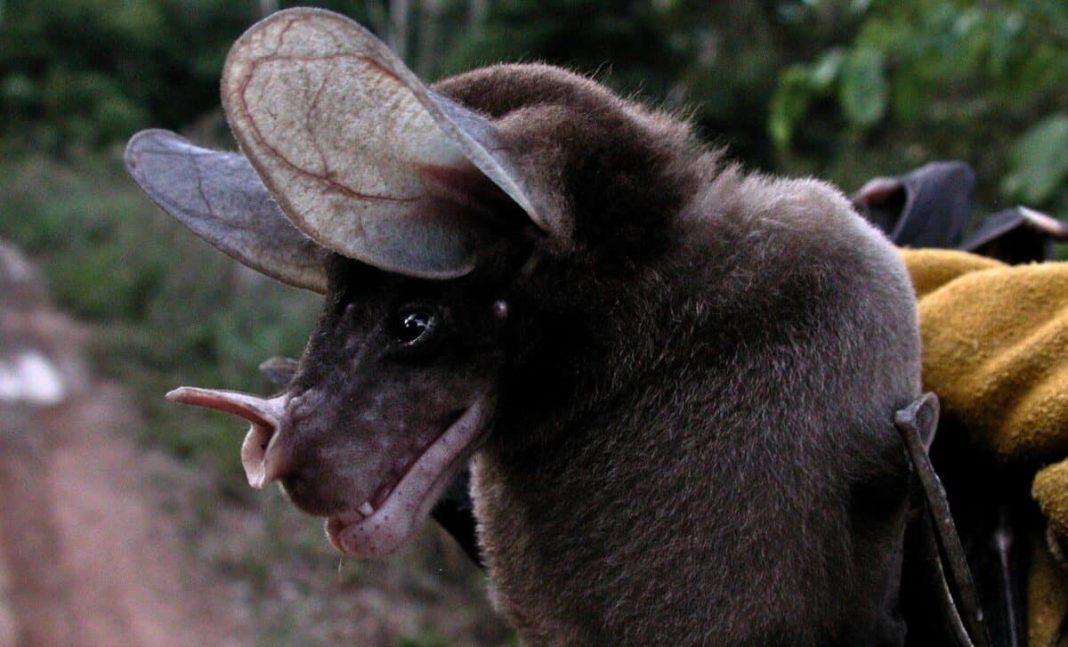
The night sky has long been a canvas for humanity’s deepest fears and grandest mysteries. Among its silent inhabitants, bats often stir a mix of fascination and apprehension. For decades, one particular creature, a behemoth of the chiropteran world, lurked largely unseen, its true nature shrouded in myth and academic speculation. Known as the Greater Noctule Bat, or Nyctalus lasiopterus, this elusive predator was long assumed to be primarily insectivorous, a common trait among its kind. Yet, whispers persisted of a darker, more audacious diet. It was only through the quiet persistence of science and the unblinking eye of technology that the startling truth was finally brought to light, reshaping our understanding of nocturnal ecosystems.
The Enigma of the Greater Noctule
Imagine a bat large enough to span a human hand, with a wingspan that can reach up to 46 centimetres. This is the Greater Noctule Bat, Europe’s largest bat species. Primarily found across parts of Europe, North Africa, and Asia, it is an apex nocturnal hunter, renowned for its high-altitude flight patterns, often soaring thousands of metres above ground. For much of scientific history, direct observation of its feeding habits was incredibly challenging. Its speed, nocturnal activity, and preference for the upper atmospheric layers meant researchers primarily relied on indirect evidence, such as analysing droppings, which largely pointed towards a diet rich in large moths and beetles.
However, anecdotal accounts and occasional inconclusive findings hinted at something more. There were sporadic reports of birds found with injuries consistent with bat predation, or fragments of feathers appearing in bat roosts. These were often dismissed as rare, opportunistic events, perhaps scavenging rather than active hunting. The sheer scale of its presumed insectivorous diet was already impressive, but the thought of a bat regularly preying on birds was a concept that few were ready to fully embrace without undeniable proof. The scientific community, always demanding concrete evidence, considered it a fascinating, yet unconfirmed, hypothesis.
Cameras Unveil the Avian Hunter
The breakthrough came with the advent of advanced wildlife monitoring technology. Scientists in regions like Spain, where the Greater Noctule Bat has significant populations, deployed a combination of thermal imaging cameras, night-vision scopes, and acoustic detectors near known roosting sites and migratory bird flyways. These tools allowed for unprecedented, continuous observation of the bats’ activities during their nightly hunts. What they captured fundamentally altered our understanding of this magnificent creature.
The footage revealed the Greater Noctule Bat actively hunting and capturing small migratory birds mid-flight. These were not isolated incidents but regular occurrences, particularly during periods of intense bird migration. The bats would intercept birds such as warblers and finches, demonstrating sophisticated aerial pursuit tactics. This wasn’t scavenging; it was predation. The scientific community was stunned. This discovery positioned the Greater Noctule Bat as one of the few known bat species globally, and the only one in Europe, to regularly include birds in its diet, marking it as a truly carnivorous apex predator within its ecosystem.
“The revelation that the Greater Noctule regularly preys on migratory birds completely shifted our understanding of its ecological niche. It underscores how much we still have to learn about even the most studied ecosystems through innovative research and technology,” commented Dr. Javier Juste, a leading bat researcher from the Estación Biológica de Doñana (CSIC), on the significance of such findings.
Beyond the Myth: Ecological Lessons and Indian Context
The story of the Greater Noctule Bat serves as a powerful reminder of how much remains undiscovered in the natural world, even concerning well-known species. It highlights the critical importance of sustained scientific inquiry and the adoption of cutting-edge technology in ecological research. This discovery has profound implications for understanding food webs, predator-prey dynamics, and the complex factors influencing migratory bird populations.
While the Greater Noctule Bat is not native to India, the lessons from its story resonate deeply within our diverse subcontinent. India is home to over 130 species of bats, ranging from the large fruit bats to a multitude of insectivorous and even a few carnivorous species like the False Vampire Bat, which preys on small vertebrates. Our rich biodiversity means that many species, particularly nocturnal or elusive ones, may still hold secrets about their behaviour and ecological roles. The consistent efforts by Indian conservationists and researchers, employing camera traps, acoustic monitoring, and genetic analysis for iconic species like tigers, leopards, and diverse birdlife, echo the very methods that unveiled the Greater Noctule’s truth.
Understanding the intricate relationships between species, whether in European skies or the Indian jungles, is vital for effective conservation strategies. As global climate patterns shift and human impact on ecosystems intensifies, such discoveries help us to build a more accurate picture of biodiversity and vulnerability. The Greater Noctule’s story encourages us to look beyond assumptions, invest in research, and appreciate the astonishing complexity of life that unfolds around us, often just out of sight.
The journey from fear and speculation to clarity, enabled by technology and relentless scientific pursuit, showcases the ever-evolving nature of ecological knowledge. It urges us, in India and worldwide, to continue exploring, documenting, and protecting the incredible tapestry of life that shares our planet.

