


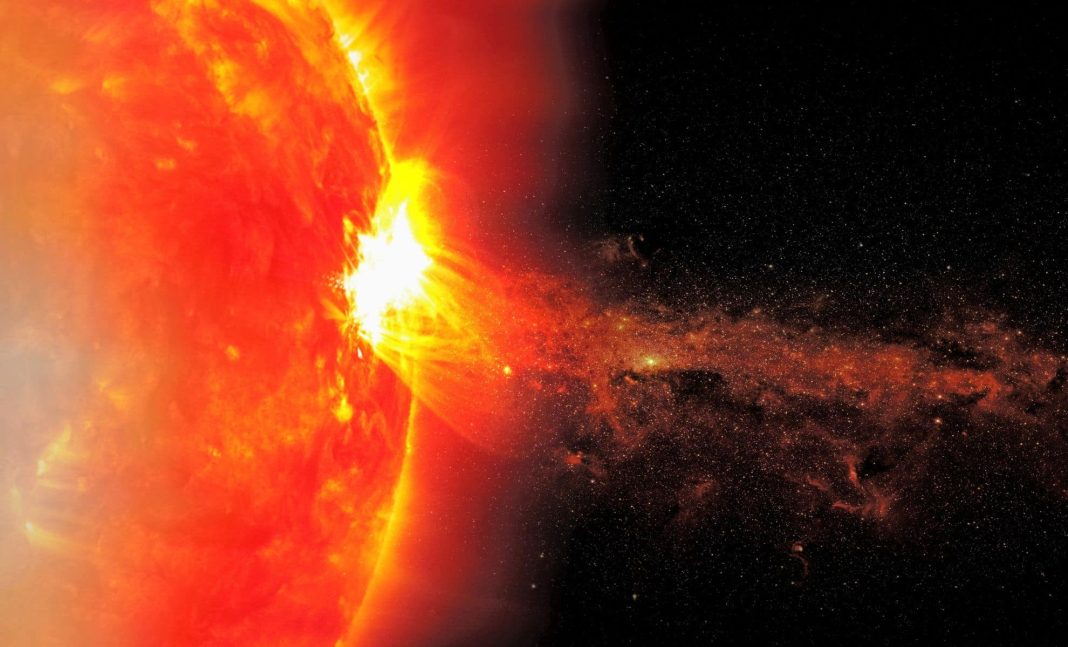
Imagine gazing at the Sun, not just as a fiery orb, but as a living, breathing star where cosmic phenomena play out on scales incomprehensible to us. Now, imagine it’s raining. Not water, not meteorites, but giant, magnetic “tadpoles” of plasma, falling from its scorching corona back to its surface. Sound like science fiction? Think again. Recent groundbreaking observations have revealed this stunning reality, fundamentally reshaping our understanding of our star.
For decades, we’ve studied the Sun with increasing sophistication, yet many mysteries persist. One of the most perplexing is the superheated solar corona – the Sun’s outermost atmosphere, which paradoxically burns millions of degrees hotter than its surface. This new discovery of magnetic tadpoles offers a tantalizing piece of the puzzle, illustrating an incredibly dynamic and intricate star.
What Exactly Are These Cosmic Critters?
The term “magnetic tadpoles” isn’t just a catchy phrase; it’s a remarkably apt description of structures observed by instruments like the Solar Orbiter. These aren’t living organisms, of course, but rather plasma formations with distinct features: a bright, hot “head” of plasma, trailed by a darker, cooler “tail” that traces the invisible contours of magnetic field lines. They emerge in the Sun’s corona and then, instead of escaping into space, they embark on a journey back down, raining plasma onto the solar surface.
Scientists previously believed that material in the corona either blasted outwards as solar wind or gradually diffused. This new evidence paints a picture of a more organized, almost choreographed, descent. These tadpoles are essentially blobs of superheated gas that get caught in a downward flow along specific magnetic field lines, cooling as they fall, much like rain condenses from clouds and precipitates back to Earth. It’s a spectacular demonstration of magnetic fields acting as invisible conduits, guiding massive amounts of plasma across vast distances in the solar atmosphere.
The Gravitational and Magnetic Dance: Unraveling Solar Mysteries
The significance of these magnetic tadpoles extends far beyond their captivating appearance. Their very existence forces us to re-evaluate our models of the solar corona and the processes that drive its extreme heat. How do these structures form? What role do they play in the overall energy balance of the corona? Could they be a key mechanism for both cooling plasma and, paradoxically, contributing to the coronal heating anomaly?
The fact that these tadpoles are observed falling back suggests a continuous cycle of material being lifted and then returned, driven by the Sun’s powerful magnetic engine. This isn’t just random turbulence; it’s a structured flow dictated by the complex interplay of gravity and magnetism. As Dr. Elara Vance, a solar physicist, notes, “This discovery completely reshapes our understanding of coronal dynamics. We always knew the Sun was complex, but these tadpoles reveal an elegant, almost rhythmic, magnetic dance we’d entirely missed. It’s a humbling reminder of how much more there is to learn about our own star.”
Implications for Space Weather
Understanding these magnetic tadpoles could also have profound implications for our comprehension of space weather. Events like solar flares and coronal mass ejections (CMEs) are driven by magnetic activity. If these tadpoles represent a fundamental process of magnetic reconfiguration and plasma flow, studying them could offer new insights into the precursors and mechanisms behind these powerful eruptions that can impact our technology on Earth.
A Star Still Full of Surprises
The discovery of the Sun’s raining magnetic tadpoles is a vibrant reminder that our universe, even our immediate celestial neighborhood, is brimming with phenomena that defy our current understanding. It’s a testament to human ingenuity and the persistent curiosity that pushes us to build better instruments and ask deeper questions. As we continue to probe the Sun with missions like the Solar Orbiter, each new observation peels back another layer of mystery, revealing a star far more dynamic and intricate than we ever dared to imagine. The Sun is not just a distant furnace; it’s a cosmic ballet, and we’re just beginning to learn its moves.
This is just the beginning of understanding these incredible solar phenomena. What other magnetic dances are hidden in plain sight, waiting for us to discover them?

