


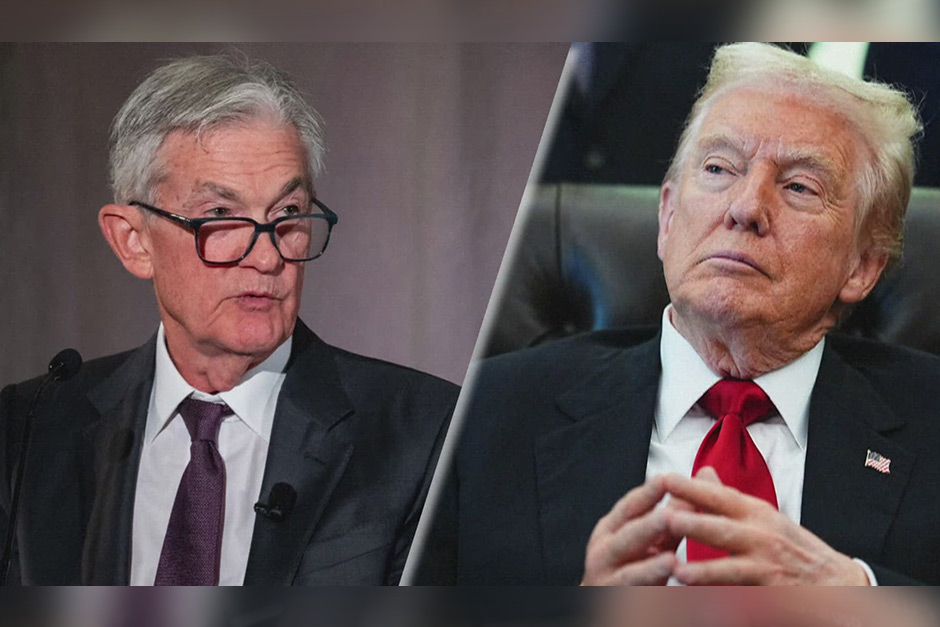
The murmurs from the political sphere are growing louder, coalescing into a distinct demand: a push for former President Donald Trump to initiate an investigation into the Federal Reserve chief. This isn’t just typical political sparring; it’s a significant call that strikes at the heart of America’s economic governance, challenging the long-held principle of the Federal Reserve’s independence. As the nation grapples with economic anxieties, particularly concerning inflation and interest rates, the Fed finds itself increasingly under a spotlight that feels less about oversight and more about direct political scrutiny.
The Calls for Unprecedented Scrutiny
The voices advocating for this investigation primarily stem from conservative circles and some economic commentators. Their argument often centers on the belief that the Federal Reserve’s actions, or inactions, have contributed significantly to the nation’s current economic challenges, particularly the surge in inflation. Proponents of an investigation suggest that the Fed may have overstepped its mandate or made policy decisions that warrant a deeper, politically driven probe.
The appeal to Donald Trump is strategic. Known for his willingness to challenge established norms and institutions, and his past public criticisms of the Fed during his presidency, he is seen by these proponents as the ideal figure to spearhead such an initiative. His populist appeal and strong base give these calls a weight that might otherwise be dismissed as fringe commentary. The idea is to bring the power of the executive branch—or the promise of it, should he return to office—to bear on an institution designed to operate outside direct political influence.
The Federal Reserve’s Independent Mandate Under Threat
The Federal Reserve was intentionally established as an independent entity, a safeguard designed to shield monetary policy from the short-term whims of political cycles. Its dual mandate—to maximize employment and maintain price stability—requires a long-term perspective, free from election-year pressures. This independence is generally considered crucial for fostering stable economic growth and maintaining global confidence in the U.S. financial system.
Historically, significant political interference in central bank operations has often led to hyperinflation or economic instability in other nations. The Fed’s autonomy allows it to make tough, sometimes unpopular, decisions like raising interest rates to combat inflation, knowing that these actions, while potentially slowing growth in the short term, are for the long-term health of the economy. Placing the Fed chief under direct political investigation, therefore, could set a dangerous precedent, potentially eroding market confidence and suggesting that future monetary policy decisions could be swayed by political considerations rather than economic data.
Political Stakes and Economic Ripple Effects
The very notion of a former President being urged to investigate the Federal Reserve chief underscores the intense political and economic climate. It reflects a growing frustration among certain segments of the population with economic conditions and a desire to hold powerful institutions directly accountable, even if it means challenging their foundational principles.
If such an investigation were to gain traction, the implications would be profound. It could lead to a significant undermining of the Federal Reserve’s credibility, both domestically and internationally. Financial markets thrive on predictability and stability, and a politicized Fed would introduce an immense amount of uncertainty. Beyond the immediate economic fallout, it would represent a fundamental shift in the balance of power between the executive branch and independent financial institutions. One veteran market analyst, speaking anonymously, remarked, “The mere suggestion of politically driven investigations into the Fed sends shivers down the spine of anyone who values economic stability. It’s a direct challenge to the bedrock principles of our financial system.”
As the conversation continues to unfold, the pressure on Donald Trump to respond to these calls will likely intensify. How he chooses to address this demand will not only shape his political narrative but could also have lasting consequences for the independence of America’s central bank and the stability of its economy. It’s a high-stakes debate that transcends partisan politics, touching on the very architecture of national governance and economic resilience.

