


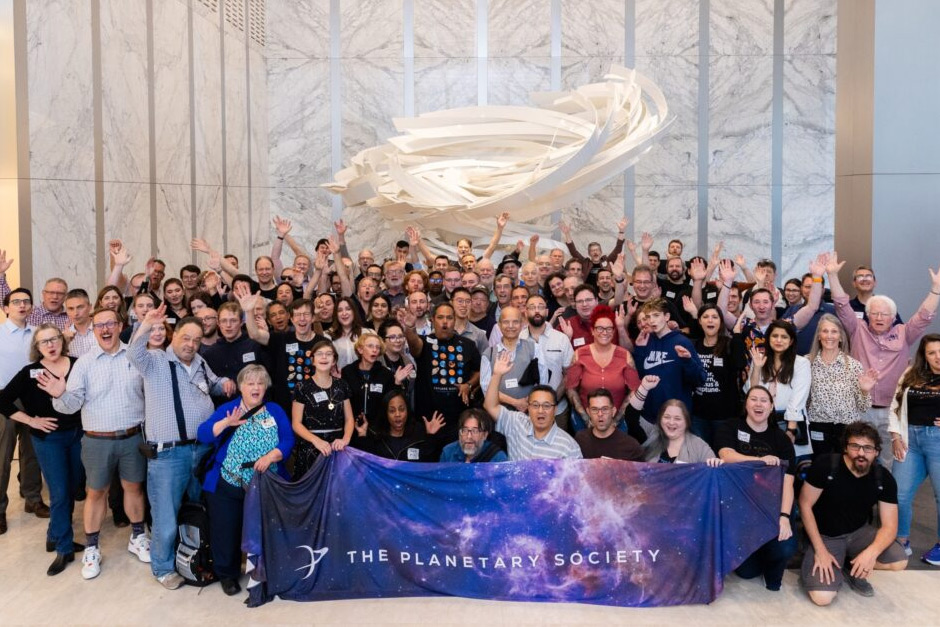
The cosmos has always held a mirror to humanity’s deepest curiosities and grandest aspirations. From ancient stargazers to modern-day astronauts, the quest to understand our place in the universe continues to drive innovation and inspire generations. In India, with its rapidly advancing space program led by ISRO, this fascination is palpable. But beyond governmental agencies, there exists a vibrant ecosystem of non-profits dedicated to fostering public engagement and advocacy for space exploration. Among them, The Planetary Society stands out as a global pioneer, championing the cause of citizen-driven space science.
A Global Voice for Space Exploration
Founded in 1980 by visionary scientists Carl Sagan, Bruce Murray, and Louis Friedman, The Planetary Society emerged from a simple yet profound belief: that space exploration should not be solely the domain of governments, but a shared pursuit of all humankind. As a non-profit, member-supported organization, its mission is to empower the world’s citizens to advance space science and exploration. With a global membership base, the Society acts as a powerful advocate, educator, and facilitator for groundbreaking projects.
The Society’s work is multifaceted, encompassing three core pillars. Firstly, it champions advocacy, lobbying governments and space agencies worldwide for continued investment in space exploration, planetary defense, and scientific research. Their efforts help secure funding for missions and ensure that public interest remains a driving force in policy decisions. Secondly, through extensive educational initiatives, The Planetary Society demystifies complex scientific concepts, making space accessible to everyone. Their publications, podcasts, and online resources foster a greater understanding and appreciation for the wonders of the universe, inspiring future generations of scientists and engineers. Lastly, the Society directly supports innovative space projects, often proving concepts that larger agencies might deem too risky or small-scale. A prime example is the LightSail project, which successfully demonstrated solar sailing technology, propelling a spacecraft purely by sunlight. Another crucial initiative is the Shoemaker NEO Grant program, funding amateur astronomers globally to search for Near-Earth Objects, crucial for planetary defense efforts.
India’s Stellar Trajectory and Planetary Partnerships
India’s journey in space has been nothing short of extraordinary. From the Chandrayaan lunar missions to the historic Mangalyaan orbiter, ISRO has consistently demonstrated its capability to execute ambitious projects with remarkable efficiency and cost-effectiveness. The upcoming Gaganyaan human spaceflight mission further solidifies India’s position as a major space power. This burgeoning space prowess creates fertile ground for organizations like The Planetary Society to engage with the Indian public and scientific community.
The Society’s emphasis on public engagement and citizen science aligns perfectly with India’s growing interest in STEM education and democratizing scientific knowledge. As India’s private space sector expands and more startups emerge, there’s an increasing need for informed public discourse and advocacy. The Planetary Society’s global network and expertise in communicating space science can serve as a valuable resource, helping to cultivate an even deeper appreciation for space exploration among Indian youth and professionals alike. Initiatives like their asteroid detection grants could empower Indian amateur astronomers and citizen scientists to contribute meaningfully to global planetary defense efforts.
As Bill Nye, CEO of The Planetary Society, aptly puts it, “Space exploration isn’t just for governments; it’s a shared human endeavor. Organizations like ours aim to ignite that spark in every individual, from Pasadena to Bengaluru, ensuring humanity’s reach beyond Earth is both inclusive and inspiring.” This sentiment resonates deeply with India’s democratic ethos and its commitment to making scientific advancement a tool for societal progress.
The synergy between The Planetary Society’s mission and India’s space ambitions points towards a future ripe with collaboration. Whether it’s through joint educational outreach programs, shared advocacy for international space law, or fostering citizen science projects tailored to the Indian context, the potential for mutual growth is immense. As India continues its ascent in the space arena, partnerships with global advocacy groups can help ensure that the benefits of space exploration are widely understood, supported, and ultimately, enjoyed by all its citizens.
The Planetary Society stands as a testament to the idea that the exploration of the cosmos is a universal human right and responsibility. As India looks towards new horizons, embracing global partners in advocacy and education will only strengthen its journey to the stars, ensuring that the wonder of space continues to inspire and unite us all.

