


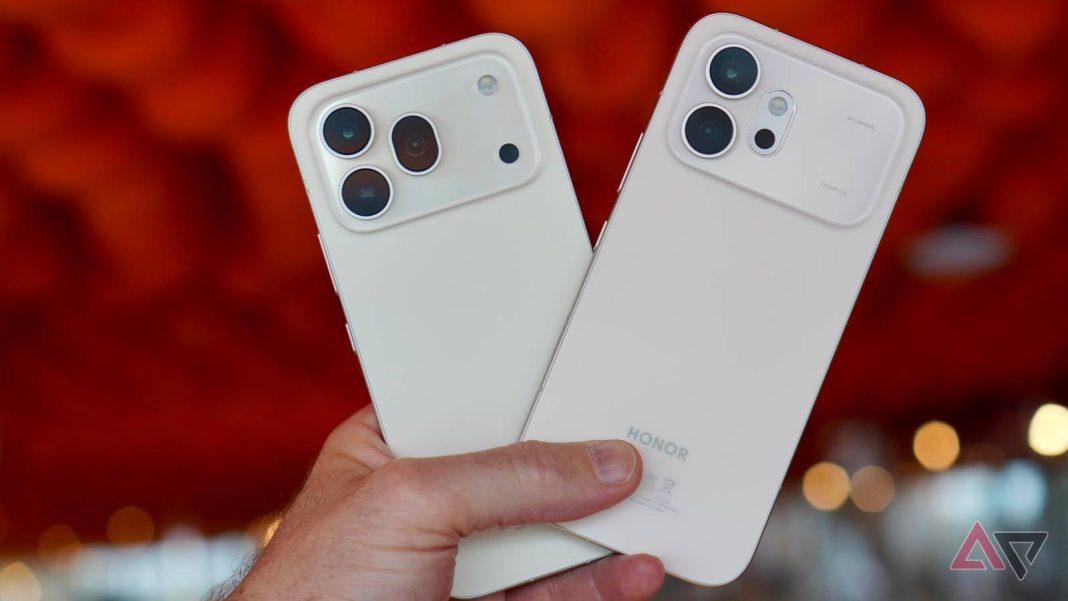
In the fiercely competitive Indian smartphone market, manufacturers are constantly seeking innovative strategies to capture consumer attention. One perennial dilemma for buyers is the choice between a standard model and its ‘Pro’ sibling. Often, the ‘Pro’ variant promises incremental upgrades at a disproportionately higher price. However, if recent industry murmurs and strategic positioning are any indication, Honor might be flipping this script with its anticipated Honor 600. The device appears poised to be so comprehensively featured that it could subtly nudge consumers to ignore its ‘Pro’ counterpart, and this strategic manoeuvre could prove remarkably shrewd in the value-driven Indian landscape.
The Honor 600: A Standalone Powerhouse
The success of any smartphone hinges on its ability to strike a balance between features, performance, and price. The Honor 600, as it’s shaping up, seems engineered to redefine what a ‘standard’ model can offer. Far from being a watered-down version, the Honor 600 is expected to arrive packing specifications that often grace the upper-midrange or even entry-level flagship segments.
Expectations are high for a vibrant AMOLED display, likely boasting a 120Hz refresh rate, ensuring buttery-smooth scrolling and an immersive viewing experience – a critical factor for Indian consumers who spend hours on content consumption. Under the hood, a robust and efficient chipset, perhaps from Qualcomm’s Snapdragon 7 series or MediaTek’s Dimensity 8000 series, is anticipated. This would provide ample power for everyday tasks, demanding games, and seamless multitasking without breaking a sweat.
Photography is another non-negotiable aspect for the Indian market. The Honor 600 is rumoured to feature a high-resolution primary camera, potentially a 108MP sensor with Optical Image Stabilisation (OIS), promising sharp, detailed photos even in challenging conditions. Complementing this would be an ultra-wide lens and perhaps a macro sensor, covering most photographic needs. Powering these features will likely be a substantial battery – a 5000mAh unit or larger – coupled with rapid fast-charging technology, ensuring minimal downtime. Such a comprehensive package, without the ‘Pro’ moniker, automatically elevates its standing.
Why Overlook the ‘Pro’ Sibling? The Strategic Imperative
The decision to make the Honor 600 so feature-rich isn’t accidental; it’s a calculated move. In a market where every rupee counts, a ‘Pro’ model often comes with a significant price premium for upgrades that, for many users, are negligible. A slightly faster processor, a marginally brighter screen, or a niche telephoto lens might justify an extra ₹10,000-₹15,000 for a select few, but the vast majority of consumers seek the best possible experience without crossing a certain budget threshold.
By positioning the Honor 600 as a device that delivers 90% of the ‘Pro’ experience at a considerably lower price point, Honor could effectively cannibalise the demand for its own higher-priced variant. This strategy could allow them to capture a larger share of the lucrative upper-midrange segment, where competition is fierce but consumer loyalty can be swayed by compelling value propositions. It’s about maximising market penetration rather than chasing razor-thin margins on a niche ‘Pro’ product.
“For the discerning Indian consumer, value isn’t just about the lowest price, but the best feature-set for every rupee spent. If the Honor 600 delivers 90% of the ‘Pro’ experience at 70% of the cost, it’s a clear winner, making the ‘Pro’ model an indulgence rather than a necessity,” observes Meera Shankar, a prominent tech industry analyst.
A Smart Play in India’s Competitive Arena
The Indian smartphone market is characterised by fierce competition from global giants like Samsung, Xiaomi, and OnePlus, alongside strong regional players. To stand out, brands need more than just good specifications; they need a compelling narrative and an undeniable value proposition. By empowering the standard Honor 600, the company aims to simplify the buying decision for many. Instead of agonising over whether the ‘Pro’ features are worth the extra investment, consumers might simply find the base model sufficiently capable for all their needs.
This approach not only streamlines Honor’s product messaging but also focuses their marketing efforts on a single, strong offering. It’s a strategy that prioritises volume and broad appeal, banking on the idea that most users value core performance and essential features over incremental, often imperceptible, upgrades. If executed well, the Honor 600 could become a benchmark for what a non-‘Pro’ smartphone should be, setting a new standard for value and performance in its segment.
In conclusion, the rumoured strategic positioning of the Honor 600, making it a compelling device in its own right, signals a mature understanding of market dynamics, especially in India. By equipping the standard model with robust specifications that minimise the perceived advantage of a ‘Pro’ variant, Honor isn’t just selling a smartphone; it’s selling a smarter choice. This move could empower consumers, simplify their buying process, and ultimately carve out a significant space for Honor in a market that constantly demands more for less.

