


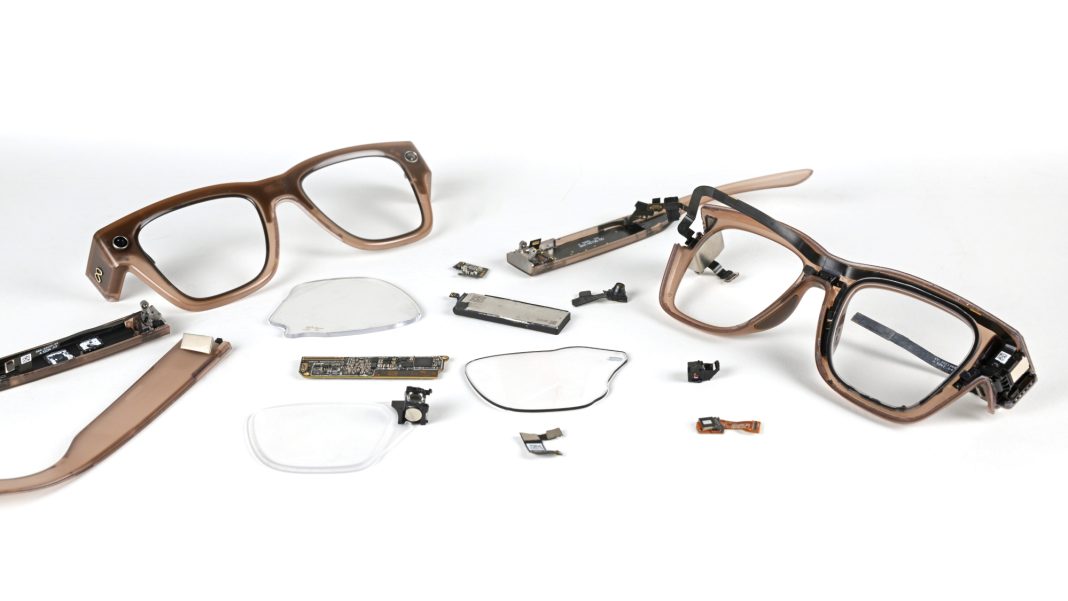
Remember that scene in sci-fi movies where someone casually glances at their glasses and a subtle interface pops up, showing them directions or a message? It felt like a distant future. Yet, here we are, with Meta pushing the boundaries, embedding surprisingly sophisticated display technology into something as familiar as Ray-Ban glasses. And the secret sauce? A seemingly magical component known as a waveguide, which, as the brilliant minds at Hackaday recently peeled back the layers on, is a testament to incredible engineering.
The Invisible Path for Pixels: What Even Is a Waveguide?
Imagine trying to pipe light around corners, keeping it perfectly contained and directed, so it only appears exactly where you want it. That’s essentially what a waveguide does. Think of it like an optical fiber, but instead of a thin strand, it’s often a very thin, flat piece of glass or plastic. Inside this transparent material, light bounces along through total internal reflection, guided from a tiny projector at the edge of the lens directly into your eye.
Why is this such a big deal for augmented reality (AR) glasses? Simple: size and subtlety. Traditional AR displays often use bulkier projection systems that beam images onto a combiner or a reflective surface. Waveguides, however, allow for displays that are incredibly thin, lightweight, and almost completely transparent when off. This means your glasses look like, well, glasses, not a clunky piece of tech strapped to your face. It’s an elegant solution to a very complex problem: how to overlay digital information onto your real-world view without obstructing it or adding significant bulk.
Meta’s Ray-Ban Breakthrough: More Than Just a Camera
While Meta’s Ray-Ban glasses are widely known for their cameras and audio capabilities, the display versions house this fascinating waveguide technology, quietly enabling the next generation of AR experiences. Hackaday’s exploration really highlights the intricate precision required to manufacture these components – it’s not just a piece of glass, but a carefully engineered optical system with microscopic gratings or structures that diffract the light at just the right angle into your pupil. This process allows a tiny, edge-mounted projector to create a bright, clear image that appears to float in your field of vision.
The beauty of Meta’s implementation lies in its seamless integration. It’s not about overwhelming you with a full AR overlay, but about providing discreet, glanceable information – notifications, directions, or contextual data – that enhances your reality without completely taking it over. As one early adopter put it, “It’s not about being immersed; it’s about having just enough information gently layered into your reality, without feeling like you’re wearing a computer on your face. That’s the real genius.” This subtle approach, powered by cutting-edge waveguide tech, is what makes these glasses feel less like a gadget and more like a natural extension of your perception.
The Future is Clear (and Thin)
The waveguide technology inside Meta’s Ray-Ban glasses is a quiet marvel, representing a significant leap in making AR truly wearable and aesthetically pleasing. It’s a testament to how meticulous engineering can transform complex optical principles into a practical, consumer-ready product. As we move further into an augmented future, expect to see waveguides become the invisible heroes, seamlessly blending the digital with the physical, all within the stylish confines of your everyday eyewear. The future isn’t just coming; it’s being channeled directly into your eyes, one photon at a time.

