


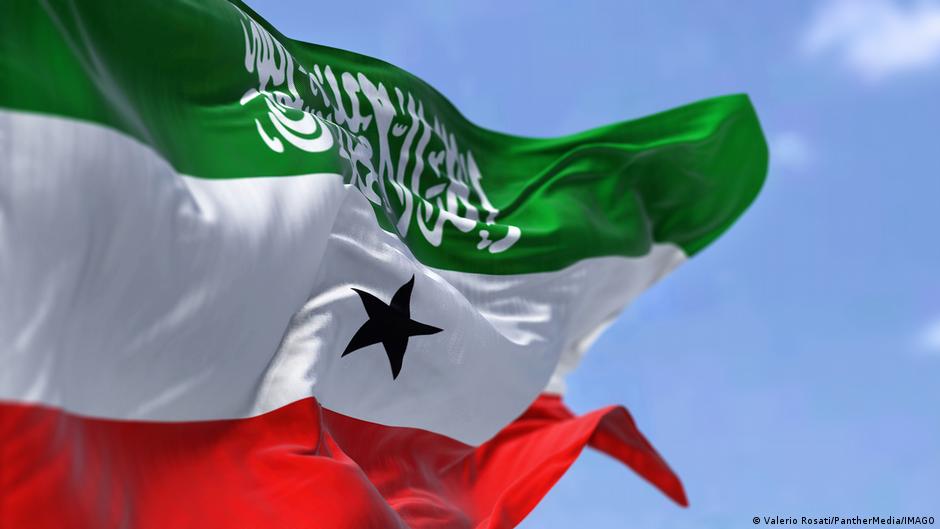
The Horn of Africa is once again at the center of a complex geopolitical dynamic, as recent developments signal a fascinating interplay of international recognition and strategic alliances. With Israel having extended a hand of recognition to Somaliland – a self-declared state with de facto independence but lacking widespread international endorsement – the European Union appears to be subtly, yet firmly, reaffirming its long-standing support for the federal government of Somalia. This isn’t just about diplomatic tit-for-tat; it’s a high-stakes chess match involving sovereignty, regional stability, and the future of international law.
The Diplomatic Gambit: Israel and Somaliland
For decades, Somaliland, formerly a British protectorate, has operated as a functional, democratic entity distinct from the rest of Somalia. Despite its stability and independent governance, it has struggled to gain formal international recognition, largely due to concerns about encouraging secessionist movements across Africa. Israel’s move to recognize Somaliland, therefore, represents a significant diplomatic shift.
The reasons behind Israel’s decision are multi-faceted. They likely involve strategic interests in the Red Sea region, a desire to forge new alliances, and perhaps even a challenge to established diplomatic norms. This recognition, while celebrated in Hargeisa (Somaliland’s capital), has sent ripples through the international community. It directly contrasts with the prevailing global consensus that recognizes the territorial integrity of a united Somalia, including Somaliland as part of its federal structure. Such a move invariably raises questions about the future of international recognition, self-determination, and the sanctity of existing state borders in a region already prone to volatility.
The EU’s Steadfast Support for Somali Unity
In response, or more accurately, in parallel to these developments, the European Union is intensifying its support for the federal government in Mogadishu. The EU has consistently championed a unified Somalia, pouring significant resources into state-building, security sector reform, humanitarian aid, and development projects. Its commitment is rooted in a belief that a strong, unified, and stable federal government is crucial for lasting peace in the Horn of Africa, as well as for countering extremism and piracy.
The EU’s renewed emphasis on strengthening its relationship with the Mogadishu government can be seen as a deliberate reinforcement of its “one Somalia” policy. This isn’t necessarily a direct rebuttal to Israel’s recognition of Somaliland, but rather a strategic commitment to the principles of territorial integrity and the established international legal framework that underpins the state of Somalia. As one regional analyst put it, “The EU’s sustained commitment to Mogadishu isn’t just about aid; it’s a clear statement on the primacy of international law and the integrity of existing state borders, especially in a fragile region where fragmentation could trigger cascading instability.” By bolstering the federal government, the EU hopes to equip it better to address internal challenges, assert its authority, and ultimately, facilitate a peaceful resolution to its complex relationship with Somaliland.
A Delicate Balance in a Volatile Region
The differing approaches from Israel and the EU underscore the delicate and often contradictory nature of international diplomacy in the Horn of Africa. On one hand, there’s the appeal of supporting a de facto independent and democratic entity like Somaliland, which has built its own governance structures. On the other, there’s the imperative to uphold the principle of territorial integrity and support a recognized federal government in its quest for stability and sovereignty over its internationally accepted borders.
This evolving situation presents both opportunities and risks. It could potentially open new avenues for dialogue and cooperation or, conversely, deepen existing divisions. The long-term implications for regional stability, the future of international recognition for other de facto states, and the power dynamics within the Horn of Africa remain to be seen. What is clear, however, is that the international community’s engagement with Somalia and Somaliland will continue to be a fascinating and crucial balancing act.

