


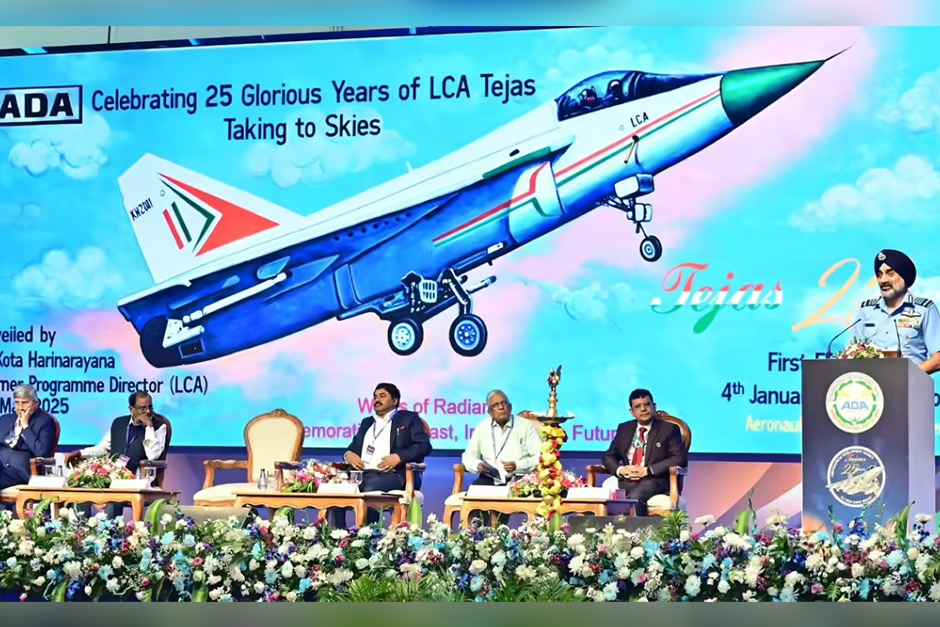
The Tejas Light Combat Aircraft (LCA), a beacon of India’s indigenous aerospace prowess, recently marked a significant quarter-century milestone since its inaugural flight. This silver jubilee is a testament to the nation’s persistent efforts in achieving self-reliance in defense. However, amidst the celebrations, a crucial directive from Air Chief Marshal V.R. Chaudhari, the Chief of Air Staff, has brought into sharp focus the imperative need to adhere strictly to delivery timelines for this domestically developed fighter jet. His emphasis underscores the strategic urgency of equipping the Indian Air Force (IAF) with advanced capabilities without delay, ensuring operational readiness and minimizing reliance on foreign suppliers.
A Quarter Century of Indigenous Prowess: The Tejas Journey
The journey of the Tejas began in the early 1980s as the Light Combat Aircraft (LCA) program, envisioned to replace the aging MiG-21 fleet. Its first flight on January 4, 2001, marked a historic moment, propelling India into an exclusive club of nations capable of designing and building supersonic fighter aircraft. Developed by the Aeronautical Development Agency (ADA) and manufactured by Hindustan Aeronautics Limited (HAL), the Tejas program has overcome numerous technological hurdles, evolving through various iterations from its initial technology demonstrator phase to the Tejas Mk-1, and now, the more advanced Tejas Mk-1A.
The Tejas Mk-1 has already been inducted into the IAF’s 45 Squadron (Flying Daggers) and 18 Squadron (Flying Bullets), where it has demonstrated commendable performance. Its compact design, advanced avionics, and superior maneuverability make it a potent force multiplier in modern aerial combat scenarios. More importantly, the Tejas represents a significant leap for India’s defense industrial base, fostering a robust ecosystem of ancillary industries and showcasing the country’s potential to innovate and produce complex defense platforms under the ‘Make in India’ and ‘Aatmanirbhar Bharat’ initiatives.
The Urgency of Timely Deliveries: IAF’s Strategic Imperative
Air Chief Marshal V.R. Chaudhari’s recent remarks highlight a critical aspect of defense procurement and indigenization: the unwavering commitment to delivery schedules. While acknowledging the immense potential and strategic value of the Tejas, the IAF chief’s message resonated with the operational realities and modernization needs of the force. Delays in production, even for a cutting-edge indigenous platform, can have cascading effects on military readiness, training cycles, and the overall strategic balance.
Speaking on the occasion, ACM Chaudhari stated, “The Tejas program is a cornerstone of our self-reliance efforts. While we laud the technological achievements, it is paramount that HAL and all associated partners adhere strictly to the committed delivery timelines for the Tejas Mk-1A. Our operational requirements are pressing, and any delay impacts our readiness and modernization goals.” This statement underscores the IAF’s commitment to swiftly integrate the Tejas Mk-1A, which promises enhanced capabilities, including improved radar, electronic warfare suite, and maintainability, further bolstering the IAF’s combat edge.
The IAF is in dire need of replacing its dwindling fleet of older generation aircraft. The timely induction of the Tejas Mk-1A is crucial to bridge this gap, ensuring that the IAF maintains its decisive air superiority. Furthermore, consistent and predictable deliveries enable better long-term planning for pilot training, maintenance infrastructure, and strategic deployment, which are vital for national security planning.
Charting the Future: Tejas Mk-1A and Beyond
The future of the Tejas program looks promising with the IAF placing an order for 83 Tejas Mk-1A aircraft, with deliveries expected to commence soon. This variant is designed to be more capable, featuring an active electronically scanned array (AESA) radar, an updated electronic warfare suite, and significant improvements in maintainability and turnaround time. This iteration is expected to serve as the backbone of the IAF’s fighter fleet for decades.
Beyond the Mk-1A, the development of the Tejas Mk-2 (Medium Weight Fighter) and the Advanced Medium Combat Aircraft (AMCA) signifies India’s ambitious roadmap for future indigenous fighter development. However, the success of these future programs heavily hinges on the effective and timely execution of current projects like the Tejas Mk-1A. Adhering to deadlines not only builds trust between the armed forces and manufacturers but also demonstrates India’s reliability as a defense exporter, potentially opening doors for international collaborations and sales.
In conclusion, as the Tejas celebrates its 25th anniversary of flight, it stands as a powerful symbol of India’s engineering prowess and strategic vision. Air Chief Marshal Chaudhari’s emphasis on delivery timelines is a timely reminder that while innovation is critical, timely execution is equally vital for operational preparedness and achieving true self-reliance in defense. The collaborative efforts of ADA, HAL, and the private sector, guided by this strategic imperative, will undoubtedly shape the trajectory of India’s aerospace future, ensuring a robust and self-sufficient defense ecosystem.
TrendLyric.com provides insightful analysis on defense trends and technological advancements.

