


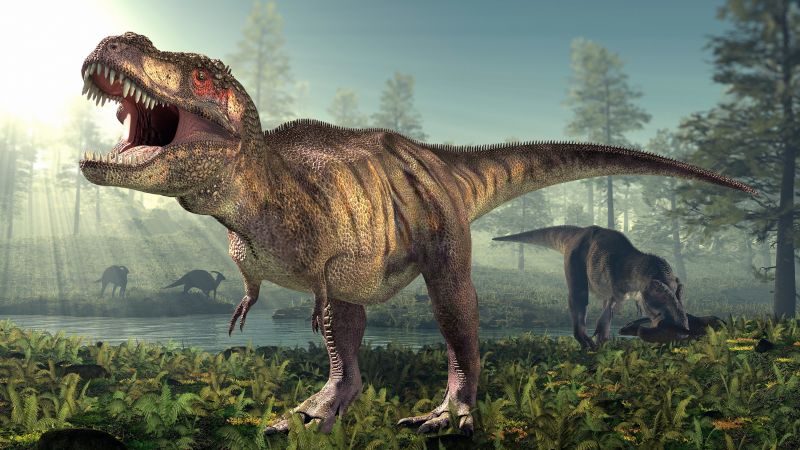
The name Tyrannosaurus rex conjures an immediate image: an unstoppable, roaring titan, a force of nature that burst onto the scene fully formed, ready to dominate. We often imagine its life as a swift ascent to apex predator status, a creature that simply was the king. But new insights into its growth reveal a far more fascinating, and perhaps even more awe-inspiring, truth: the T. rex didn’t just appear; it patiently, deliberately, and incredibly, grew for 35 long years to reach its full, formidable size.
The Marathon to Majesty: A Decades-Long Transformation
Thirty-five years. Think about that for a moment. For many creatures, that’s more than a lifetime. For a T. rex, it was the journey from a vulnerable hatchling to the undisputed ruler of its ecosystem. This wasn’t a rapid, explosive growth spurt like some modern animals; it was a steady, calculated climb. Imagine the sheer endurance required, the constant need for sustenance, the decades spent navigating a dangerous world while not yet at its peak.
This long growth phase tells us much about the dinosaur’s early life. A juvenile T. rex, while still dangerous, wasn’t the bone-crushing leviathan we envision. It would have occupied a different ecological niche, perhaps hunting smaller prey, honing its skills, and learning the intricate rhythms of its environment. This extended adolescence implies a level of adaptability and survival instinct that went beyond mere brute strength. It was a prolonged investment in becoming the ultimate predator, building colossal muscles and dense bone structures over a span that dwarfs the maturation period of most creatures today.
A Lifetime of Lessons: The Wisdom of the Apex Predator
What does a 35-year growth period mean for the T. rex’s intelligence and experience? It suggests a creature that wasn’t just physically impressive, but also remarkably seasoned. Over three decades, a T. rex would have accumulated an incredible amount of knowledge about its territory, its prey, and its rivals. It would have encountered countless challenges, learned from failures, and refined its hunting strategies. This long lifespan allowed for continuous learning, transforming it from a powerful animal into a truly wise and formidable hunter.
This perspective transforms our understanding of the T. rex from a simple monster into a complex, intelligent survivor. Its reign wasn’t just about overwhelming power; it was about honed skill, accumulated experience, and an unparalleled understanding of its world. As Dr. Eleanor Vance, a leading researcher in Mesozoic paleontology, recently observed, “To truly understand the might of a T. rex, we must first appreciate the remarkable endurance and adaptability it demonstrated over decades, honing its skills long before it reached its peak.” This wasn’t just evolution’s brutal efficiency; it was a testament to nature’s profound patience.
The Echo of Endurance
Understanding the T. rex’s 35-year journey to full size reshapes our perception of this iconic dinosaur. It wasn’t merely a force of nature; it was a product of an incredibly long, deliberate process of growth and learning. It highlights the immense scale of geological time and the patience inherent in truly colossal life forms. The next time you marvel at the fossilized remains of a T. rex, remember not just its power, but the decades of endurance, learning, and slow, steady growth that brought it to its magnificent, terrifying prime.
It’s a powerful reminder that even the most dominant forces in history earned their place not through instant gratification, but through a long, arduous, and ultimately awe-inspiring journey.

