


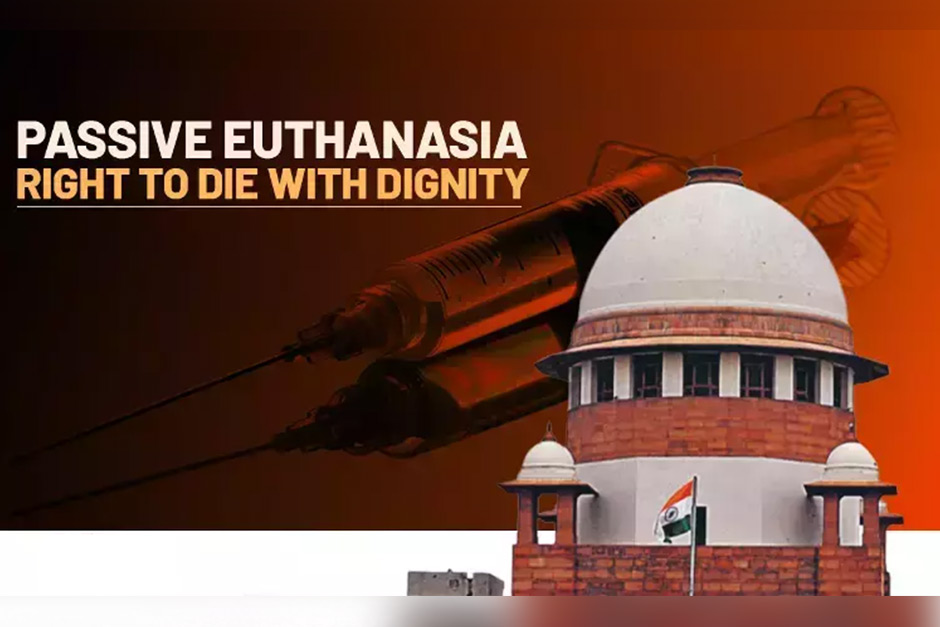
The corridors of India’s Supreme Court are often privy to intricate legal battles and landmark judgments, but few cases touch the raw nerve of human existence quite like those involving end-of-life decisions. A recent development has brought this profound debate back into sharp focus: the apex court’s decision to personally engage with the parents seeking permission for passive euthanasia for their son. This move underscores the immense gravity and moral complexity inherent in such pleas, as the judiciary grapples with balancing compassion, legal precedent, and the sanctity of life.
The Agonizing Plea: A Family’s Unimaginable Choice
The case involves a young man who, following a tragic accident or medical mishap, has reportedly been in a persistent vegetative state (PVS) for an extended period. His medical condition is deemed irreversible, with no hope of recovery. For his parents, witnessing their son’s prolonged suffering and the absence of consciousness has led them to the heart-wrenching decision to seek permission for passive euthanasia. They believe that allowing him to pass away peacefully would be an act of mercy, freeing him from a life devoid of quality or awareness.
Passive euthanasia, in the Indian legal context, involves withdrawing life support or stopping medical treatment that is keeping a patient alive, allowing natural processes to take their course. It is distinct from active euthanasia, which involves direct intervention to end a life and remains illegal. India’s stance on passive euthanasia evolved significantly after the landmark 2018 Supreme Court judgment in the Common Cause vs. Union of India case, which upheld the ‘right to die with dignity’ as an intrinsic part of Article 21 (right to life). This ruling established a framework for allowing passive euthanasia through living wills (advance directives) or, in their absence, through a rigorous process involving medical boards and High Court approval for incompetent patients.
The parents’ plea highlights the deep emotional, financial, and psychological toll such a situation takes on families. Their decision, born out of immense love and desperation, places them at the intersection of medical ethics, legal rights, and profound personal belief. The Supreme Court’s involvement is not merely procedural but reflects a commitment to ensuring that such life-altering decisions are made with the utmost care and scrutiny.
Supreme Court’s Deliberation: Ensuring Genuine Intent
The Supreme Court’s recent directive to interact directly with the parents of the young man is a crucial step in its deliberation process. While the established guidelines provide a legal pathway for passive euthanasia, the court’s desire for a personal engagement goes beyond mere formality. It seeks to ascertain the genuine intent of the parents, ensuring that their request is indeed voluntary, well-considered, and free from any external pressure or ulterior motives.
This direct interaction allows the justices to understand the depth of the family’s suffering, their understanding of their son’s irreversible condition, and their conviction that passive euthanasia is the only humane option left. It’s a way to personalize a legal process that often relies on medical reports and affidavits, adding a human dimension to the highly sensitive matter. The court’s meticulous approach is vital given the irreversible nature of the decision and the profound ethical questions it raises about the sanctity of life versus the right to a dignified death.
Speaking on the broader implications of such cases, a prominent legal expert, Dr. Meera Sharma, stated, “The judiciary’s role here is not just about interpreting the law, but about acting as a custodian of conscience. When considering end-of-life decisions, especially for those who cannot express their own will, the courts must tread carefully, ensuring that every safeguard is in place to protect the vulnerable and uphold justice in its broadest sense.”
Balancing Compassion and Legal Safeguards
The Supreme Court’s decision to engage with the parents before reaching a final verdict underscores the delicate balance it must strike. On one hand, there is the compassionate understanding of a family’s agony and their plea for their son to find peace. On the other, there is the paramount need to prevent any potential misuse of the provisions for passive euthanasia, ensuring that the ‘right to die with dignity’ does not inadvertently become a pathway for exploitation or arbitrary decisions.
This case, like the landmark Aruna Shanbaug case that preceded the 2018 guidelines, is set to further refine India’s jurisprudence on end-of-life care. The personal interaction with the parents will likely inform the court’s understanding of the practical and emotional realities faced by families navigating such profound dilemmas. It will also help reinforce the procedural rigor required for such applications, ensuring that medical assessments are unimpeachable and that the family’s decision is truly informed and autonomous.
Ultimately, the Supreme Court’s forthcoming decision will not only determine the fate of one individual but will also contribute significantly to the ongoing societal and legal discourse surrounding death, dignity, and autonomy in India. It will be a testament to how the nation grapples with complex ethical challenges while upholding the tenets of justice and human compassion.

