


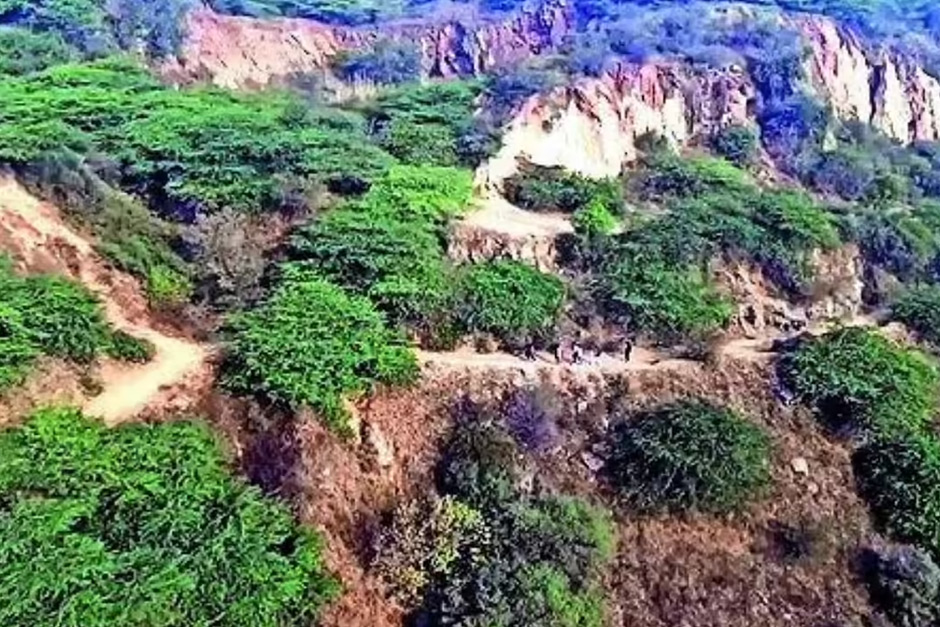
The Aravalli Range, an ancient ecological marvel vital for North India’s groundwater, biodiversity, and climate, faces relentless threats from urbanization and encroachment. For over two decades, the Supreme Court of India has been its steadfast guardian, delivering landmark judgments to protect this fragile ecosystem. Crucially, the Prime Minister’s Office (PMO) has also played a decisive role on two significant occasions, stepping in to reinforce conservation efforts and prevent irreversible environmental damage.
The Aravallis: A Lifeline Under Threat
Often dubbed the “green lung” of Delhi-NCR, the Aravalli hills act as a natural barrier against desertification, crucial for groundwater recharge and regulating the region’s climate. Their diverse forest cover supports unique flora and fauna. Degradation of the Aravallis, therefore, directly threatens North India’s water security, air quality, and ecological balance.
Threats are multifaceted and relentless. Illegal quarrying and mining, often under political patronage, have carved out huge sections, causing erosion and biodiversity loss. Unplanned urban development in Gurugram, Faridabad, and Delhi encroaches upon vital forest land. Industrial pollution further degrades the landscape. Despite local regulations, these challenges often overwhelm enforcement, necessitating higher authority intervention.
Supreme Court’s Enduring Guardianship
For over two decades, the Supreme Court of India has shown unwavering commitment to environmental justice in the Aravallis. Its intervention began with cases like M.C. Mehta v. Union of India, leading to significant rulings against destructive mining. A pivotal 2004 judgment imposed a complete ban on mining in specific Aravalli parts of Haryana, particularly Faridabad and Gurugram. Directives followed, advocating a broader interpretation of “forest land,” ensuring protection irrespective of revenue records.
The judiciary’s approach has been holistic, addressing mining, illegal construction, and encroachment. The Court consistently ordered demolition of illegal structures, asserting environmental protection outweighs private interests. Its judgments underscored intergenerational equity, reminding the state of its duty to preserve natural resources. Despite implementation challenges, the Supreme Court’s pronouncements remain an indispensable legal backbone for activists and agencies, keeping the Aravallis a critical national concern.
“The judiciary’s persistent oversight has been crucial. Without its unwavering commitment, much of this ancient range would have succumbed to exploitation,” remarked an environmental law expert.
PMO’s Crucial Interventions
While the Supreme Court provides the foundational legal framework, the Prime Minister’s Office (PMO) has also played a critical role in Aravalli conservation. On two notable occasions, the PMO’s direct involvement proved decisive in steering policy towards protection.
One significant instance involved a large-scale infrastructure project that threatened ecologically sensitive Aravalli zones. Following detailed environmental impact assessments and conservationist appeals, the PMO intervened. This led to a comprehensive re-evaluation, resulting in the project’s significant downsizing or relocation away from critical biodiversity corridors. Such high-level review prevented irreparable damage to vital forest patches, showcasing a commitment to balancing development with environmental sustainability.
A second crucial intervention addressed fragmentation caused by disparate state-level policies across the Aravallis. Recognizing that differing regulations created loopholes, the PMO initiated a high-level consultative process with affected states’ environmental ministries. This effort resulted in a reinforced, standardized policy framework, pushing for stricter enforcement and allocating funds for ecological restoration. These strategic interventions provided the political will to overcome bureaucratic hurdles, ensuring a more cohesive approach to conservation.
The journey to protect the Aravalli Range showcases a powerful interplay of environmental advocacy, judicial intervention, and executive will. The Supreme Court’s consistent two-decade guardianship established crucial legal precedents, defining development and conservation boundaries. Complementing this, the PMO’s timely interventions provided impetus to translate judicial pronouncements into actionable policy and avert specific threats. While the Aravallis remain vulnerable, these combined efforts offer a vital example of safeguarding critical natural assets. Continued vigilance and public participation are paramount for this irreplaceable ecological treasure.

