


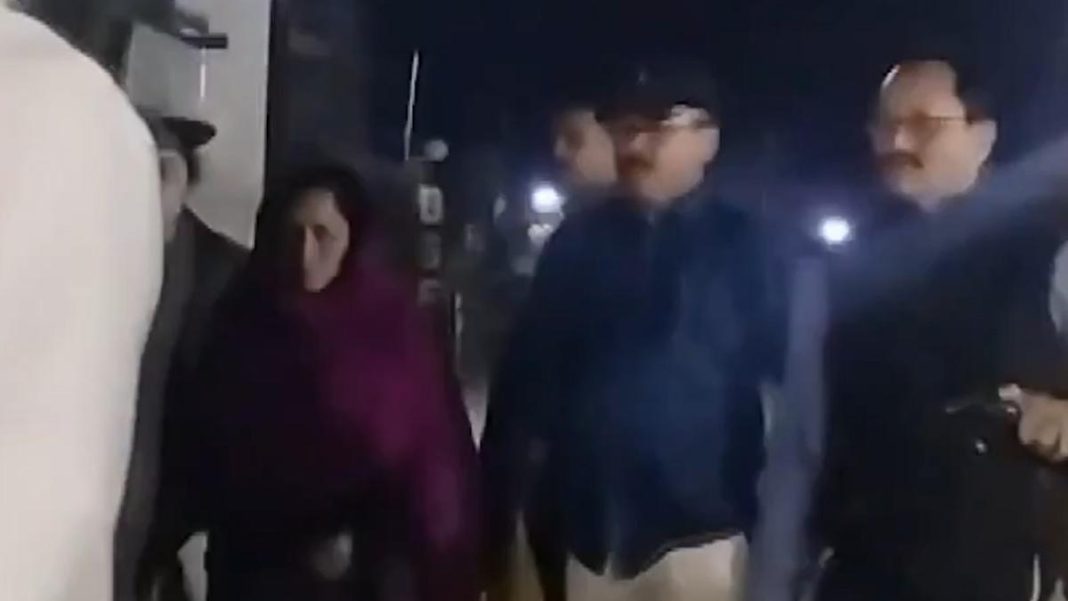
The quiet borderlands of West Bengal once again bear witness to a poignant human story, as Sunali (name changed to protect identity), a woman whose alleged undocumented status led to her being pushed back into Bangladesh six months ago, has finally returned to Indian soil. Her journey back is more than just a crossing of an international line; it symbolises the complex interplay of border security, human rights, and diplomatic efforts that often define the lives of individuals caught in such precarious situations.
Sunali’s case first garnered attention earlier this year when she was reportedly identified by border authorities as an undocumented individual and subsequently pushed back across the India-Bangladesh frontier. For half a year, her fate remained uncertain, leaving her family in India distressed and various advocacy groups concerned. Her return now highlights the challenges faced by both nations in managing their shared, porous border and the enduring human cost when administrative definitions clash with personal realities.
The Six-Month Limbo: A Life in Between Borders
The initial incident that led to Sunali’s pushback remains a point of discussion among local communities and human rights activists. While specific details are often shrouded in the complexities of border protocols, it is understood that Sunali, like many others residing in border areas, found herself without adequate documentation to prove her Indian citizenship to the satisfaction of all authorities. This lack of definitive proof, whether due to historical oversight, administrative errors, or genuine migratory patterns, often places individuals in a vulnerable position. Upon being identified, she was reportedly pushed back to the Bangladeshi side, effectively rendering her a person without official recognition in either nation.
For six months, Sunali existed in a state of limbo. Reports from advocacy groups that monitored her case suggest she spent her time navigating a foreign land, reliant on the goodwill of local communities and the limited resources of humanitarian organisations. Her situation underscored a critical challenge in border management: the process of identifying genuine citizens versus undocumented migrants, and the often-dire consequences for those who fall through the cracks. The absence of a streamlined, universally accepted verification process often leaves individuals, particularly women and children, susceptible to exploitation and prolonged periods of statelessness.
Collaborative Efforts Bring Sunali Home
Sunali’s return is not merely a spontaneous crossing but the result of concerted efforts involving multiple stakeholders. Over the past several months, local non-governmental organisations (NGOs) working on human rights and border issues, along with community leaders, played a pivotal role in advocating for her case. These groups worked tirelessly to gather supporting evidence of her Indian lineage, liaising with local administration and, in some instances, facilitating informal dialogues across the border.
While official diplomatic channels between India’s Border Security Force (BSF) and Bangladesh’s Border Guard Bangladesh (BGB) are critical for formal repatriations, cases like Sunali’s often see humanitarian intervention paving the way for eventual resolution. The persistent advocacy created a groundswell of support, bringing her plight to the attention of relevant authorities on both sides. It is through this delicate balance of official procedures and humanitarian pressure that Sunali’s status could finally be clarified to allow her return.
A representative from a local human rights organisation, who wished to remain anonymous due to the sensitive nature of border issues, stated, “Sunali’s case is a stark reminder of the human element at play in border management. While security is paramount, we must never lose sight of the individual’s right to identity and dignity. Her return is a testament to what can be achieved when humanity guides policy discussions across frontiers.” This quote underscores the sentiment that often drives efforts to resolve such complex border cases.
The Road Ahead: Reintegration and Lessons Learned
With Sunali back in India, the immediate priority shifts to her rehabilitation and reintegration into her community. Having spent six months in an unfamiliar land under stressful circumstances, she will require support to rebuild her life. Local authorities and NGOs are expected to work together to ensure she receives necessary assistance, which may include psychological support, livelihood opportunities, and crucially, assistance in acquiring robust documentation to prevent a recurrence of her ordeal.
Sunali’s story, while a personal triumph, also serves as a broader commentary on the need for more humane and transparent mechanisms for border management. It highlights the importance of robust identification processes, the role of humanitarian organisations in safeguarding human rights, and the potential for cross-border cooperation on humanitarian grounds. As India and Bangladesh continue to strengthen their bilateral ties, such incidents underscore the necessity for protocols that address the nuances of border communities and ensure that no individual is left in an indefinite state of statelessness.
Her return is not just the end of a long struggle for one individual, but a critical inflection point urging a re-evaluation of policies to ensure compassion and clarity prevail in the often-turbulent landscape of international borders.

