


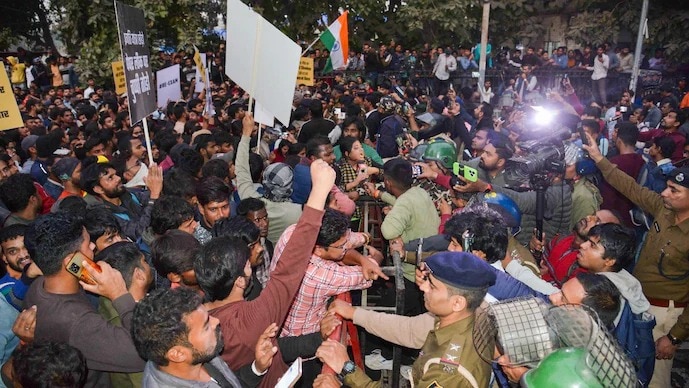
On January 27, the heart of India’s capital is set to witness a significant outpouring of student dissent as various student bodies prepare to converge at the University Grants Commission (UGC) headquarters in Delhi. The planned protest aims to challenge a slew of recent guidelines issued by the regulatory body, which students argue threaten the foundational principles of accessibility, quality, and inclusivity in Indian higher education. This demonstration underscores a growing discontent among the academic community regarding policy shifts perceived as detrimental to student welfare and academic freedom.
The Evolving Landscape of Higher Education Policies
The primary impetus behind the upcoming protest stems from several recent policy pronouncements by the UGC. Among the most contentious is the renewed push for a Four-Year Undergraduate Programme (FYUP) across central universities, a move many student organizations view with apprehension. Critics argue that while the FYUP model, touted as providing greater flexibility and interdisciplinary options, could lead to an additional year of financial burden for students and may not genuinely enhance academic rigor without substantial infrastructural and faculty support.
Furthermore, changes to Ph.D. regulations, including revised admission criteria and the introduction of a Common University Entrance Test (CUET) for Ph.D. admissions in many institutions, have also fueled widespread concern. Students and faculty alike are questioning the efficacy and fairness of these changes, fearing they could disadvantage candidates from diverse socio-economic backgrounds and compromise the autonomy of research institutions. The compulsory credit requirements for coursework, along with strict supervisor limits, are seen by some as bottlenecks that could prolong Ph.D. completion times and stifle innovative research.
Unified Voices Against Policy Shifts
Student organizations from across the political spectrum are uniting under a common banner to articulate their grievances. Groups like the All India Students’ Association (AISA), Students’ Federation of India (SFI), and the National Students’ Union of India (NSUI), alongside several independent student collectives, are mobilising support for the January 27 demonstration. Their demands extend beyond just the FYUP and Ph.D. changes, encompassing broader concerns about dwindling public funding for higher education, the perceived commercialization of academic institutions, and the need for greater student representation in policy-making bodies. Many student leaders contend that these guidelines, rather than empowering students, risk creating an elite system inaccessible to the majority.
Speaking to TrendLyric.com, Aakash Sinha, a student representative from Delhi University, articulated the collective sentiment: ‘These UGC guidelines are not just academic adjustments; they are an assault on affordable education and genuine research. We are being forced into a system that prioritises bureaucratic control over intellectual growth. The protest on January 27 is a clear message that students will not silently accept policies that undermine our future and the quality of Indian higher education.’ The call for the protest is not merely a localized event but aims to galvanize nationwide solidarity, emphasizing that these policies affect students across various states and institutions.
The Broader Implications for India’s Academic Future
The concerns voiced by the protesting students resonate with a larger debate about the trajectory of higher education in India. Critics suggest that an overemphasis on standardized testing and rigid structural changes, without addressing fundamental issues such as faculty shortages, outdated curricula, and inadequate research funding, might do more harm than good. The shift towards potentially longer undergraduate programs and more centralized Ph.D. admissions is seen by some as part of a wider trend towards standardisation that could stifle diversity and innovation within universities. There are also apprehensions that these reforms, if not carefully implemented, could inadvertently increase the burden on marginalized students, further widening the educational gap.
Conversely, the UGC maintains that these reforms are essential for aligning Indian higher education with global standards, enhancing employability, and fostering interdisciplinary research. They often highlight the benefits of flexibility, the potential for a more robust academic framework, and the necessity of ensuring quality control across institutions. The regulatory body asserts that these guidelines are designed to create a more dynamic and competitive academic environment, preparing students for both national and international challenges.
As January 27 approaches, the eyes of the nation’s academic community will be fixed on Delhi. The planned student protest at the UGC headquarters is more than just a single event; it represents a crucial juncture in the ongoing dialogue surrounding higher education reforms in India. It highlights the urgent need for a consultative process where student voices are not merely heard but actively integrated into policy formulation. The outcome of this demonstration, and the subsequent response from the UGC and the Ministry of Education, will undoubtedly have profound implications for millions of students and the future landscape of Indian academia.

