


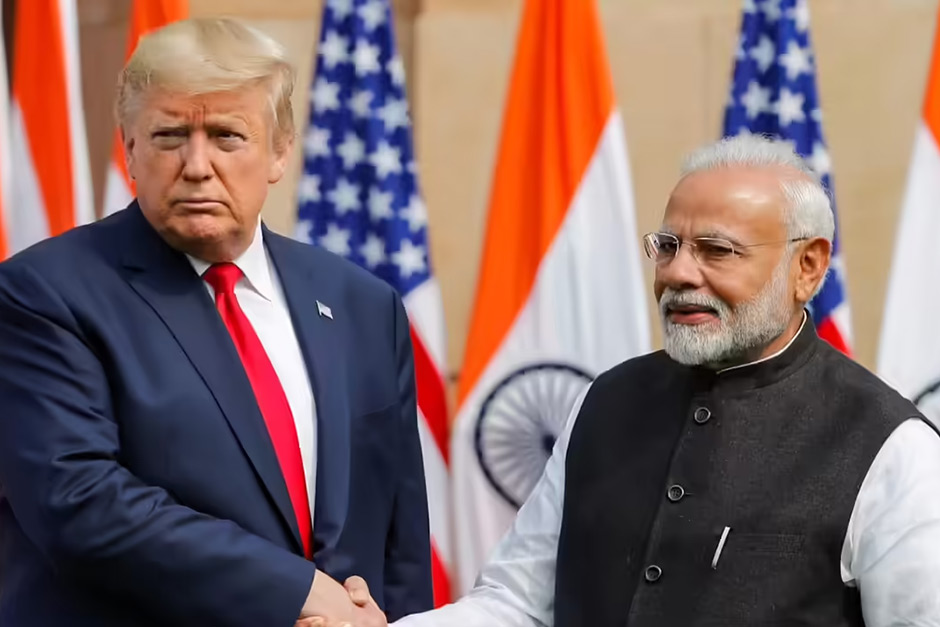
The global diplomatic landscape is often shaped by both formal engagements and informal overtures. In a development that has captured significant attention in India and beyond, former US President Donald Trump recently engaged in a conversation with Indian Prime Minister Narendra Modi. The news was shared by Sergio Gor, an appointed Ambassador-at-Large for the America First Policy Institute (AFPI) and a known confidante of Trump, adding a layer of authenticity and official informal weight to the exchange. The cryptic but intriguing message accompanying the announcement – “Stay tuned!” – has ignited speculation about the future trajectory of India-US relations, especially with a potential return of Trump to the Oval Office.
The ‘Stay Tuned’ Revelation and Its Immediate Implications
The announcement first surfaced on X (formerly Twitter) through Sergio Gor’s handle. Gor, who plays a key role in Trump’s post-presidency political and policy endeavors through AFPI, stated, “President Trump just called Prime Minister Modi. They had a wonderful conversation. ‘Stay tuned!’ he said. PM Modi’s leadership is admired by President Trump.” This direct communication, originating from a source close to the former president, bypasses traditional diplomatic channels and signals a personal rapport that continues to exist between the two leaders.
The phrase “Stay tuned!” itself is highly suggestive, hinting at forthcoming developments, possibly a future meeting, a policy announcement, or a renewed focus on specific bilateral areas. While details of the conversation remain undisclosed, the very act of Trump reaching out to Modi during an election year in the US, and prior to India’s own general elections, underscores India’s rising geopolitical significance. It also reflects a continuity in the personal bond that characterised their interactions during Trump’s previous term. For India, this phone call from a potential future US President reinforces its position as a crucial global player, irrespective of the incumbent American administration.
A Glimpse into Past Dynamics: Modi-Trump Chemistry
The relationship between Donald Trump and Narendra Modi during Trump’s presidency was often highlighted by a unique personal chemistry and grand public displays of camaraderie. Events like the “Howdy, Modi!” rally in Houston in 2019 and the “Namaste, Trump” event in Ahmedabad in 2020 became iconic symbols of this bond. These massive joint appearances underscored a mutual appreciation and a shared vision, at least publicly, for strengthening bilateral ties.
Beyond the optics, the India-US strategic partnership deepened considerably during Trump’s tenure. Despite his “America First” rhetoric, which often led to trade friction, the broader strategic alignment against common challenges, particularly in the Indo-Pacific region and regarding counter-terrorism, remained robust. Defense cooperation saw significant progress, with India procuring advanced military equipment and participating in joint exercises. The Quadrilateral Security Dialogue (QUAD) gained renewed momentum, with both nations recognizing the imperative of a free and open Indo-Pacific in the face of China’s growing assertiveness.
This history suggests that while a future Trump administration might bring its own set of transactional demands, especially on trade, the underlying strategic imperatives that bind India and the US are likely to endure. The personal rapport between Trump and Modi could serve as a vital bridge, facilitating dialogue and navigation through potential disagreements, much as it did during Trump’s first term.
Looking Ahead: Potential Trajectories for India-US Ties
The recent phone call, framed by the “Stay tuned” message, opens up various possibilities should Donald Trump secure the presidency again. A second Trump administration would likely continue to prioritize strategic competition with China, a stance that aligns well with India’s own security and geopolitical interests in the Indo-Pacific. Defense cooperation, intelligence sharing, and collaboration within multilateral frameworks like the QUAD could see further enhancement.
However, an “America First” approach could also mean renewed pressure on trade issues, demands for greater market access for US goods, and scrutiny over India’s tariff regimes. Visa policies, particularly for skilled workers, might also undergo review. India, for its part, has consistently emphasized its strategic autonomy, engaging with various global powers based on its national interests. A potential Trump 2.0 era would test India’s diplomatic agility in balancing its strategic partnership with the US against its own foreign policy objectives, including its relationships with Russia and its stance on global energy security.
Ultimately, the conversation between Donald Trump and Prime Minister Modi, and the subsequent “Stay tuned” message, serves as a significant marker. It signals not just a continued personal connection but also the potential for a renewed, perhaps even more dynamic, phase in India-US relations. As the world watches the US electoral process unfold, the international community, and particularly India, will indeed be staying tuned for what these developments might portend for one of the most critical bilateral relationships of the 21st century.

