


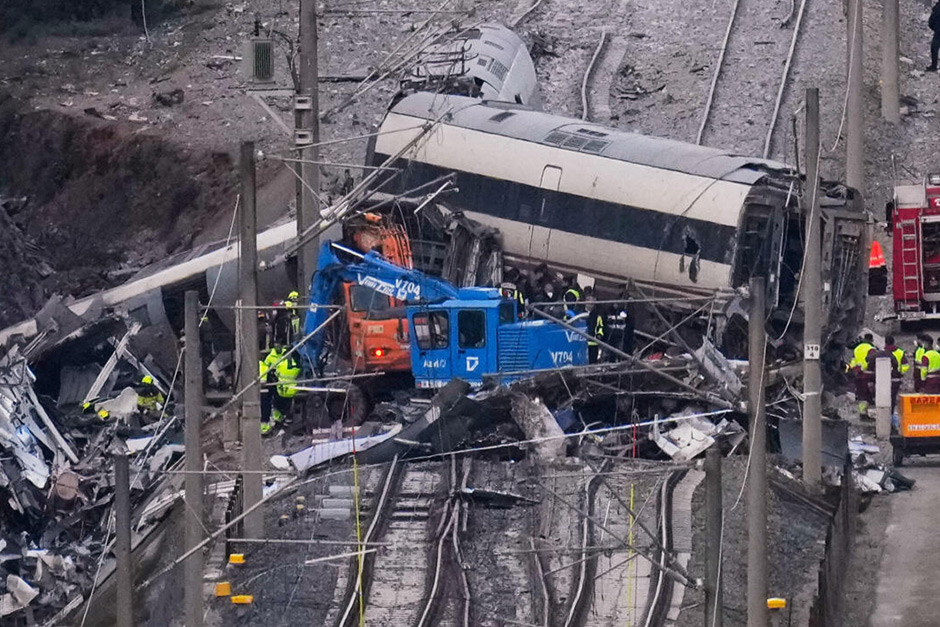
Spain, a nation celebrated for its vibrant culture and stunning landscapes, found itself gripped by a somber mood in late July 2013. Just two days after the catastrophic high-speed train derailment in Santiago de Compostela that claimed 79 lives and left scores injured, another railway incident unfolded, this time near Barcelona. While significantly less severe in terms of casualties, the derailment of a commuter train near Sant Andreu de la Barca served as a stark, unsettling reminder of the fragility of safety, casting a long shadow over the entire country.
For a nation still reeling from one of its worst rail disasters in decades, the news from Barcelona amplified a sense of national grief and anxiety. The back-to-back incidents inevitably spurred intense scrutiny on Spain’s railway infrastructure and operational protocols, resonating far beyond its borders, including in India, a country with its own extensive and complex rail network.
The Barcelona Derailment: A Second Jolt
The incident near Barcelona occurred on Friday, July 26, 2013, involving a Rodalies R4 line commuter train. According to initial reports, the train, carrying approximately 30 passengers, derailed at low speed as it approached the Sant Andreu de la Barca station, located about 25 kilometres north-west of Barcelona. The incident saw two carriages leave the tracks, causing alarm among passengers and emergency services alike.
Fortunately, the consequences were not nearly as devastating as the Santiago crash. Authorities confirmed that around 25 people sustained injuries, most of them minor. Five individuals required hospitalisation, though their conditions were not critical. The absence of fatalities was a significant relief, preventing a further escalation of national tragedy. Investigations into the cause of the Barcelona derailment quickly commenced, with early indications pointing towards potential issues with the track or the train’s bogies, distinct from the high-speed driver error suspected in the Santiago disaster. This incident, while a near miss for a major tragedy, underscored the persistent challenges in maintaining flawless railway operations across diverse networks.
Shadow of Santiago and Global Resonance
The timing of the Barcelona derailment, coming so soon after the horrific Santiago de Compostela crash, magnified its impact. The Santiago tragedy, which saw an Alvia high-speed train carrying 218 passengers derail at a notoriously sharp bend, had plunged Spain into an official period of mourning. The sheer scale of the loss — 79 fatalities and over 140 injuries — had captured global headlines and generated immense sympathy.
The subsequent incident in Barcelona, regardless of its comparatively minor scale, thus deepened the sense of unease. It prompted a collective reflection on railway safety standards, not just in Spain but across Europe and globally. For many, including those in India, these events served as a poignant reminder of the inherent risks associated with mass transit and the paramount importance of stringent safety regulations, meticulous maintenance, and continuous technological upgrades. India, with one of the world’s largest railway systems, often grapples with its own set of challenges related to safety, infrastructure, and passenger volumes. Therefore, the Spanish incidents resonated strongly, sparking conversations about shared vulnerabilities and the universal pursuit of safer travel.
As one transport safety analyst observed during that period, “The repeated nature of these incidents, regardless of their scale, is a stark reminder of the continuous need for vigilance and investment in railway safety. Every incident, no matter how small, offers critical lessons that must be integrated into operational practices worldwide.”
Lessons and the Path Forward
The events of July 2013 in Spain served as a potent, albeit tragic, educational moment for railway operators and policymakers globally. While the Santiago crash highlighted issues of speed control and human factors on high-speed lines, the Barcelona incident brought attention back to the daily operational challenges of commuter networks – track integrity, rolling stock maintenance, and station area safety. These back-to-back incidents spurred accelerated reviews of safety protocols, signalling systems, and driver training across Spain’s RENFE network.
For India, a nation deeply reliant on its railways for both passenger and freight movement, such international tragedies often prompt internal introspection. They underscore the critical importance of balancing expansion and modernisation with the foundational principles of safety. As global travel continues to grow, and more Indians explore destinations like Spain, confidence in international transport systems becomes increasingly vital. The Spanish tragedies, therefore, transcended national borders, becoming a global call for unwavering commitment to passenger safety and the continuous evolution of railway best practices.
The memory of these incidents serves as a powerful testament to the ongoing imperative for all nations to prioritise robust safety measures, learn from every mishap, and strive tirelessly to prevent future tragedies on their tracks.

