


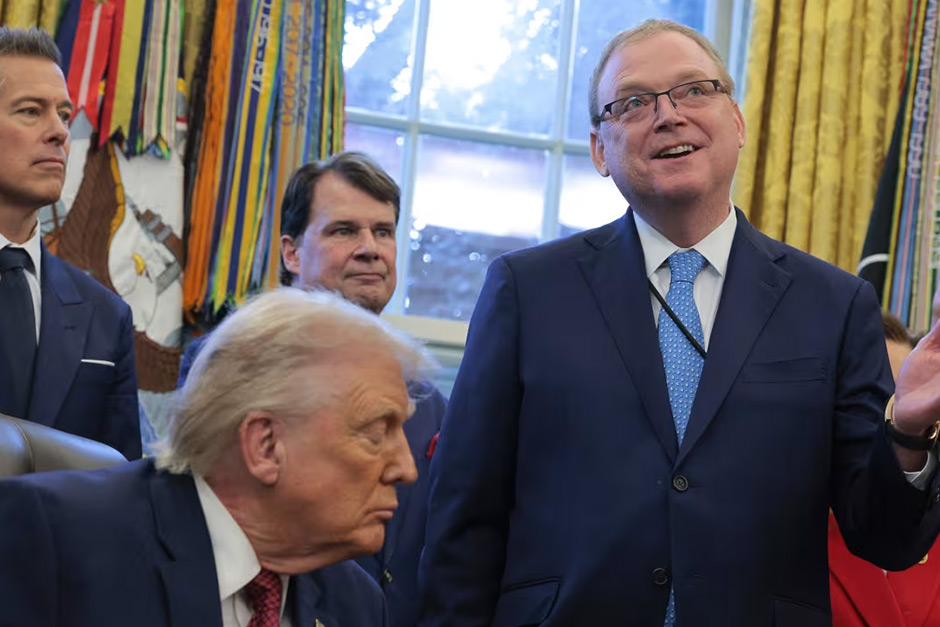
The financial world recently got a fresh reminder of just how tightly intertwined politics and market sentiment truly are. The S&P 500, that ever-watchful barometer of U.S. economic health, found itself dancing to an uncertain tune after a particular hint from the White House regarding the next potential Federal Reserve chair. This episode underscores the deep sensitivity of global markets to leadership changes at institutions as pivotal as the Fed, especially when presidential commentary introduces a dose of the unexpected.
The S&P 500’s Volatile Ballet
For investors, stability and predictability are often highly prized commodities. So, when the possibility of a shift in the leadership of the Federal Reserve enters the conversation, it’s rarely met with indifference. The S&P 500’s recent movements encapsulated this perfectly, showcasing a distinct lack of direction as traders grappled with fresh information. Initial whispers and then a more direct presidential comment suggested that Kevin Hassett, a name previously floated for the top central banking role, might not, in fact, be the chosen one.
The immediate reaction was a palpable stir. Major indices, particularly the S&P 500, which reflects broad market health, began to fluctuate. This wasn’t a simple up or down day; it was more of a “bouncing around” as the market tried to digest what this new variable meant. Would a different candidate signal a change in monetary policy approach? Would it imply a more or less hawkish stance on interest rates? The answers remained elusive, leaving a vacuum quickly filled by speculation and, consequently, volatility.
Decoding the “Hassett Hint” and Market Sensitivity
So, why did a comment about one individual’s potential non-appointment create such a stir? The Federal Reserve chair is arguably one of the most powerful economic positions globally. This individual’s decisions on interest rates and monetary policy ripple through every corner of the economy, affecting everything from mortgage rates to corporate borrowing costs, and ultimately, corporate profits and stock valuations. The market thrives on knowing who is at the helm and what their general philosophy might be.
Kevin Hassett, a former Chairman of the Council of Economic Advisers, has a known economic philosophy. The market had likely begun to price in what his potential stewardship might entail. Therefore, a presidential hint that he might not be the next Fed chair isn’t just about Hassett; it’s about throwing a wrench into existing expectations. It resets the speculation game, forcing investors to consider a wider array of possibilities for the Fed’s future direction. This uncertainty is precisely what leads to the kind of hesitant, volatile trading seen in the S&P 500.
One veteran market analyst observed, “Markets absolutely crave clarity, especially when it comes to the steward of monetary policy. Any hint of deviation from established norms or an unexpected pivot in potential leadership can send ripples across every sector, as investors scramble to reassess their positions.” This sentiment perfectly encapsulates why such a seemingly minor comment from the White House can have outsized effects on the highly sensitive world of financial markets.
The Unseen Hand of Influence
This episode is a stark reminder of the immense influence that political commentary can exert on financial markets, particularly when it touches upon the independence and leadership of critical economic institutions. The Federal Reserve’s autonomy from political interference is often seen as a cornerstone of its effectiveness and market credibility. Any suggestion that the appointment process is less clear-cut than anticipated, or subject to shifting winds, naturally generates concern.
For investors, the key takeaway is a continued need for vigilance. The S&P 500’s recent jitters are a microcosm of the larger environment where policy, politics, and perception merge. As the process for selecting the next Fed chair continues to unfold, expect markets to remain hypersensitive to every word, hint, and potential development, underscoring the delicate balance between White House ambitions and Wall Street’s relentless pursuit of certainty.

