


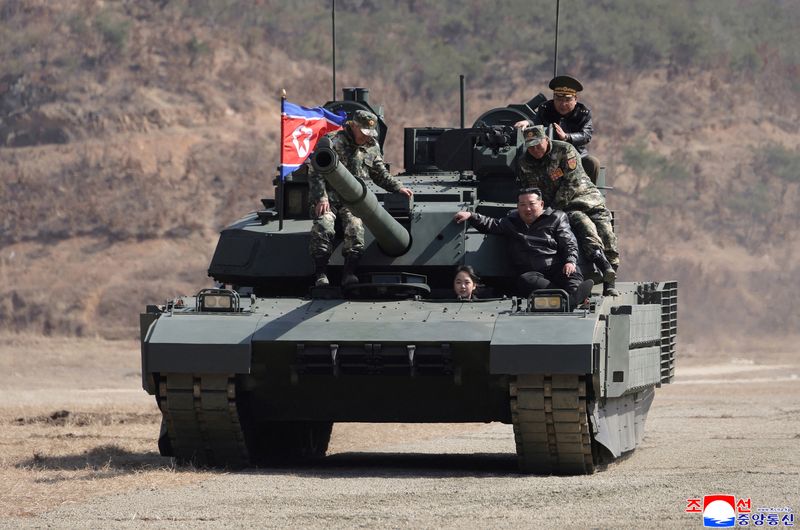
The intricate and often opaque world of North Korean leadership has once again captured global attention, but this time with a particularly intriguing development. Credible intelligence circles are increasingly pointing towards an unprecedented future for the hermit kingdom: Kim Jong Un’s daughter, Kim Ju Ae, is being positioned as the most likely successor to her father. This isn’t mere speculation; it’s a growing consensus based on a pattern of public appearances and state media treatment that signals a profound shift in the dynastic succession plan.
The Unveiling of a Future Leader
For years, the question of who would follow Kim Jong Un has been a topic of intense discussion among North Korea watchers. Conventional wisdom often leaned towards a male heir, given the patriarchal nature of North Korean society and its historical leadership. However, recent observations have painted a starkly different picture. Kim Ju Ae, believed to be around 10-11 years old, has been featured prominently alongside her father at crucial military events, missile launches, and even during visits to new residential districts. These aren’t casual appearances; they are carefully orchestrated moments designed to elevate her stature and normalize her presence in the highest echelons of power.
Her consistent visibility, often depicted standing shoulder-to-shoulder with her father while inspecting military hardware or reviewing troops, transcends mere familial affection. State media has gone as far as referring to her with honorifics previously reserved solely for Kim Jong Un himself. This deliberate showcasing, experts suggest, is a clear strategy to present her as the natural and legitimate heir, preparing both the domestic populace and the international community for a continuity of the Kim dynasty.
Beyond Bloodline: Strategic Positioning
The decision to put Kim Ju Ae front and center is not simply a matter of choosing a successor; it’s a strategic move with multiple layers of intent. North Korea’s political system is fundamentally built on the “Paektu Bloodline,” a sacred lineage tracing back to its founder, Kim Il Sung. By positioning his daughter, Kim Jong Un is reinforcing the absolute primacy of this bloodline, ensuring that power remains firmly within the family’s grasp for generations to come. This move also counters any potential internal instability or challenges to his authority by clearly delineating the future leadership path.
Furthermore, her visible role at military parades and missile tests sends a powerful message. It integrates her identity with the nation’s most potent symbols of strength and sovereignty. This isn’t just a child accompanying her father; it’s a future commander-in-chief in training, being indoctrinated into the military-first philosophy that underpins the regime. As one seasoned observer noted, “This isn’t just about a daughter; it’s about solidifying the Kim dynasty’s future for generations, projecting an image of stability and continuity in a highly controlled environment.” This public grooming serves to gradually acclimatize the North Korean people to the idea of a female supreme leader, a significant departure from tradition that underscores Kim Jong Un’s ultimate authority to define the nation’s future.
The Legacy and the Future
The implications of this succession path are profound. While the specifics of Kim Ju Ae’s potential rule remain decades away and subject to many variables, her emergence as the designated heir signals Kim Jong Un’s long-term vision for his legacy. He appears to be not just securing his own position but meticulously planning the continuation of the Kim family’s rule well beyond his lifetime. This clarity, despite its dramatic break from traditional expectations, might be perceived internally as a sign of strength and foresight by the current leader.
For the international community, this development presents a new dimension to understanding North Korea. A female leader, while groundbreaking for the reclusive state, does not inherently suggest a shift in the nation’s policies or its aggressive stance on nuclear weapons development. Instead, it likely signifies a determined effort to maintain the status quo of the dynastic dictatorship, ensuring a predictable (if alarming) continuation of its current trajectory under new, yet familiar, leadership. The world will undoubtedly continue to watch her evolution, understanding that her future is inextricably linked to the trajectory of one of the world’s most enigmatic nations.
The intelligence pointing to Kim Ju Ae as Kim Jong Un’s likely successor marks a pivotal moment in North Korean politics. It underscores the regime’s enduring commitment to dynastic rule and the Kim family’s grip on power. While the specifics of her eventual ascent remain in the distant future, her prominent placement now is a clear declaration of intent. This move not only solidifies the foundational principles of the North Korean state but also sets the stage for a unique and unprecedented chapter in its tumultuous history.

