


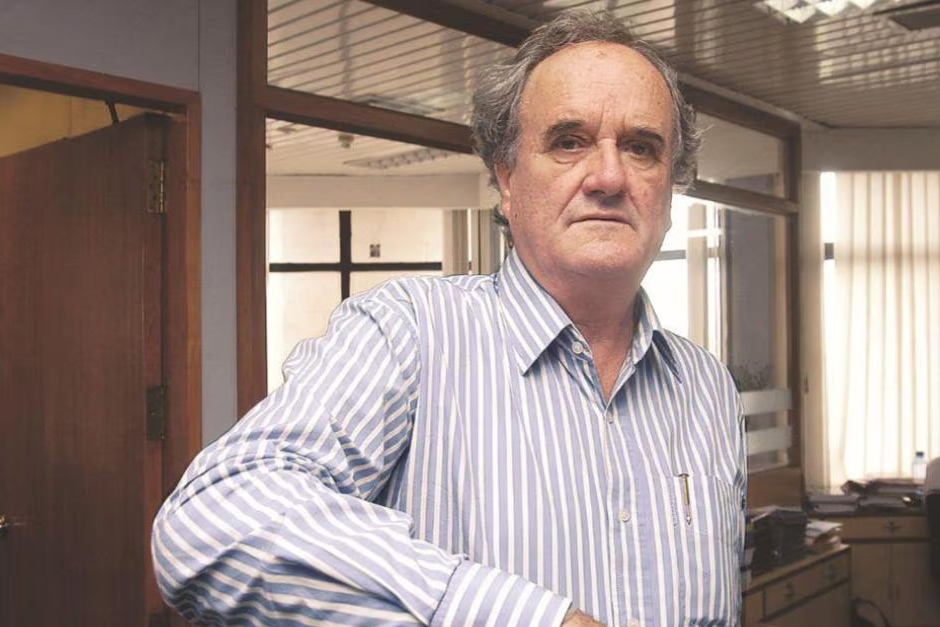
India mourns the passing of a unique figure who dedicated much of his life to understanding and narrating its complex tapestry. Sir Mark Tully, the venerable BBC correspondent affectionately known as the ‘voice of India’, passed away peacefully at his Delhi residence on Thursday, aged 90. His death marks the end of an era for journalism and for India’s connection with the world, leaving behind an indelible legacy of insightful reporting and profound cultural empathy.
A Legacy Forged in India
Born in Calcutta (now Kolkata) in 1935 during the British Raj, Mark Tully’s connection with India was not merely professional but deeply personal, almost fated. After an education in England, he returned to India in 1965 to join the BBC, embarking on a remarkable three-decade career that would define his life and shape global perceptions of the subcontinent. He served as the BBC’s bureau chief in Delhi for over 20 years, an unparalleled tenure that saw him cover some of the most pivotal moments in modern Indian history.
From the tumultuous years of the Emergency in the mid-1970s, where his reporting courageously navigated censorship and political pressure, to the assassination of Prime Minister Indira Gandhi in 1984 and the subsequent anti-Sikh riots, Tully was on the ground, delivering nuanced and often fearless accounts. He reported on the Bhopal gas tragedy, the Babri Masjid demolition, and countless elections, communal conflicts, and social changes, always striving for impartiality and depth. His fluent Hindi and deep understanding of local customs allowed him to transcend the typical foreign correspondent’s gaze, offering perspectives that resonated deeply with both Indian and international audiences. He didn’t just report the news; he immersed himself in the stories and the lives of the people.
More Than Just a Reporter
Even after officially retiring from the BBC in 1994, Sir Mark Tully never truly left India. He chose to remain in Delhi, continuing his work as a commentator, author, and broadcaster, cementing his status as one of the most respected foreign voices on Indian affairs. His literary contributions include insightful books such as Amritsar: Mrs Gandhi’s Last Battle, No Full Stops in India, and India in Slow Motion, which delved into the nation’s political, social, and spiritual landscape with a characteristic blend of critical analysis and profound affection. These works offered a window into the soul of India, reflecting his nuanced understanding of its paradoxes and vibrant complexities.
Tully’s unique position stemmed from his ability to be both an insider and an outsider. He observed India with the rigour of a trained journalist but approached it with the heart of someone deeply attached. This dual perspective allowed him to critique its challenges while celebrating its enduring spirit. He once eloquently stated, “I don’t belong to anywhere, but I feel at home in India.” This sentiment underscored his lifelong commitment to the country, going beyond mere professional duty to become a genuine advocate for understanding and engagement.
Enduring Influence and Indian Affection
The affection and respect Tully commanded in India were extraordinary for a British national, especially one who began his career in the post-colonial era. He transcended historical baggage through his unwavering commitment to fair reporting, his genuine curiosity, and his refusal to parachute in and out of stories. His distinctive, measured voice became synonymous with credible news, and his analyses were sought after by policymakers, academics, and the general public alike.
His contributions were formally recognised by both the United Kingdom and India. He was knighted by Queen Elizabeth II in 2002 for his services to broadcasting and journalism. India honoured him with the
Sir Mark Tully’s passing leaves a void that will be difficult to fill. He was not just a journalist; he was a cultural ambassador, a storyteller, and a bridge between worlds. His legacy will endure in the annals of journalism and in the hearts of millions who saw him as more than just the BBC’s ‘voice of India’ but as a true friend and perceptive chronicler of the nation he so deeply loved. He will be remembered for his integrity, his eloquence, and his profound humanism that illuminated India for decades.

