


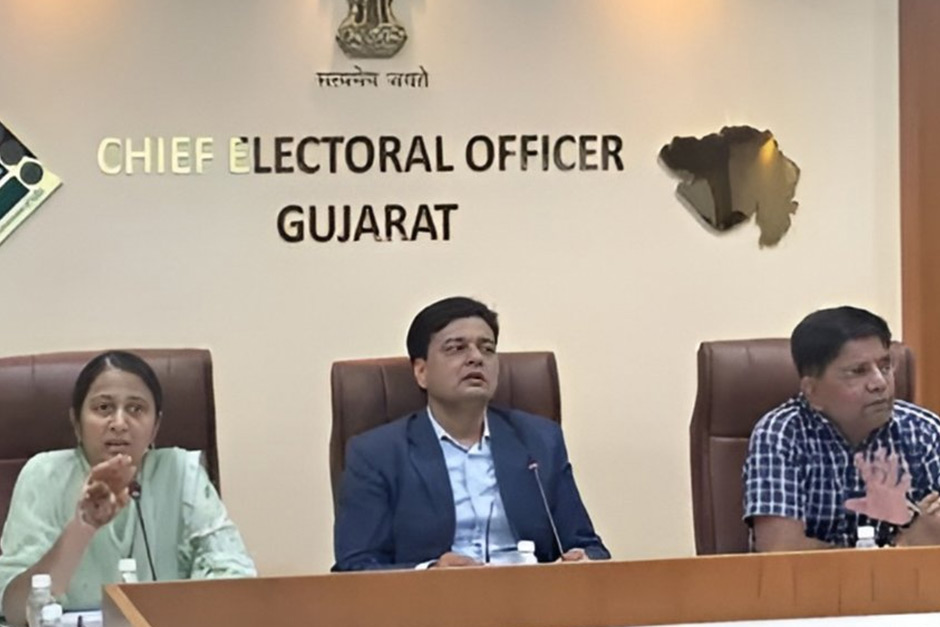
The integrity of India’s democratic process hinges significantly on the accuracy of its electoral rolls. In a recent development that has drawn considerable attention, the Election Commission of India (ECI) has announced the deletion of nearly 74 lakh (7.4 million) names from the voter lists across Gujarat. This substantial clean-up is part of the ongoing Special Summary Revision (SIR), an annual exercise undertaken by the ECI to update and purify the electoral database. Following these extensive deletions, the Commission has promptly opened a crucial window for citizens to file objections and claims, ensuring transparency and fairness in the process.
Understanding the Special Summary Revision (SIR)
The Special Summary Revision is a comprehensive and meticulous exercise mandated by the Election Commission to ensure that India’s voter rolls are as accurate and up-to-date as possible. It is not an arbitrary process but a structured cycle designed to reflect the dynamic nature of a population. During SIR, draft electoral rolls are published, allowing for a period where citizens can submit claims for inclusion, object to wrongful inclusions, or seek corrections to their entries.
The primary objectives of SIR are multifaceted. It aims to enroll newly eligible voters who have turned 18 years of age, incorporate the names of individuals who have recently moved into a constituency, and, critically, remove names of deceased voters, those who have permanently shifted residence outside the constituency, or duplicate entries. This continuous purification is vital to prevent electoral malpractice and uphold the principle of “one person, one vote.” The rigorous nature of this annual update ensures that the electoral database remains a true reflection of the eligible voting populace, thereby strengthening the foundation of fair and free elections.
The Scale of Deletions and the EC’s Rationale
The figure of nearly 74 lakh deleted names in Gujarat is undoubtedly significant and naturally prompts questions about the underlying reasons. While the number appears large, it’s crucial to understand that such extensive deletions are often a consequence of several factors accumulating over time. High rates of migration within and outside the state, instances of voters passing away, and individuals having multiple entries across different constituencies or even within the same one are common reasons for such purges.
The Election Commission emphasizes that these deletions are the result of a stringent, multi-stage verification process conducted by Booth Level Officers (BLOs), who are the grassroots representatives of the EC. BLOs visit homes, cross-reference data, and gather information to ascertain the validity of each entry. The goal is not to disenfranchise legitimate voters but to cleanse the rolls of inaccuracies. “Maintaining a clean and accurate electoral roll is fundamental to the integrity of our democratic process. These deletions, while significant in number, are a culmination of a rigorous, year-long process designed to ensure that only eligible voters are on the list, and that no eligible voter is left out,” said a senior Election Commission official, underscoring the EC’s commitment to electoral purity.
Such large-scale revisions, while necessary, also highlight the need for continuous public awareness campaigns about voter registration and verification. The sheer volume of deletions in Gujarat reflects the sheer scale of the task involved in managing an electoral roll for a state with a vast and often mobile population.
Window for Objections and Voter Responsibility
Recognizing the potential for errors or oversight in any large-scale data management exercise, the Election Commission has promptly opened a crucial window for claims and objections. This period is paramount for safeguarding the rights of every eligible voter. Citizens whose names might have been inadvertently deleted, or those who wish to object to the inclusion of an ineligible voter, can now approach the electoral authorities.
The process for filing claims and objections is designed to be accessible. Individuals can visit designated polling stations, the offices of Electoral Registration Officers (EROs), or utilize the EC’s online portals to check their status and submit necessary forms. It is imperative for every citizen to take proactive responsibility for verifying their inclusion on the electoral roll, especially after such a large-scale revision. The onus is not solely on the EC; active participation from the electorate is a cornerstone of a robust democratic system. If a name has been deleted in error, prompt action during this window is critical to ensure re-inclusion before the next elections.
The Election Commission often publicizes detailed schedules and locations for these claim and objection periods, encouraging maximum participation. By making full use of this window, citizens can ensure that their fundamental right to vote is protected and that the electoral rolls accurately reflect the democratic will of the people.
The extensive deletion of nearly 74 lakh names from Gujarat’s electoral rolls through the Special Summary Revision is a testament to the Election Commission’s ongoing efforts to maintain robust and accurate voter lists. While the numbers are substantial, they underline the continuous nature of electoral roll purification. The subsequent opening of the claims and objections window is a vital safeguard, offering every citizen the opportunity to verify their status and rectify any discrepancies. For India’s democracy to thrive, it is incumbent upon both the electoral machinery and the vigilant citizenry to ensure that the electoral rolls are clean, comprehensive, and truly representative of the voting public.
—

