


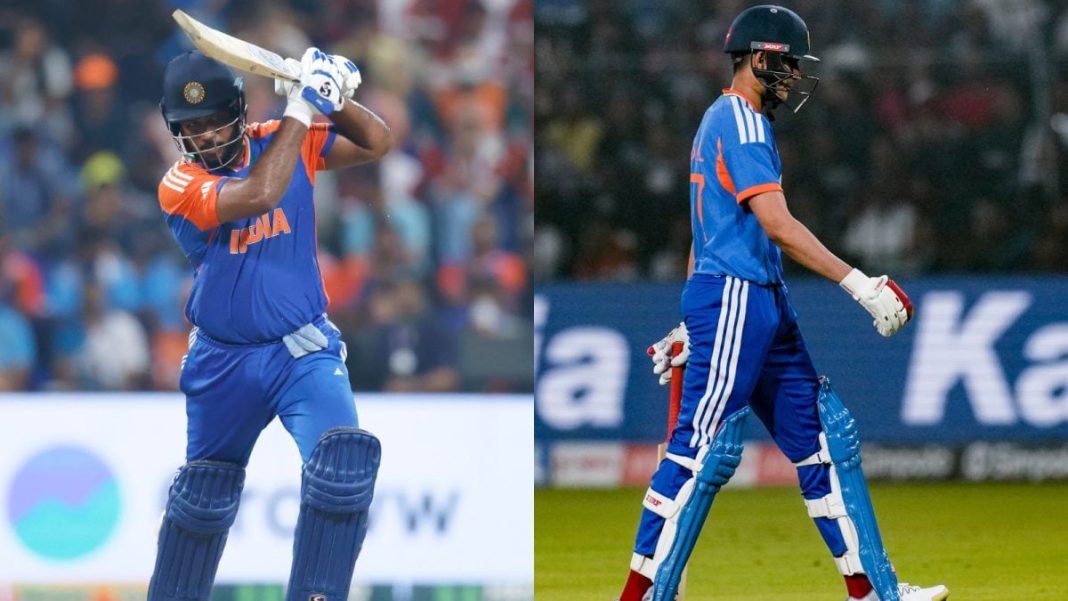
The highly anticipated India vs. South Africa T20I series began with an anticlimactic washout in Durban, leaving fans and pundits alike to speculate further on India’s playing XI for the upcoming matches. With the second T20I slated for December 12th in Gqeberha, the spotlight intenshes on potential tactical shifts and player selections. Among the most talked-about possibilities is a change at the top, specifically the question of whether Shubman Gill might make way, perhaps opening a door for the inclusion of Sanju Samson.
India’s recent T20I performances, particularly the dominant series win against Australia, have showcased a blend of aggressive batting and promising young talent. However, the absence of key senior players for this tour means the team management, led by Suryakumar Yadav, has a crucial task of balancing experimentation with establishing a strong core. The Proteas, known for their formidable home record, present a stern test, making every selection decision paramount.
The Opening Conundrum: Gill’s T20 Form Under Scrutiny
Shubman Gill has undeniably been a revelation in ODI and Test cricket over the past year. His elegance and prolific scoring have cemented his place in the longer formats. However, his T20I numbers, while not poor, haven’t quite mirrored the explosive consistency expected from an opener in the shortest format, especially when compared to his contemporaries. In the recently concluded T20I series against Australia, Gill had scores of 7, 8, and 28 in the three matches he played. While he does possess a T20I century, his strike rate and overall impact in the previous few innings have been a point of discussion.
India currently boasts a wealth of opening options. Yashasvi Jaiswal and Ruturaj Gaikwad have both demonstrated their capability to provide rapid starts, with Gaikwad especially shining against Australia with a match-winning century. Should the team management opt to rest Gill, or explore other combinations, the natural pairing of Jaiswal and Gaikwad at the top seems like a logical choice, allowing them to build on their recent understanding. This would also free up a spot in the middle order, which could be where Sanju Samson enters the conversation.
Sanju Samson’s Strong Case: A Middle-Order Impetus?
The calls for Sanju Samson’s inclusion in India’s limited-overs setup have been persistent and understandable. The Kerala captain brings a unique blend of attacking flair, experience, and wicket-keeping ability. His performances in the Indian Premier League (IPL) and domestic cricket have consistently highlighted his talent for scoring quick runs and taking charge of an innings. Despite sporadic opportunities at the international level, Samson has often looked good in his brief appearances, only to be dropped for various reasons.
If Shubman Gill is indeed rested or rotated, and Jaiswal-Gaikwad open, Samson could potentially slot into the middle order, perhaps at number 3 or 4. This would provide the team with an aggressive option against both pace and spin, capable of accelerating the scoring rate or stabilizing an innings. His inclusion could add much-needed depth and dynamism, especially against a potent South African bowling attack. Given his previous roles and temperament, he could be an ideal candidate to capitalize on the powerplay or anchor the middle overs.
Strategic Considerations and Team Balance
Beyond individual form, the team management will be weighing several strategic factors. The conditions in Gqeberha, potentially offering some assistance to pacers, might influence the bowling combination. The balance between aggressive batsmen and reliable anchors will be crucial. Furthermore, with the T20 World Cup 2024 on the horizon, every match is an opportunity to test players under pressure and identify core combinations.
The team has been proactive in giving opportunities to young talents like Tilak Varma and Rinku Singh, who have impressed. Integrating Samson without disrupting the rhythm of others presents a tactical puzzle. However, Samson’s versatility — his ability to bat anywhere from opening to number five and his sharp wicket-keeping skills (though Jitesh Sharma is the designated keeper for this series) — makes him an attractive proposition. The decision will ultimately boil down to the desired team balance and the specific roles the management envisages for each player.
“Finding the right balance between giving consistent opportunities and strategically rotating players is the hallmark of a successful international team. Samson’s case is compelling, especially when you consider his ability to inject pace into the innings, a critical aspect of modern T20 cricket,” remarked a veteran cricket analyst, highlighting the potential impact Samson could have.
The second T20I against South Africa is not just another match; it’s a critical juncture for India’s T20 World Cup preparations. Whether Shubman Gill retains his spot or if Sanju Samson gets a long-awaited call-up remains to be seen. The team management has a tough but exciting decision ahead, aiming to field the strongest XI capable of countering the Proteas on their home turf. Fans will be eagerly watching the toss to unveil India’s strategic choices for a crucial encounter.

