


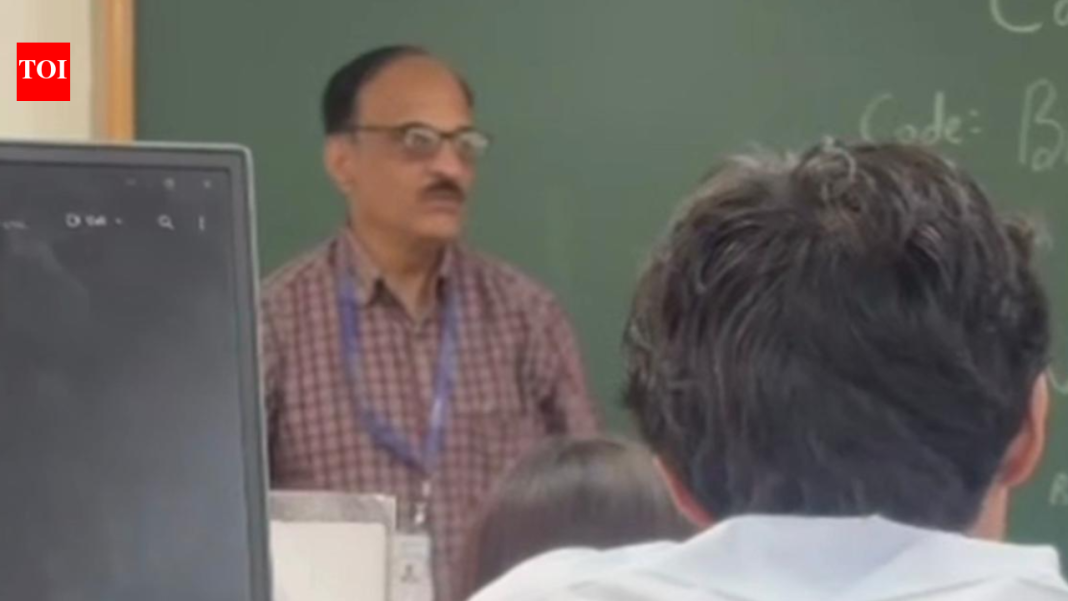
A disturbing incident at a prominent educational institution in Karnataka has ignited a crucial conversation about prejudice and the responsibility of educators. A professor, whose identity has been widely reported, was suspended after a video of him repeatedly calling a Muslim student a “terrorist” inside a classroom went viral, sparking outrage across social media platforms and beyond. The incident, recorded by the student himself, captured the professor’s aggressive interrogation, including the Hindi phrase “Sharm nahi aati tumko?” (Don’t you feel ashamed?).
The Classroom Confrontation That Went Viral
The incident unfolded during a class at the Manipal Institute of Technology (MIT), part of Manipal Academy of Higher Education. In the now-viral video, a student confronts his professor, accusing him of referring to him as a “terrorist.” The exchange quickly escalated, with the student expressing his distress and the professor initially attempting to defend his comment as a “joke.”
The student’s voice, laced with emotion, can be heard challenging the professor’s rationale. “How can you call me a terrorist?” he asks, pointing out the sensitivity surrounding the term, especially for individuals from certain communities in India. The professor, rather than immediately apologizing, continued to engage in an argument, repeatedly asking, “Sharm nahi aati tumko?” and asserting that his action was a joke, a claim the student vehemently rejected. The student highlighted the communal undertones of such a ‘joke’, stating, “Being a Muslim and calling me a terrorist… it’s not okay.” This poignant line resonated deeply with many who viewed the video, underscoring the casual prejudice often faced by minority communities.
The student’s courage in recording and sharing the incident brought immediate attention to the gravity of the situation. His insistence on an apology and his clear articulation of the harm caused by the professor’s words were pivotal in shaping the public discourse that followed.
Swift Suspension and Public Outcry
Within hours of the video surfacing, it spread like wildfire across Twitter, Instagram, and other social media platforms. Users condemned the professor’s behavior, calling for strict action from the university. Many highlighted the irony of such an incident occurring in an educational environment meant to foster respect and intellectual growth. The hashtag #Manipal began trending, with former students, alumni, and activists expressing solidarity with the student and demanding accountability.
Responding to the widespread condemnation, the Manipal Institute of Technology acted swiftly. The institution issued a statement acknowledging the incident and confirming that the concerned professor had been immediately suspended from his duties. The university also stated that a thorough inquiry would be conducted into the matter, assuring that appropriate action would be taken based on the findings. This prompt response was largely appreciated by the public, signaling the institution’s commitment to upholding its values.
For the student involved, the university has reportedly offered counselling and support. This step is crucial, as such incidents can have a lasting psychological impact on students, affecting their sense of belonging and safety within the campus environment.
Beyond the Classroom: Addressing Systemic Issues
While the immediate suspension of the professor addresses the individual misconduct, the incident has catalyzed a broader discussion about systemic issues within Indian educational institutions. It brings to light the prevalence of unconscious biases and, at times, overt prejudice that students from minority communities may encounter. The incident serves as a stark reminder that academic excellence must be complemented by an unwavering commitment to inclusivity, diversity, and empathy.
Educators, by virtue of their position, hold significant power and influence over young minds. Their words, whether intended as jokes or not, carry immense weight and can either inspire or deeply wound. This event underscores the urgent need for sensitivity training, cultural awareness programs, and robust grievance redressal mechanisms in all educational settings. It also highlights the critical role of students themselves in calling out prejudice and demanding respectful treatment, thereby fostering an environment where every individual feels valued and safe.
The suspension of the Bengaluru professor, while a necessary disciplinary action, is just one step in a longer journey towards fostering truly inclusive and equitable learning spaces. It compels institutions to look inward, examine their existing structures, and actively work towards creating environments free from discrimination and fear, ensuring that such an incident is not repeated.

