


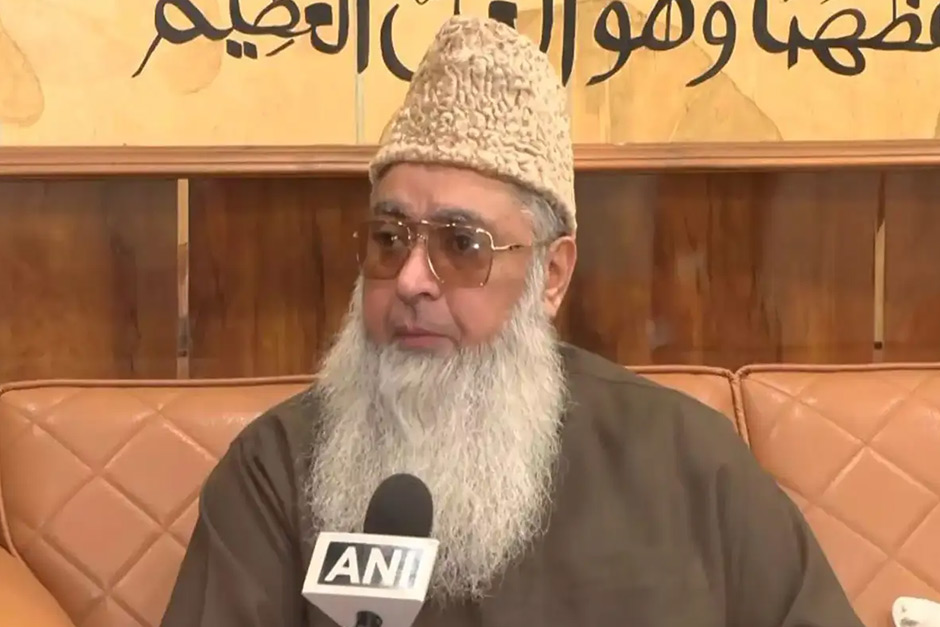
In a move that has ignited discussions across national media and social platforms, Imam Umer Ahmed Ilyasi, the Chief Imam of the All India Imam Organization, has called for Bollywood icon and Kolkata Knight Riders (KKR) co-owner Shah Rukh Khan to issue a national apology. The Imam’s strong remarks stem from KKR’s decision to include a Bangladeshi cricketer in their squad, a choice that has seemingly touched a raw nerve regarding national pride and priorities in the context of Indian sports.
The Imam’s Stance: A Call for National Apology
Imam Umer Ahmed Ilyasi’s recent statement has brought a sharp focus on the intersection of sports, nationalism, and public sentiment. Addressing the media, Imam Ilyasi minced no words, stating, “Shah Rukh Khan should apologise to the nation.” His demand is rooted in the belief that an Indian Premier League (IPL) franchise, particularly one owned by a prominent Indian figure like Shah Rukh Khan, should exercise greater discretion in player selection, especially concerning individuals from nations with whom India might have complex or perceived strained relations.
The core of the Imam’s argument appears to revolve around prioritizing Indian interests and talent within the nation’s premier sporting events. While the IPL has always been a global league attracting top talent from various countries, Ilyasi’s comments suggest a particular sensitivity surrounding players from Bangladesh. This perspective resonates with a segment of the public that believes national pride should supersede commercial or sporting considerations, particularly when it involves significant public figures and platforms.
IPL’s Global Canvas vs. National Priorities
The Indian Premier League is globally renowned for its unique blend of cricketing talent, high-octane entertainment, and substantial commercial appeal. Since its inception, the league has featured players from virtually every major cricketing nation, fostering international camaraderie and providing a global stage for cricketers. KKR, co-owned by Shah Rukh Khan, Juhi Chawla, and Jay Mehta, has historically embraced this international character, with a roster often boasting a mix of Indian and foreign stars crucial to their two IPL titles.
The selection of a Bangladeshi player by KKR aligns with the league’s established framework, which permits franchises to sign a certain number of overseas players. Teams often base their selections on cricketing merit, strategic needs, player availability, and market value. From a franchise perspective, the decision to draft any player, irrespective of nationality, is typically a purely professional one, aimed at strengthening the team and enhancing its chances of success. The Imam’s demand, however, introduces a dimension beyond pure sporting merit, questioning the morality or appropriateness of such a professional decision through a nationalistic lens. It prompts a debate on whether Indian sports franchises, despite their commercial autonomy, bear a larger responsibility towards national sentiment and diplomatic nuances.
The Broader Implications and Public Debate
Imam Ilyasi’s statement has undoubtedly sparked a wider public debate on several fronts. For Shah Rukh Khan, a figure often seen as an ambassador of Indian culture globally, such a call for apology places him in an unenviable position, caught between his role as a team owner making professional decisions and his public image as a national icon. KKR, as a franchise, now faces scrutiny over a selection that would ordinarily be considered routine within the IPL’s operational framework.
The controversy also underscores the increasing influence of non-sporting factors on major sporting events. In an era where nationalistic narratives often intertwine with cultural and commercial activities, the selection of a player from a specific country can unexpectedly become a flashpoint for broader geopolitical or public sentiment issues. While neither Shah Rukh Khan nor KKR has issued an official response to the Imam’s demand at the time of this report, the statement has certainly added a layer of complexity to the upcoming IPL season’s narrative.
As the dust settles on this controversial statement, the spotlight remains on Shah Rukh Khan and KKR, as well as the broader implications for how sports franchises navigate nationalistic sentiments in a globally connected sporting landscape. The debate highlights the intricate balance between commercial interests, sporting merit, and perceived national pride, a conversation that is far from over.

