


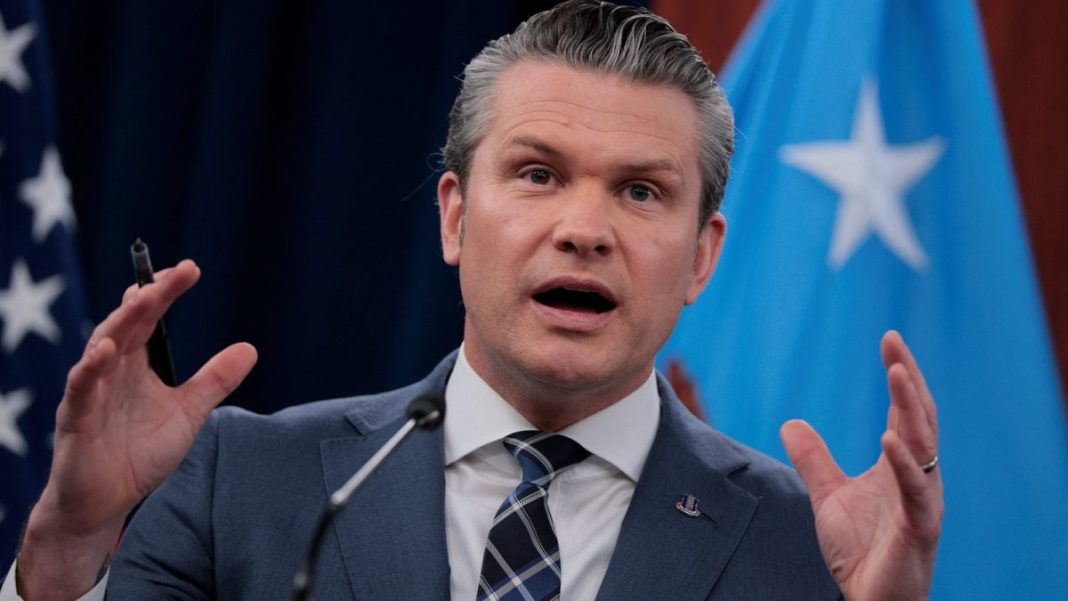
In an age dominated by instant information and hyper-connected social media, public figures find themselves under an unprecedented magnifying glass. Every utterance, every gesture, and even every poorly timed joke can be amplified globally within moments, often leading to consequences far beyond the speaker’s intent. Such was the recent (re)emergence of a particular gaffe involving American television personality and conservative commentator, Pete Hegseth, whose casual on-air remark, “Secretary of Fart,” has once again gone viral, sparking widespread amusement and discussion across digital platforms, including India’s bustling online communities.
The Podium Moment That Wouldn’t Fade
The incident in question dates back to July 2020, during a live segment of Fox News’ “Fox & Friends Weekend.” Pete Hegseth, a prominent co-host known for his conservative viewpoints, was engaged in a discussion about potential future cabinet positions for a hypothetical presidential administration. In what appeared to be an attempt at lighthearted humor or improvisation, Hegseth casually tossed out a series of unconventional, whimsical portfolio suggestions. After proposing “Secretary of Vibe,” he followed it with the undeniably bizarre and inherently crude, “Secretary of Fart.”
The comment, delivered with a straight face and seemingly without irony, immediately caused a ripple of awkwardness on set. While his co-hosts reacted with a mixture of surprise and stifled laughter, the moment was quickly clipped and shared online. Fast forward to 2024, and this particular soundbite has once again resurfaced across various social media platforms, including X (formerly Twitter), TikTok, and Reddit. Its revival highlights the enduring, almost immortal nature of digital content, where even a four-year-old verbal misstep can find new life and renewed virality, reminding the internet of its perpetual memory.
From Broadcast Blunder to Global Meme
The resurfacing of Hegseth’s “Secretary of Fart” moment has not merely been a quiet re-upload; it has ignited a fresh wave of online reactions. Social media users have responded with everything from outright bewilderment to creative mockery. Memes featuring Hegseth’s image alongside the infamous phrase have proliferated, witty captions dissecting the absurdity of the comment have gained traction, and opinion pieces have pondered the implications of such gaffes from prominent media personalities. Hashtags related to the incident quickly trended, demonstrating the collective power of online communities to transform a minor blunder into a global talking point.
In India, where political discourse is often vibrant and social media engagement incredibly high, the “Secretary of Fart” incident has also found resonance. Indian internet users, known for their sharp wit and ability to quickly adapt global trends to local contexts, have participated in the online conversation. This phenomenon underscores how digital virality transcends geographical borders, bringing distant political and media gaffes into local living rooms and smartphone screens. It serves as a reminder that regardless of origin, anything remotely humorous, absurd, or cringeworthy has the potential to become a shared cultural moment in the interconnected digital world.
The incident also sparks a broader discussion about the decorum expected from public figures, especially those in influential media roles. While some might argue it was an innocent, albeit ill-conceived, joke, others see it as a lapse in judgment that reflects poorly on the individual and the platform. “In an era where every word spoken in public is instantly scrutinized and amplified, moments like these serve as a stark reminder of the unforgiving nature of the digital spotlight,” observed one social media commentator, encapsulating the pervasive sentiment around such incidents.
The Enduring Lesson of the Digital Age
Pete Hegseth’s “Secretary of Fart” moment serves as a potent reminder of several key aspects of contemporary public life. Firstly, it illustrates the internet’s long memory and its capacity to exhume and re-contextualize past events with fresh viral energy. Secondly, it highlights the delicate balance between humor and professionalism, especially for those who shape public opinion. What might be acceptable in a casual conversation can become a public relations nightmare when broadcast to millions and then dissected by billions online.
As media consumption habits continue to evolve, and the line between formal news and informal commentary blurs, the scrutiny on public figures like Hegseth will only intensify. This incident, while seemingly trivial on the surface, offers a significant lesson for anyone in the public eye: in the digital age, every word carries the potential for monumental impact, for better or, as in this case, for all the wrong reasons.

