


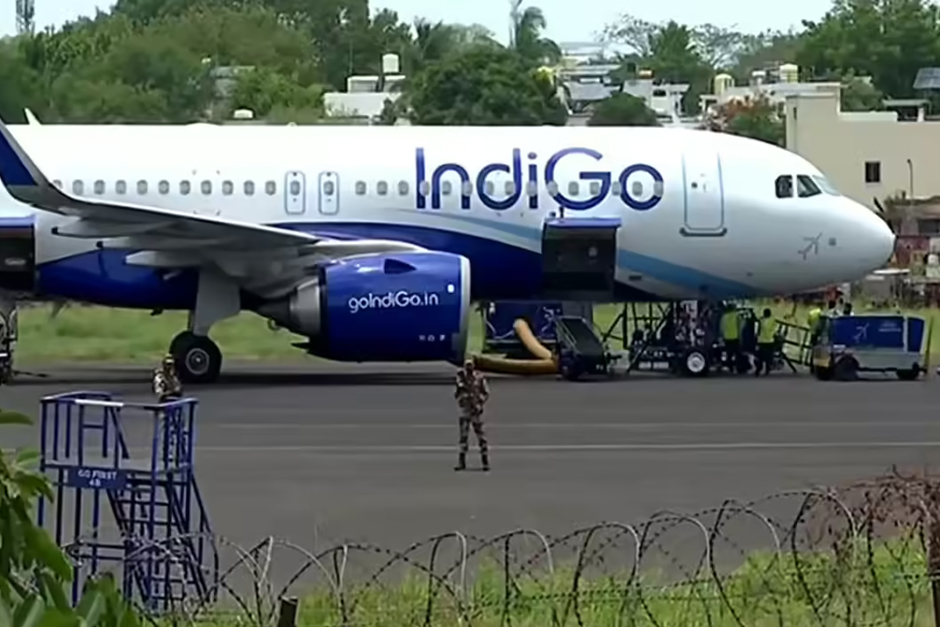
In a unsettling turn of events for Indian aviation, an IndiGo flight scheduled from Kolkata to Shillong became the subject of a bomb scare yesterday, marking the second such incident in less than 24 hours at Netaji Subhas Chandra Bose International Airport (NSCBI) in Kolkata. The latest threat, discovered in a rather unusual manner, forced a complete security protocol activation, leading to significant delays and passenger anxiety, though it ultimately proved to be a hoax.
The incident involved IndiGo flight 6E-5124, which was preparing for departure to Shillong. This follows closely on the heels of a bomb threat received via a phone call for another IndiGo flight from Kolkata to Chennai just the previous day. Both incidents underscore the persistent challenges faced by aviation security authorities in distinguishing genuine threats from disruptive hoaxes.
The Lipstick Note and Security Protocols
The alarm for flight 6E-5124 was raised when a flight attendant discovered a chilling message scrawled on the washroom mirror of the aircraft. Written in red lipstick, the note starkly stated, “Bomb @ 5:30“. The crew member immediately informed the pilot, who in turn alerted Air Traffic Control (ATC) and ground security. The aircraft, which had completed boarding and was preparing for pushback, was instantly directed to an isolation bay, a standard operating procedure for such threats.
Following protocol, all 136 passengers onboard were safely deplaned and escorted back to the terminal. Simultaneously, all checked-in baggage was offloaded and subjected to rigorous secondary screening. A multi-agency security response was swiftly initiated, involving personnel from the Central Industrial Security Force (CISF), the Bomb Detection and Disposal Squad (BDDS), and canine units trained to detect explosives. The aircraft itself underwent a thorough and meticulous search, both internally and externally, spanning several hours. Every accessible compartment, overhead bin, and cargo hold was scoured for any suspicious object. Ultimately, after comprehensive checks, no explosive device or suspicious item was found, confirming the threat to be a hoax.
A Disturbing Pattern: Aviation Security on Alert
This incident is not an isolated one, but rather part of a concerning trend impacting Indian aviation. The previous day, an IndiGo flight from Kolkata to Chennai (6E-474) faced a similar scare after authorities received a phone call claiming the presence of a bomb on board. That flight, too, was subjected to extensive searches at Kolkata before being cleared for departure. The back-to-back incidents at the same airport highlight the immense pressure on security agencies to maintain vigilance while managing the operational disruptions caused by such false alarms.
Such threats, even when proven to be hoaxes, have significant repercussions. They lead to considerable delays, cause immense stress and anxiety among passengers and crew, and divert critical security resources. The financial implications for airlines, ranging from fuel consumption during extended ground time to passenger compensation for delays, are substantial. Furthermore, they test the robustness and swiftness of airport emergency response systems, which must treat every threat with the utmost seriousness. An airport official, speaking on condition of anonymity, stated, “Every single threat, irrespective of its perceived credibility, must be treated as genuine until proven otherwise. Our priority is passenger safety, and that necessitates a full-scale deployment of resources and adherence to stringent protocols, leading to unavoidable operational delays.”
Consequences and the Road Ahead
The repeated occurrence of bomb threats, whether from phone calls or unusual notes, underscores the challenge in deterring individuals intent on causing disruption. While the immediate focus is always on ensuring safety and clearing the threat, investigations into the origin of these hoaxes are pursued with equal vigour. Spreading false alarms about bombs carries severe legal consequences under Indian law, including imprisonment and hefty fines, designed to act as a deterrent against such irresponsible acts.
For passengers, these incidents are a stark reminder of the unpredictable nature of travel and the importance of cooperating with security personnel during unforeseen circumstances. For aviation authorities and airlines, it necessitates continuous review and enhancement of security protocols, intelligence gathering, and public awareness campaigns about the serious ramifications of making false threats. As the IndiGo Kolkata-Shillong flight eventually departed after a delay of several hours, cleared for safe travel, the incident serves as another point of reflection on the constant battle against threats, both real and imagined, that aviation security must confront daily.

