


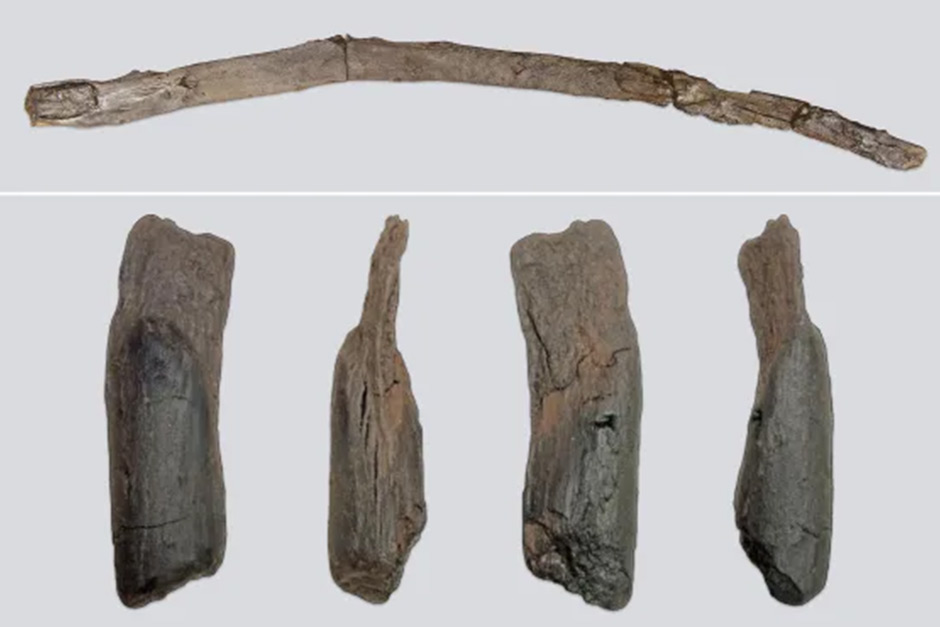
Imagine peeling back the layers of history, not with a gentle brush, but by diving into a forgotten marshland, only to pull out something that completely reshapes our understanding of human ingenuity. That’s precisely what’s happened in Greece, where scientists have unearthed the oldest wooden tools ever found. This isn’t just an archaeological find; it’s a profound whisper from our ancient ancestors, reminding us that innovation isn’t a modern concept, but a cornerstone of what makes us human.
Echoes from an Ancient Workshop
For millennia, wood has been one of humanity’s most essential resources. Yet, unlike stone or metal, organic materials rarely survive the relentless march of time. They decay, they crumble, they return to the earth. That’s why the recent discovery of incredibly well-preserved wooden tools in a waterlogged site in Greece is nothing short of revolutionary. These aren’t just fragments; we’re talking about implements that offer a tangible connection to the daily lives of people who walked the earth so long ago, their stories previously told mostly through stone and bone.
The conditions at the site—likely an ancient lakeside or marsh environment—acted as nature’s ultimate time capsule, denying oxygen the chance to break down the wood. What emerged were tools that speak volumes about early human craftsmanship. We’re talking about digging sticks, possibly spears, and other implements that would have been critical for foraging, hunting, and processing food. They represent a fundamental reliance on the immediate environment, fashioned with a surprising degree of skill and foresight. It’s a stark reminder that even with seemingly simple materials, our ancestors were master problem-solvers.
Rewriting the Manual for Early Humans
This remarkable discovery forces us to reconsider the timeline and sophistication of early human technology. Often, our mental image of “stone age” people conjures images dominated by flint axes and rock shelters. While stone tools are vital, they only tell half the story. Wood was likely just as, if not more, prevalent and versatile. These Greek tools provide concrete evidence of a rich, complex wooden toolkit that was integral to survival and advancement.
The precision and apparent design behind these ancient wooden artifacts suggest a deep understanding of material properties and their application. They weren’t just picking up a fallen branch; they were selecting, shaping, and refining wood for specific purposes. This implies a level of cognitive ability and planning that some might not readily associate with such early periods. As Dr. Elara Vance, a paleoanthropologist, mused, “These aren’t just sticks; they’re a testament to an intricate understanding of purpose and material. It’s like finding the instruction manual for ingenuity itself, written by hands we’re only just beginning to truly appreciate.” The tools tell us that early humans weren’t merely surviving; they were thriving, adapting, and innovating with remarkable ingenuity, using every resource at their disposal.
The unearthing of these wooden wonders in Greece isn’t just a win for archaeology; it’s a win for our collective understanding of where we come from. It chips away at our modern biases, revealing a more nuanced, sophisticated picture of our ancient ancestors. They built, they crafted, they innovated, using what the earth provided to shape their world. And with every such discovery, we gain a deeper appreciation for the enduring spirit of human creativity that connects us all through the ages.
What an incredible find! These tools don’t just push back the clock on human history; they illuminate the incredible resourcefulness of our forebears, proving that sometimes, the most enduring legacies are carved not in stone, but in wood.

