


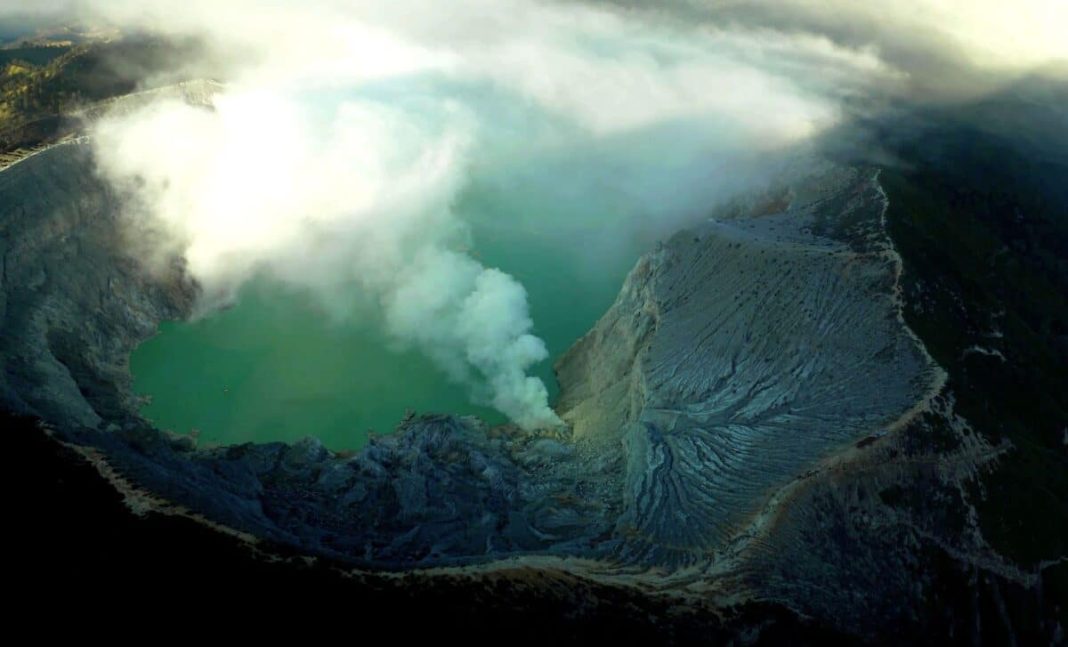
Imagine finding an ancient, colossal monument, not on land, but deep beneath the ocean’s surface, buried under a thick blanket of sediment for epochs. Now imagine that monument isn’t a forgotten city, but a slumbering giant that once spewed fire and ash – a volcano, nearly twice the age of the dinosaurs’ extinction, hidden over a mile deep. That’s precisely the breathtaking discovery scientists have just unveiled, pulling back the curtain on a 145-million-year-old behemoth of Earth’s fiery past.
Unearthing the Deep-Sea Colossus
The ocean floor is Earth’s largest and least explored frontier, a testament to time and geological forces. This latest find isn’t just any old volcanic rock; it’s a massive structure dating back to the Cretaceous period, an era when dinosaurs roamed and our continents were just beginning their slow dance towards their current positions. Buried over a mile beneath the waves, this ancient volcano has been a silent witness to countless millennia, its existence hinted at by sophisticated sonar and seismic imaging technologies that peer through the seafloor.
The sheer scale of this discovery is mind-boggling. Think about the processes required to bury something so immense. Over 145 million years, layers upon layers of marine sediment have accumulated, slowly but surely entombing this geological titan. It’s a testament to the Earth’s relentless geological cycle – the continuous deposition, compaction, and transformation of materials. Finding it now is like excavating an archaeological site not of human history, but of planetary history, offering unprecedented insights into a world vastly different from our own.
A Deep Dive into Earth’s Ancient Heartbeat
So, why is a 145-million-year-old buried volcano such a big deal? For geologists and oceanographers, it’s a treasure trove of information. Volcanoes are direct conduits to Earth’s interior, and their activity is intrinsically linked to plate tectonics – the movement of massive continental and oceanic plates that shape our planet’s surface. This ancient structure offers a unique snapshot of tectonic activity during the early Cretaceous, a period crucial for understanding the fragmentation of the supercontinent Gondwana and the formation of new ocean basins.
Moreover, volcanic eruptions, even deep-sea ones, have profound impacts on ocean chemistry and global climate. Studying the rock samples from this newly discovered behemoth could unlock secrets about ancient ocean temperatures, atmospheric composition, and even contribute to our understanding of past mass extinction events. As Dr. Elena Petrova, a marine geophysicist passionate about deep-sea discoveries, put it, “Every time we peer deeper into the ocean floor, we’re essentially looking back in time. Discoveries like this aren’t just about finding a big rock; they’re about piecing together the monumental puzzle of Earth’s dynamic history, understanding forces that shaped our world long before humans walked it.” This find truly emphasizes how much of our planet’s story remains untold, hidden just beneath our feet – or rather, beneath miles of water and sediment.
What This Means for Our Future Explorations
The unearthing of this massive, ancient volcano serves as a powerful reminder of how much remains unknown about our own planet. It highlights the incredible advancements in marine technology that allow us to peel back the layers of time and sediment, revealing geological wonders that have lain undisturbed for eons. Each such discovery doesn’t just add a data point to our scientific understanding; it sparks new questions, new hypotheses, and fuels the drive for further exploration.
From potential unique deep-sea microbial ecosystems thriving in its ancient mineral deposits to unraveling the precise mechanisms of Cretaceous plate tectonics, this buried giant promises a wealth of future research opportunities. It underscores that even in an era dominated by space exploration, the ultimate frontier might still be found in the depths of our own blue planet, waiting for us to uncover its ancient, awe-inspiring secrets.
—

