


The Earth holds many secrets within its ancient layers, and scientists are continuously developing ingenious ways to unearth them. Recent endeavors have focused on reconstructing past climate conditions, specifically ancient sea levels, to better understand our planet’s sensitivity to change. What these historical snapshots are revealing about the future of sea-level rise is prompting a significant reassessment of projections, and the insights are, in a word, sobering.
Unearthing the Planet’s Past Coastlines
For decades, researchers have pieced together Earth’s climatic history using various geological archives. This includes analyzing sediment cores drilled from the ocean floor and coastal plains, examining fossilized coral reefs, and studying unique geological formations known as ‘strandlines’ that mark ancient shorelines. These natural records act like pages in a vast, planetary diary, detailing how sea levels responded to past periods of warming and cooling.
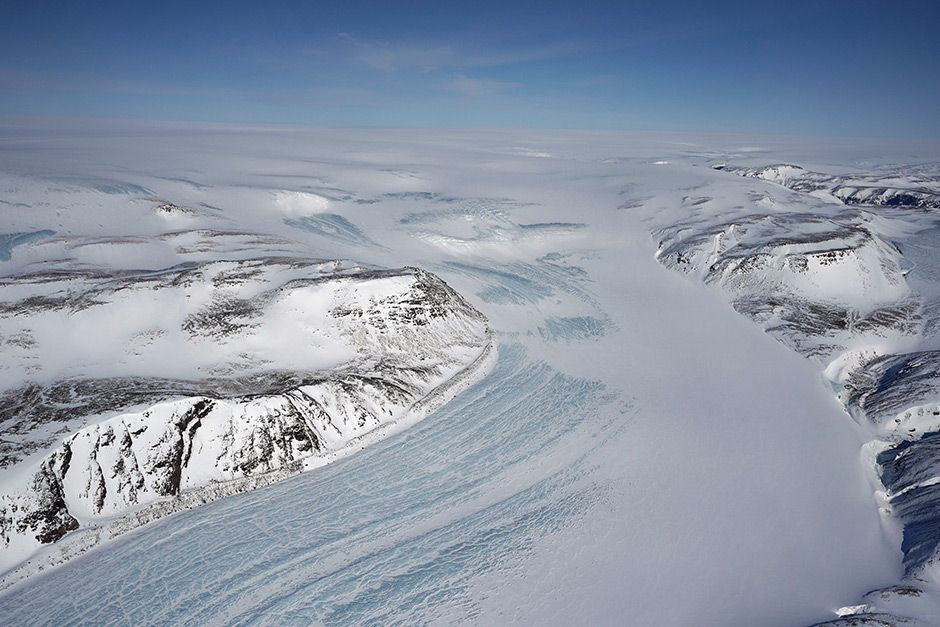
The latest findings, derived from advanced analytical techniques and broader geographical surveys, are providing an unprecedented level of detail about the rates and magnitudes of sea-level changes during specific warm periods in Earth’s history. For instance, studies focusing on past interglacial periods – natural warm phases between ice ages – are revealing that global sea levels reached significantly higher elevations than previously understood, even with temperatures only slightly warmer than today’s pre-industrial averages. Crucially, the speed at which these changes occurred in some ancient epochs indicates that major ice sheets, like those covering Greenland and Antarctica, might be more susceptible to rapid melting than current models often assume.
Implications for Future Sea-Level Projections
The past is a powerful lens through which to view the future. These newly refined historical data points are not merely academic curiosities; they are vital for calibrating and validating the complex climate models scientists use to predict future sea-level rise. By understanding how the Earth system behaved under different warming scenarios in the deep past, researchers can refine their understanding of ice sheet dynamics, ocean thermal expansion, and the intricate feedback loops that drive sea-level change.
What the ancient record suggests, and what makes the outlook “not promising,” is a potential for higher peak sea levels and possibly faster rates of rise than current conservative projections might indicate. It hints that once certain temperature thresholds are crossed, the melting of large ice sheets could accelerate, leading to a more substantial and quicker contribution to global sea levels. This isn’t about predicting an immediate catastrophe, but rather about recognizing a greater long-term challenge.
As Dr. Anya Sharma, a paleoclimatologist involved in similar research, observes, “These ancient blueprints offer a stark reminder: our planet has experienced dramatic sea-level shifts before, and understanding those past events is crucial for accurately forecasting the future. The data encourages us to re-evaluate the sensitivity of our polar ice sheets to sustained warming.” Her perspective underscores the importance of this historical context in refining our understanding of potential future pathways.
A Call for Informed Preparedness
The scientific community’s role is to provide the clearest possible picture of our planet’s future trajectory based on empirical evidence. These recent findings, while highlighting a potentially more challenging future regarding sea-level rise, offer invaluable information. They reinforce the urgency of understanding the long-term consequences of current warming trends and provide a stronger foundation for informed decision-making.
While the prospect of significant sea-level rise is undoubtedly a formidable challenge for coastal communities and ecosystems worldwide, knowing the full scope of potential change is the first step toward effective adaptation and mitigation strategies. The ancient Earth, through these newly unearthed clues, is providing a critical lesson, urging us to prepare for a future shaped by the profound dynamics of our planet’s climate system.

