


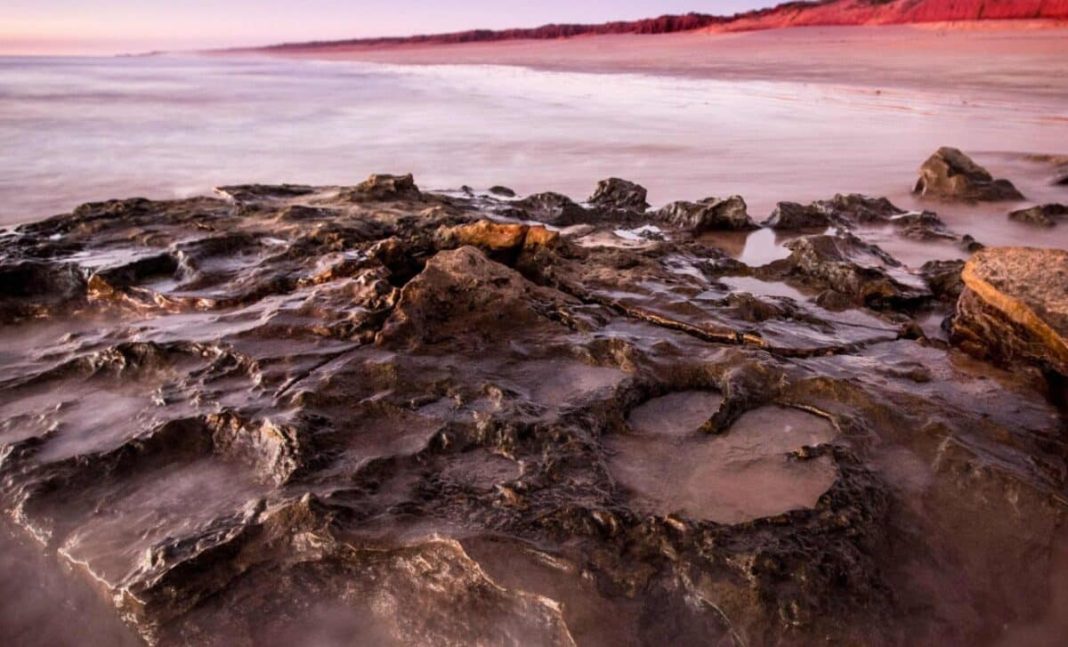
Imagine standing beside an impression in the earth so vast and deep that an adult human could comfortably disappear into it. This isn’t a scene from a science fiction movie, but a recent discovery that has captivated paleontologists and dinosaur enthusiasts alike: the finding of what scientists are calling the biggest dinosaur footprints ever unearthed. These colossal imprints offer a breathtaking glimpse into a time when true giants roamed the planet, leaving behind a legacy that continues to astonish us millions of years later.
Giants Among Us: Unearthing the Colossal Prints
The discovery site, often a remote and ancient landscape, has yielded a series of footprints that defy conventional understanding of animal size. Each print measures several meters across, with depths that truly live up to the claim of being “deep enough to swallow a grown adult.” These aren’t just shallow indentations; they are massive depressions, perfectly preserved testament to the immense weight and scale of the creature that made them. Experts believe these belong to a long-necked, long-tailed herbivore known as a sauropod—a group of dinosaurs renowned for their immense size, including well-known species like Brontosaurus and Argentinosaurus. However, the sheer scale of these particular prints suggests an individual, or perhaps an entire species, that pushed the boundaries of even these titanic animals.
The preservation of such delicate yet enormous features is a marvel in itself. Typically, these footprints are formed when a dinosaur steps into soft, muddy ground, often near an ancient water body like a lake or riverbed. Over time, layers of sediment cover the impressions, protecting them from erosion. Subsequently, these sediments harden into rock, preserving the original trackways for geological epochs. Millions of years later, erosion brings these ancient surfaces back to light, allowing scientists to piece together the movements of creatures that vanished long ago.
Beyond Size: What Footprints Reveal
While the sheer size of these footprints is undeniably impressive, their scientific value extends far beyond their dimensions. Each print is a data point, a frozen moment in time that offers invaluable insights into the life of these prehistoric behemoths. Scientists can analyze the stride length, the spacing between prints, and the depth of the impressions to estimate the dinosaur’s speed, gait, and even its weight. A series of prints, known as a trackway, can even suggest social behaviors, such as whether the animal was moving alone or as part of a herd.
Moreover, the surrounding geology and fossilized flora and fauna found at the site can paint a vivid picture of the paleoenvironment. These footprints tell us not only about the dinosaur itself but also about the world it inhabited: the type of terrain, the presence of water sources, and the climate. “Discovering prints of this magnitude and clarity is incredibly rare,” noted Dr. Evelyn Reed, a paleontologist involved in the preliminary assessment. “They’re not just big; they’re a window into the actual movements and behaviors of these ancient titans, offering clues we rarely get from fossilized bones alone.” Such detailed information is crucial for understanding the ecosystems of the Mesozoic Era and how these enormous creatures fit into them.
A Lasting Impression
The discovery of the biggest dinosaur footprints ever is more than just a headline-grabbing find; it’s a profound reminder of the incredible diversity and scale of life that has existed on Earth. These colossal imprints serve as tangible links to a distant past, inviting us to ponder the world when creatures of truly unimaginable proportions roamed the land. As research continues, these immense footprints promise to unlock even more secrets, deepening our understanding of Earth’s ancient inhabitants and ensuring that the wonder of dinosaurs continues to capture the human imagination.
The quest to understand these ancient giants is an ongoing journey, with each new discovery adding another piece to the vast prehistoric puzzle.

