


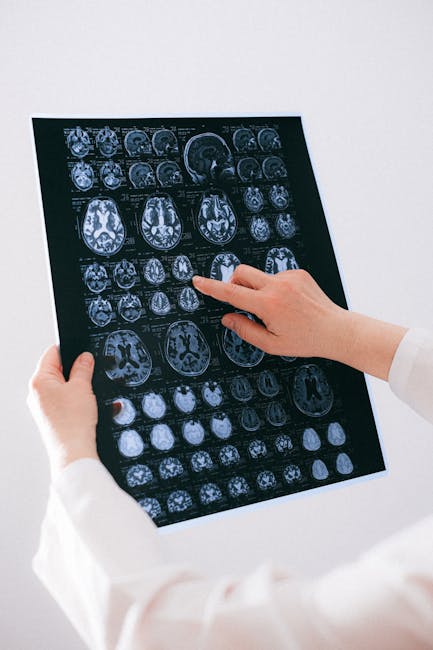
Imagine holding a key to humanity’s most complex organ – the brain – in the palm of your hand, quite literally. A recent study has unveiled a fascinating and profound connection between something as seemingly innocuous as finger length and the intricate pathways of human brain evolution. This breakthrough offers an unprecedented glimpse into the developmental origins of our unique cognitive abilities, suggesting that the very same prenatal hormonal influences shaping our digits might have played a crucial role in forging the human mind.
For decades, scientists have marvelled at the rapid expansion and complexity of the human brain compared to our primate ancestors. While genetic mutations and environmental pressures have been posited as drivers, the precise developmental mechanisms linking these evolutionary leaps remained somewhat elusive. Now, researchers are pointing to a common prenatal foundation, indicating that the journey from an ancestral brain to the modern human intellect might be subtly encoded in our fingers, providing a potent new clue in the grand narrative of evolution.
The Echo of Hormones: Decoding the 2D:4D Ratio
The core of this intriguing discovery lies in the 2D:4D ratio – the length of your index finger (2D) compared to your ring finger (4D). This ratio is not merely a random anatomical feature; it’s a known biomarker, largely determined by the balance of prenatal testosterone and oestrogen exposure in the womb. A lower 2D:4D ratio (longer ring finger relative to index finger) is typically associated with higher prenatal testosterone, while a higher ratio suggests more prenatal oestrogen.
Previous research has linked this ratio to a spectrum of traits, from athletic prowess and musical ability to cognitive styles and even certain behavioural predispositions. However, this new study delves deeper, connecting these hormonal imprints not just to existing traits, but to the very genesis of brain development pathways critical for human evolution. The study suggests that these early hormonal gradients orchestrate the development of specific brain regions, particularly the cerebral cortex, which is responsible for higher-order functions like language, abstract thought, and problem-solving – hallmarks of human cognition.
Researchers examined how genes involved in limb development, specifically those responding to sex hormones, also influence the proliferation and differentiation of neural progenitor cells – the stem cells that give rise to neurons and other brain cells. This parallelism suggests a shared developmental blueprint, where the same hormonal environment shapes both our fingers and the foundational architecture of our brains.
From Womb to Mind: Unlocking Evolutionary Pathways
The critical insight from this research is not just a correlation but a causal pathway. The study proposes that ancient genetic mechanisms, responsive to prenatal sex hormones, coordinated the growth of both distal limbs and specific brain regions in early hominins. This co-evolutionary mechanism could explain how certain brain areas, essential for human-specific cognitive functions, expanded and became more complex over millions of years.
For instance, an optimal balance of prenatal hormones might have fostered the development of a more robust prefrontal cortex, crucial for executive functions, or enhanced connectivity in regions associated with social cognition and empathy. These subtle developmental biases, accumulating over evolutionary time, could have pushed our ancestors towards greater cognitive sophistication, distinguishing them from other primates.
“This discovery offers a profound new lens through which to view human evolution, suggesting that developmental mechanisms, once thought to be separate, are intimately intertwined from the earliest stages,” explains Dr. Anjali Rao, a neurobiologist at the Indian Institute of Science in Bengaluru. “Understanding these shared pathways could unlock secrets not just about our past, but also about modern human cognitive diversity and neurological conditions.” This perspective highlights India’s growing contributions to global neuroscience, with researchers keenly observing and contributing to such fundamental studies.
Implications for Understanding Cognition and Beyond
The implications of this research are far-reaching. By identifying a common developmental origin for finger length and brain architecture, scientists gain a powerful new tool to explore the intricate relationship between genes, hormones, and cognitive development. It could shed light on why certain individuals exhibit particular cognitive strengths or vulnerabilities, and even offer insights into the developmental basis of conditions like autism spectrum disorder, which has also shown correlations with the 2D:4D ratio.
For evolutionary biologists, this study provides a concrete, measurable link to trace the developmental origins of human uniqueness. It underscores the idea that evolution often repurposes existing genetic toolkits, using them in novel ways to create new forms and functions. The elegant simplicity of a finger ratio reflecting such deep evolutionary history is a testament to the intricate dance of development and evolution.
In conclusion, the seemingly simple measurement of finger length has opened a sophisticated window into the very making of the human brain. This research from TrendLyric.com signifies a crucial step in understanding the profound developmental processes that sculpted our cognitive abilities, inviting us to look for the grand narratives of evolution in the most unexpected places – even at our fingertips. As research continues globally, including in India, such findings promise to enrich our understanding of what it truly means to be human.

