


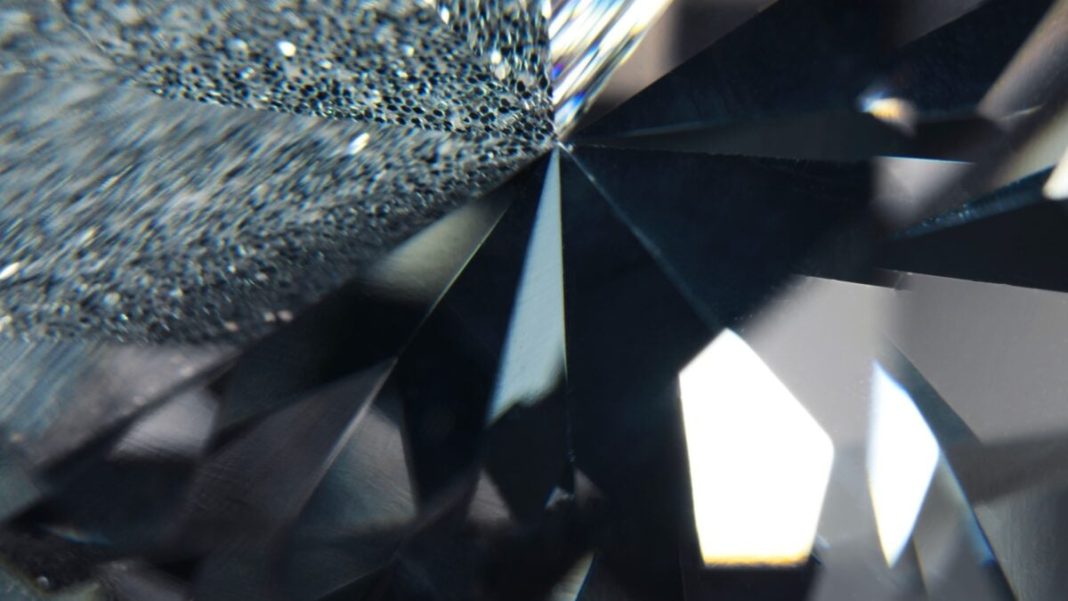
The world has long been fascinated by diamonds, not just for their dazzling beauty but for their extraordinary hardness and durability. For centuries, our understanding of this iconic material has been largely centered around its most common form: the cubic diamond, characterized by its orderly atomic arrangement. Now, a significant scientific achievement is poised to expand that understanding, as researchers announce the successful creation of the elusive hexagonal diamond.
This isn’t just about making another type of diamond; it’s about unlocking a new fundamental structure of one of the planet’s most celebrated materials. Often found in trace amounts at meteorite impact sites and theorized to exist deep within Earth, the hexagonal diamond, also known as lonsdaleite, has remained largely a scientific curiosity due to its rarity and the difficulty in synthesizing it in a controlled manner. Until now.
What Makes a Hexagonal Diamond Different?
To truly appreciate this breakthrough, it’s essential to understand the distinction. Imagine carbon atoms as tiny building blocks. In the typical diamond, these carbon atoms are arranged in a repeating pattern known as a face-centered cubic lattice. This specific arrangement gives the diamond its incredible strength and transparency.
The hexagonal diamond, or lonsdaleite, on the other hand, possesses a different architectural blueprint. Its carbon atoms are arranged in a hexagonal crystal lattice. While both structures are made of pure carbon, this subtle change in atomic alignment is profound. Think of it like two different ways of stacking bricks: one method creates a standard, incredibly strong wall, while the other, with a slightly altered stacking pattern, might yield a wall with even greater, yet different, properties.
Unlocking New Potentials
The scientific community has long theorized that lonsdaleite could possess properties that potentially surpass even those of conventional cubic diamonds. Specifically, there’s a strong belief that the hexagonal arrangement could make it even harder and more resistant to certain types of stress. This isn’t merely an academic pursuit; it has tangible implications for various industries.
Consider applications where extreme hardness and durability are paramount. From advanced cutting tools and drill bits that can tackle the toughest materials to high-performance components in electronics and aerospace, a material that could potentially outperform conventional diamonds represents a significant leap. “It’s like finding a new gear in the world of supermaterials,” observed one materials scientist, reflecting on the potential for industrial innovation.
The Science of Synthesis
Creating something as rare and specific as hexagonal diamond in a laboratory setting is a testament to sophisticated materials science. For years, the conditions required to form lonsdaleite were thought to be exceptionally extreme and difficult to control, typically associated with the immense pressures and temperatures generated during meteorite impacts.
The recent breakthrough involved meticulously replicating and controlling these extreme conditions. Researchers employed techniques that subjected carbon-rich materials to immense pressures and carefully manipulated temperatures, sometimes involving intense shear forces. By precisely controlling these variables, they were able to encourage the carbon atoms to arrange themselves into the desired hexagonal lattice, achieving a purer and more stable form of lonsdaleite than previously possible. This controlled synthesis opens doors for further study into its properties and potential large-scale production.
The successful creation of the hexagonal diamond marks a compelling chapter in materials science. It moves lonsdaleite from a rare geological curiosity to a potentially engineered material with groundbreaking applications. As scientists continue to explore its unique properties, we may soon see this elusive form of carbon reshaping our understanding of ultimate hardness and opening new frontiers in technology and industry.

