


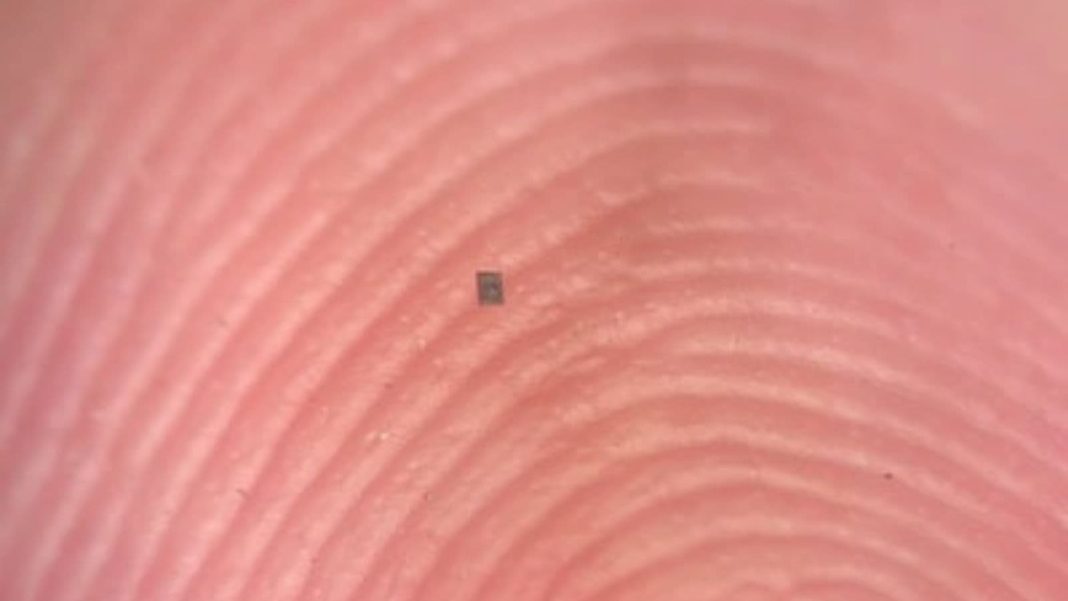
The relentless march of innovation continues to redefine what’s possible, especially in the realm of robotics. For decades, sci-fi visions have teased us with autonomous machines, but often depicted them on a grand scale. Now, a groundbreaking development is shrinking that vision to an unprecedented degree. Scientists have successfully engineered the world’s smallest autonomous robots, so minuscule they are almost imperceptible to the naked eye. This remarkable feat heralds a new era, promising to revolutionise fields from medicine to environmental science and placing India squarely at the cusp of witnessing and participating in this technological revolution.
The Dawn of Micro-Robotics: An Invisible Revolution
The term “autonomous” in robotics typically conjures images of self-driving cars or industrial automatons. However, this latest breakthrough takes autonomy to a microscopic level. These newly developed robots, measuring mere micrometers – roughly the size of a single human cell – are not only incredibly small but also possess the ability to propel themselves, navigate complex environments, and perform tasks without external tethers or constant human intervention. Their engineering relies on cutting-edge materials science and microfabrication techniques, often utilising light or chemical reactions for propulsion and intricate control systems packed into their minuscule frames.
The challenge in creating such devices lies not just in their size, but in integrating power sources, sensors, and actuators that can function independently. Researchers have harnessed principles of physics at these extreme scales, where forces like surface tension and Brownian motion play a significant role, to design systems that are both robust and agile. This level of miniaturisation was once considered impossible, pushing the boundaries of what semiconductor manufacturing and nano-engineering can achieve. It signifies a profound leap from tethered micro-devices to truly independent, intelligent micro-machines, opening up a universe of possibilities previously confined to theoretical discussions.
Unveiling Unprecedented Applications
The potential applications of these near-invisible robots are nothing short of transformative. In the medical field, they could usher in an era of precision medicine, performing tasks like targeted drug delivery directly to cancerous cells, conducting non-invasive micro-surgeries, or diagnosing diseases at their earliest stages from within the human body. Imagine tiny robots patrolling the bloodstream, identifying pathogens or repairing damaged tissues at a cellular level, minimising side effects and maximising therapeutic efficacy.
Beyond healthcare, these micro-robots hold immense promise for environmental protection. They could be deployed to detect and neutralise micro-pollutants in water bodies, monitor air quality with unprecedented accuracy, or even aid in intricate material science experiments at the atomic scale. Their ability to operate in highly confined spaces also makes them invaluable for industrial applications, such as quality control in micro-manufacturing processes or exploring inaccessible components of complex machinery. The implications are vast, promising solutions to some of humanity’s most persistent challenges.
As one leading researcher, Dr. Anya Gupta, aptly puts it, “This isn’t just a scientific marvel; it’s a paradigm shift. The ability to manipulate and interact with matter at scales previously unimaginable opens doors to solving some of humanity’s most pressing challenges, from disease eradication to environmental restoration.”
India’s Trajectory in the Micro-Robotics Era
For India, a nation rapidly advancing in science, technology, engineering, and mathematics (STEM), this breakthrough holds particular significance. With a burgeoning start-up ecosystem and robust research institutions like the IITs and IISc, India is well-positioned to not only adopt but also contribute significantly to the future of micro-robotics. The nation’s expertise in software development, AI, and data analytics can provide the crucial intelligence layer these tiny robots will need to operate effectively and autonomously.
Investments in nanotechnology research, advanced materials, and biomedical engineering are already creating a fertile ground for innovation. Indian researchers and entrepreneurs can leverage this foundation to develop bespoke applications for local challenges, such as affordable diagnostics for rural populations or innovative environmental clean-up solutions. Furthermore, the ethical considerations surrounding such powerful microscopic technologies – from privacy concerns to potential misuse – will require careful deliberation and robust regulatory frameworks, an area where India’s democratic and diverse societal structure can foster thoughtful discourse. This innovation isn’t just a global phenomenon; it’s a call to action for India to cement its place as a leader in the next generation of technological advancement.
The development of almost invisible, autonomous robots marks a pivotal moment in human ingenuity. It opens a frontier where the smallest machines can have the biggest impact, promising a future where technological solutions are integrated into the very fabric of our lives and environments. As these micro-robots transition from laboratories to real-world applications, India has a unique opportunity to shape their development and deployment, contributing to a healthier, cleaner, and more efficient world.

