


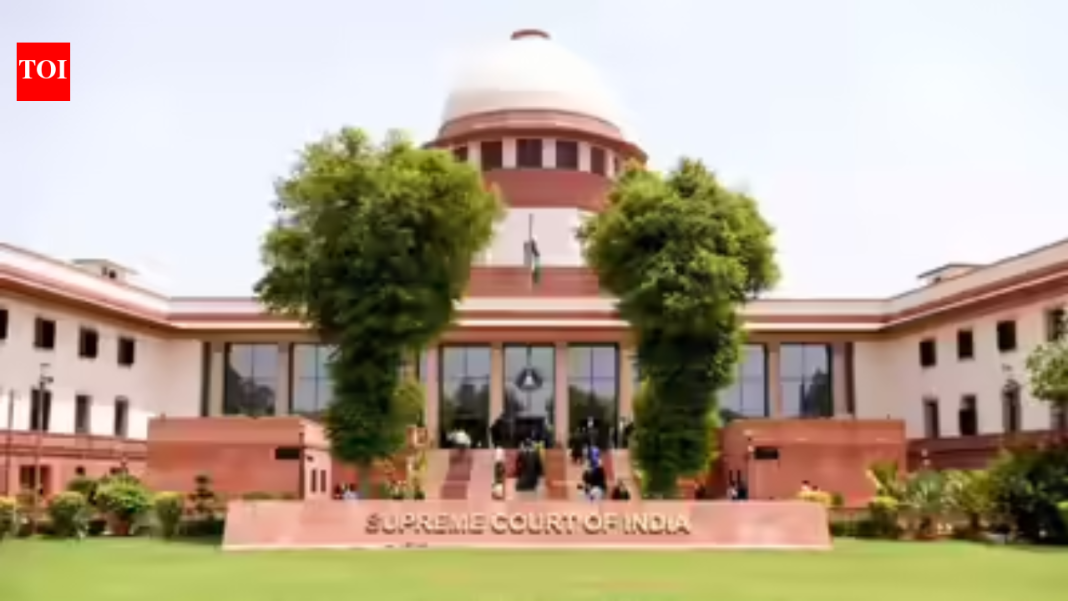
The debate around mandatory menstrual leave in India has gained significant traction following a recent observation by the Supreme Court. While a Public Interest Litigation (PIL) sought to make period leave compulsory for all working women and students across the country, the apex court expressed serious reservations, suggesting that such a mandate could potentially deter employers from hiring women, thereby having a “detrimental effect” on their employment prospects.
The Petition for Mandatory Menstrual Leave
The PIL, filed by advocate Shailendra Mani Tripathi, sought to invoke Section 14 of the Maternity Benefit Act, 1961, which provides for certain benefits to women in establishments, including during periods of illness arising out of pregnancy, delivery, premature birth of a child, or miscarriage. The petitioner argued that menstrual pain is a natural biological process for women and should be treated with the same consideration, advocating for a nationwide policy ensuring paid leave during menstruation.
Currently, while some private companies and a few state governments, notably Kerala and Bihar, have already implemented menstrual leave policies, there is no overarching central legislation. Kerala, for instance, introduced menstrual leave for female students in all state universities and also for women employees in various government departments, recognizing the physical discomfort and health issues associated with menstruation.
Proponents of mandatory menstrual leave argue that it is a crucial step towards acknowledging women’s physiological realities, destigmatizing menstruation, and promoting a more inclusive and supportive work environment. They highlight that severe menstrual pain (dysmenorrhea) can significantly impact productivity and well-being, and forcing women to work through such discomfort is counterproductive and unfair.
Supreme Court’s Stance: A Double-Edged Sword?
During the hearing on February 24, 2023, a bench led by Chief Justice of India D.Y. Chandrachud observed that while the intention behind the PIL was noble, directing employers to provide mandatory period leave could have unintended negative consequences. The Chief Justice specifically voiced concerns that such a policy might disincentivize companies from hiring women, fearing increased operational costs and potential loss of productivity. He suggested that the issue falls within the domain of policy-making and directed the petitioner to approach the Union Ministry of Women and Child Development (WCD) with their representations.
This observation from the highest court sheds light on a complex dilemma: how to balance the need for gender-sensitive workplace policies with the economic realities faced by employers. Critics of mandatory leave, aligning with the SC’s concerns, argue that it could inadvertently worsen India’s already low female labour force participation rate. Companies might perceive women as less economically viable employees due to additional leave entitlements, potentially leading to discrimination during hiring processes.
The debate is further complicated by varying socio-economic contexts. While large corporations might absorb such policies with relative ease, smaller businesses and startups, which form a significant part of India’s employment landscape, might find it challenging to implement mandatory paid leave, potentially leading to a preference for male employees.
Navigating the Path to Inclusive Workplaces
The Supreme Court’s decision to refer the matter to the WCD Ministry underscores that this is a complex policy issue requiring thorough deliberation. Any national policy on menstrual leave would need to consider a multitude of factors, including its potential impact on women’s employment, the financial implications for businesses, and the broader goal of fostering genuine workplace equality.
Finding a solution that supports women’s health without creating barriers to their career progression is paramount. “The Supreme Court’s observation brings to light the delicate balance policymakers must strike: supporting women’s health and well-being without creating unintended economic disincentives for employers. It underscores the need for a holistic approach that addresses both the physiological realities of menstruation and the realities of India’s labour market,” says Dr. Priya Sharma, a labour policy analyst. This indicates a need for careful crafting of any policy, perhaps exploring alternative models such as flexible working hours, accessible sanitary facilities, or greater awareness campaigns to destigmatize menstruation, rather than a blanket mandatory leave.
Ultimately, the discussion around menstrual leave reflects a broader societal shift towards acknowledging women’s unique health needs in the workplace. While the intention behind mandatory leave is to create a more supportive environment, the Supreme Court’s cautionary stance highlights a crucial socio-economic tightrope. The path forward for India lies in developing nuanced policies that genuinely empower women, ensuring their well-being and active participation in the workforce without inadvertently undermining their employment opportunities.

