


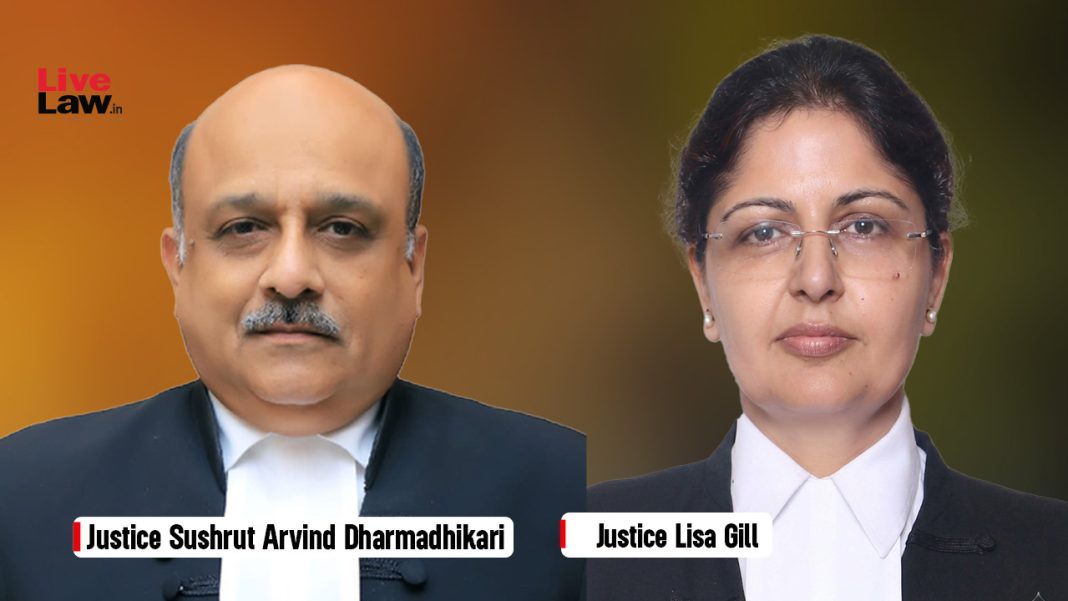
In a significant development for India’s judicial landscape, the Supreme Court Collegium has put forward key recommendations for the leadership of two prominent High Courts. Justice S.A. Dharmadhikari, currently a judge of the Bombay High Court, has been recommended for appointment as the Chief Justice of the Madras High Court. Simultaneously, Justice Lisa Gill, presently serving in the Punjab & Haryana High Court, has been proposed for transfer as a judge to the Andhra Pradesh High Court. These recommendations, once approved by the central government, will play a crucial role in shaping the administrative and judicial trajectory of these vital institutions, addressing existing vacancies and bolstering the judicial machinery in their respective jurisdictions.
SC Collegium’s Recommendations: Elevating Leadership
The Supreme Court Collegium, headed by Chief Justice of India D.Y. Chandrachud, carefully considers a multitude of factors, including merit, seniority, and regional representation, before making such pivotal recommendations. The proposal for Justice S.A. Dharmadhikari to helm the Madras High Court comes at a time when the court is functioning with an acting Chief Justice. Justice Dharmadhikari, with his extensive experience on the bench of the Bombay High Court, is poised to bring a wealth of judicial acumen and administrative expertise to one of India’s oldest and most respected High Courts. His tenure is expected to focus on expediting justice delivery, streamlining administrative processes, and upholding the high standards of judicial integrity.
Parallelly, the recommendation concerning Justice Lisa Gill marks another strategic move by the Collegium. Justice Gill, a seasoned judge from the Punjab & Haryana High Court, is slated for transfer to the Andhra Pradesh High Court. Transfers of judges between High Courts are a common practice aimed at optimizing judicial resources, ensuring balanced representation, and sometimes addressing specific needs of a High Court. Her experience from a diverse and high-volume court like Punjab & Haryana is anticipated to be a valuable asset to the Andhra Pradesh High Court, which also plays a critical role in the judicial governance of the state.
These recommendations follow a rigorous consultative process, involving detailed deliberations among the Collegium members. Once these recommendations are formally accepted by the Union Government and notifications are issued by the President of India, the appointed judges will assume their new roles, marking a new chapter for the respective High Courts.
Significance for Judicial Administration and State Jurisprudence
The appointment of a Chief Justice is a matter of paramount importance for any High Court. The Chief Justice serves not only as the head of the court’s judicial functions but also as its chief administrator, overseeing the allocation of cases, management of court staff, and implementation of judicial reforms. For the Madras High Court, Justice Dharmadhikari’s leadership is expected to bring stability and a renewed thrust on resolving pending cases, a perennial challenge across India’s judicial system. His administrative prowess will be crucial in steering the court through contemporary challenges, including the integration of technology for greater efficiency and accessibility.
Similarly, the transfer of Justice Lisa Gill to the Andhra Pradesh High Court underscores the Collegium’s proactive approach to ensuring that High Courts are equipped with experienced and capable judges. Such transfers often contribute to a richer exchange of judicial perspectives and best practices between different High Courts, thereby strengthening the national judicial fabric. A seasoned judge can significantly contribute to the existing judicial strength, offering new insights and enhancing the court’s capacity to handle complex litigation and constitutional matters effectively.
“These strategic appointments by the Supreme Court Collegium are vital for maintaining the robust functioning and administrative efficiency of our High Courts,” observed a seasoned legal analyst. “They not only fill critical leadership voids but also ensure a continuity of experienced judicial minds, which is fundamental for upholding the rule of law and public trust in the judiciary across India’s diverse legal landscape.” The seamless functioning of High Courts is indispensable for a democratic nation, as they serve as the primary appellate courts and also exercise original jurisdiction in many critical matters, including constitutional rights.
The Path Ahead for the High Courts
The Madras High Court, steeped in history and with a vast jurisdiction, requires a Chief Justice who can navigate its complexities with wisdom and resolve. Justice Dharmadhikari’s experience is expected to be instrumental in this regard, especially in promoting judicial discipline and fostering a vibrant legal environment. For the Andhra Pradesh High Court, Justice Gill’s arrival will augment its judicial strength, providing additional capacity to address its judicial workload and contribute to the evolution of jurisprudence in the state.
These recommendations highlight the ongoing efforts of the Supreme Court Collegium to ensure that India’s High Courts are led and staffed by capable judges, reinforcing the foundational pillars of justice delivery. The judiciary, being one of the three pillars of democracy, relies heavily on the quality and integrity of its leadership to uphold its mandate. The successful implementation of these recommendations will undoubtedly contribute to the enhanced functioning and public confidence in these crucial judicial institutions.

