


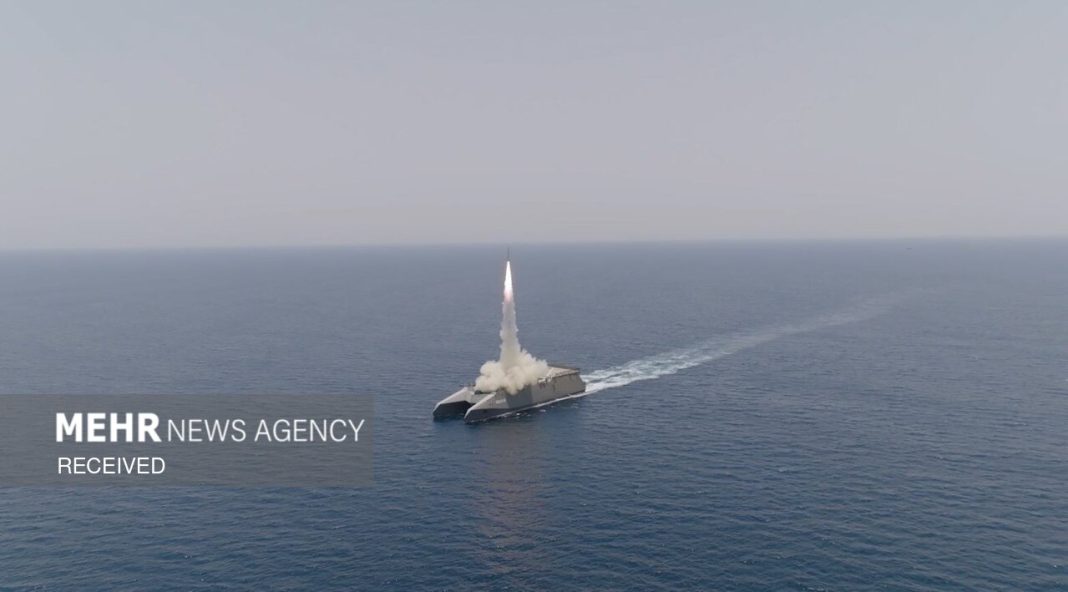
The intricate dance of geopolitical power in the Middle East is perpetually influenced by advancements in military technology. Iran, a key player in this theatre, has consistently sought to bolster its indigenous defence capabilities, particularly in naval warfare. The latest stride in this journey comes in the form of the Sayyad-3G, a new naval missile system that analysts suggest could significantly enhance the Islamic Republic’s maritime defence posture. For a nation positioned strategically along crucial global shipping lanes, such developments resonate far beyond its borders, inviting close scrutiny from regional powers and global stakeholders, including India.
Iran’s Evolving Naval Prowess: Introducing the Sayyad-3G
Iran’s defence strategy has long emphasised self-reliance, spurred by decades of sanctions and geopolitical isolation. This philosophy has led to the development of a robust domestic arms industry, capable of producing a wide array of conventional weaponry. The Sayyad series of missiles, primarily surface-to-air, represent a cornerstone of Iran’s air defence network. The introduction of the Sayyad-3G, reportedly a naval variant or an upgraded version specifically designed for maritime platforms, marks a critical evolution. While precise specifications often remain shrouded in secrecy, reports indicate this missile is intended to provide advanced air defence capabilities for Iranian warships, countering aerial threats from aircraft, drones, and anti-ship cruise missiles.
The ‘Sayyad’ designation itself, meaning ‘Hunter’ in Persian, has historically been associated with domestically produced surface-to-air missiles. Previous iterations, like the Sayyad-2, Sayyad-3, and Sayyad-4, have demonstrated Iran’s gradual progress in developing medium-to-long-range air defence systems. The Sayyad-3G is expected to build upon this legacy, likely incorporating enhanced guidance systems, improved range, and greater precision – essential attributes for defending valuable naval assets in a complex operational environment like the Persian Gulf.
The Indigenous Imperative
The development of systems like the Sayyad-3G underscores Iran’s commitment to reducing its dependency on foreign arms supplies. This ‘indigenous imperative’ is not just about national pride; it’s a strategic necessity. By developing its own advanced weaponry, Iran gains greater control over its defence strategy and operational readiness, bypassing the vulnerabilities associated with international arms embargoes and technological restrictions. This approach has allowed Iran to incrementally build a credible deterrence, especially in its maritime domain.
Dissecting the Sayyad-3G: Capabilities and Purpose
While official details are scarce, experts infer that the Sayyad-3G would likely be a medium to long-range naval surface-to-air missile (SAM). Its primary role would be to provide layered air defence for Iranian naval vessels, from frigates to larger support ships. This means it would be designed to intercept various aerial threats at different altitudes and ranges, offering a protective bubble around the fleet. The missile is anticipated to feature an advanced guidance system, potentially employing a combination of semi-active and active radar homing, allowing for greater accuracy and the ability to engage multiple targets simultaneously. Its integration onto naval platforms would likely involve vertical launch systems (VLS), a modern standard that allows for rapid firing and a 360-degree engagement capability.
The operational theatre for such a missile is predominantly the Persian Gulf and the Strait of Hormuz – a choke point through which a significant portion of the world’s oil transits. In this environment, where the presence of advanced foreign air power is a constant, robust naval air defence is paramount. The Sayyad-3G would aim to complicate any adversary’s air operations over these waters, increasing the cost and risk of engagement and thus contributing to Iran’s overall anti-access/area denial (A2/AD) strategy. Its deployment could force potential adversaries to reconsider their approach, investing more in electronic warfare and stealth technologies to penetrate Iranian air defences.
Regional Implications and India’s Watchful Eye
The introduction of any new advanced weapon system in the Middle East invariably ripples through the region’s complex geopolitical landscape. For India, a nation with significant strategic and economic interests in the region, such developments are observed with keen interest. India maintains historical ties with Iran, including collaborations like the Chabahar Port project, which offers a vital gateway for Indian trade to Afghanistan and Central Asia. The stability of the Persian Gulf and the security of its shipping lanes are critical for India’s energy security, as a substantial portion of its crude oil imports traverse these waters.
The Sayyad-3G, by enhancing Iran’s naval air defence capabilities, could contribute to a perception of stronger deterrence in the region. However, it also adds another layer of complexity to an already volatile environment. From an Indian perspective, while indigenous defence development by any nation is understandable, the overarching goal remains regional stability and freedom of navigation. An escalation of an arms race, or any development that could potentially disrupt maritime trade, is a cause for cautious observation.
As one geopolitical analyst recently remarked, “The Sayyad-3G is more than just a missile; it’s a statement of self-sufficiency and strategic intent. Its true impact will be measured not just by its technical prowess, but by how it reshapes perceptions of power and risk in the Persian Gulf.”
In conclusion, the Sayyad-3G represents a significant step in Iran’s continuous efforts to modernize its armed forces and strengthen its naval defence capabilities. While specific details remain largely speculative, its emergence signals Iran’s growing indigenous technological capacity. For India and other global powers, understanding the capabilities and implications of such systems is crucial for navigating the evolving strategic currents of the Middle East and ensuring continued regional stability.

