


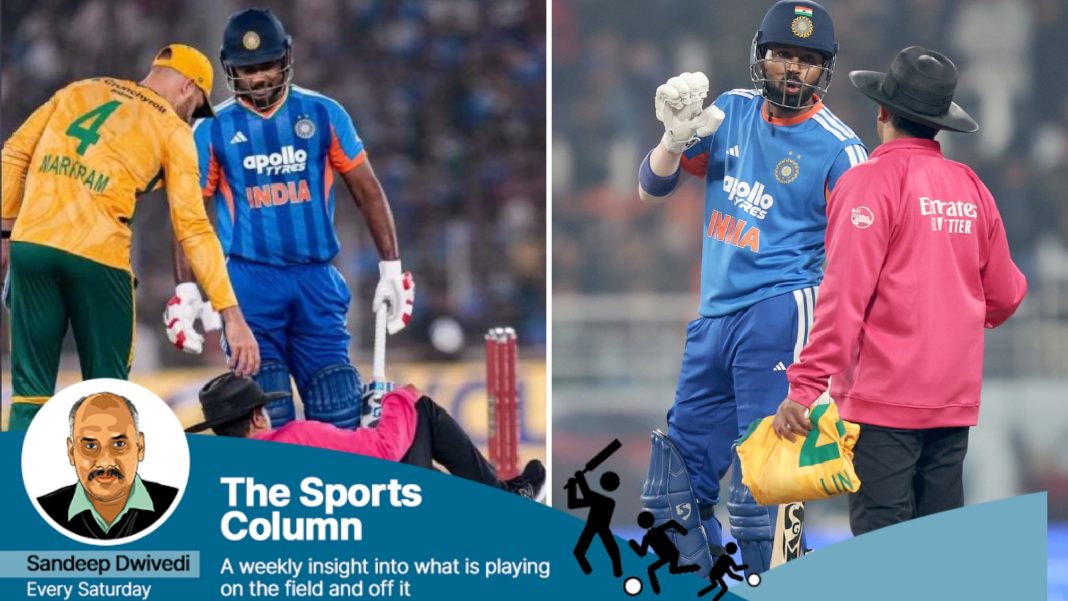
Cricket has always been a game of exhilarating highs and intense competition. In its modern avatar, particularly with the advent of T20 leagues, the spectacle has amplified manifold. Boundaries are shrinking, bats are getting bigger, and cricketers are evolving into powerhouses capable of hitting the ball with unprecedented velocity. While fans revel in the sixes raining down from the likes of India’s prodigious talents like Sanju Samson and the dynamic all-rounder Hardik Pandya, there’s a growing, often overlooked, concern that warrants urgent attention: the safety of the umpires. These custodians of the game, standing mere yards from the crease, are increasingly at risk from rockets off the bat, raising critical questions about their protection from hard-hitting modern batsmen.
The Rising Velocity: A Modern Hazard
The transformation of cricket into a high-octane sport has brought with it an undeniable shift in batting styles. Gone are the days when batsmen primarily focused on touch and placement; the modern game demands brute force and boundary-clearing ability. Players like Sanju Samson, known for his effortless power, and Hardik Pandya, with his explosive hitting, embody this evolution. These athletes, leveraging advanced training, superior fitness, and technologically enhanced bats, consistently launch balls that travel at speeds exceeding 150 km/h in a fraction of a second. Umpires, positioned at the bowler’s end, often have less than a second to react to a straight drive or a powerful flick, a blink-and-you-miss-it timeframe that is proving increasingly insufficient for safety.
Several incidents, though not always widely reported, highlight this alarming trend. Umpires have been struck on various parts of their bodies, resulting in injuries ranging from minor bruises to serious fractures and concussions. These near-misses, and sometimes direct hits, serve as stark reminders of the perils of standing in the firing line. The sheer force with which the ball departs the bat means even glancing blows can be debilitating, potentially ending careers or, worse, causing long-term health issues. The visual thrill for spectators translates into a very real physical threat for those officiating the game.
Existing Safeguards and the Imperative for Innovation
Currently, umpires wear some protective gear, primarily shin guards and often a cap or helmet, especially in the shortest formats. While these offer a degree of protection against stray balls or deflections, they are largely inadequate against a direct, full-blooded hit from a modern power-hitter. The front-on impact of a ball traveling at peak velocity can easily bypass or overwhelm the existing padding. Unlike fielders or batsmen, who have the luxury of anticipation and sometimes greater distance, the umpire’s position is inherently vulnerable and fixed for much of the delivery.
The International Cricket Council (ICC), as the sport’s global governing body, holds the primary responsibility for ensuring the safety of all participants, including umpires. While player safety protocols have evolved significantly, umpire protection seems to have lagged. The discourse around potential solutions often includes enhanced protective equipment, such as more robust, lightweight helmets and body armour similar to what baseball umpires wear, though tailored for cricket’s specific demands. However, any solution must also consider the umpire’s need for mobility and an unobstructed view of play, crucial for making accurate decisions.
As a veteran umpire recently observed, “The intensity of hitting has changed dramatically. We love the game, but the governing body needs to ensure that passion doesn’t come at the cost of our physical well-being. A small adjustment in gear can make a world of difference.” This sentiment underscores the urgent need for a proactive approach rather than a reactive one following a major incident.
Charting a Safer Course: The Road Ahead
Protecting umpires from the escalating power of modern cricket requires a multi-faceted approach. Beyond improved personal protective equipment, the ICC could explore technological interventions. For instance, advanced sensor technology could assist in automated no-ball calls, potentially allowing umpires at the bowler’s end to take slightly safer positions without compromising decision accuracy. Furthermore, greater emphasis on player awareness regarding umpire positioning, though difficult to enforce in the heat of the moment, could also play a small role.
Ultimately, the conversation needs to move beyond mere acknowledgement to concrete action. Cricket’s appeal lies in its dynamic nature, but that dynamism should not come at the expense of its most critical officials. Investing in umpire safety is not just about preventing injuries; it’s about upholding the integrity of the game and ensuring a healthy, secure environment for everyone involved. As the game continues to evolve, so too must its commitment to safeguarding those who make it possible, guaranteeing that umpires can officiate with confidence, free from the shadow of potentially devastating injury from the sport’s most powerful hitters.

