


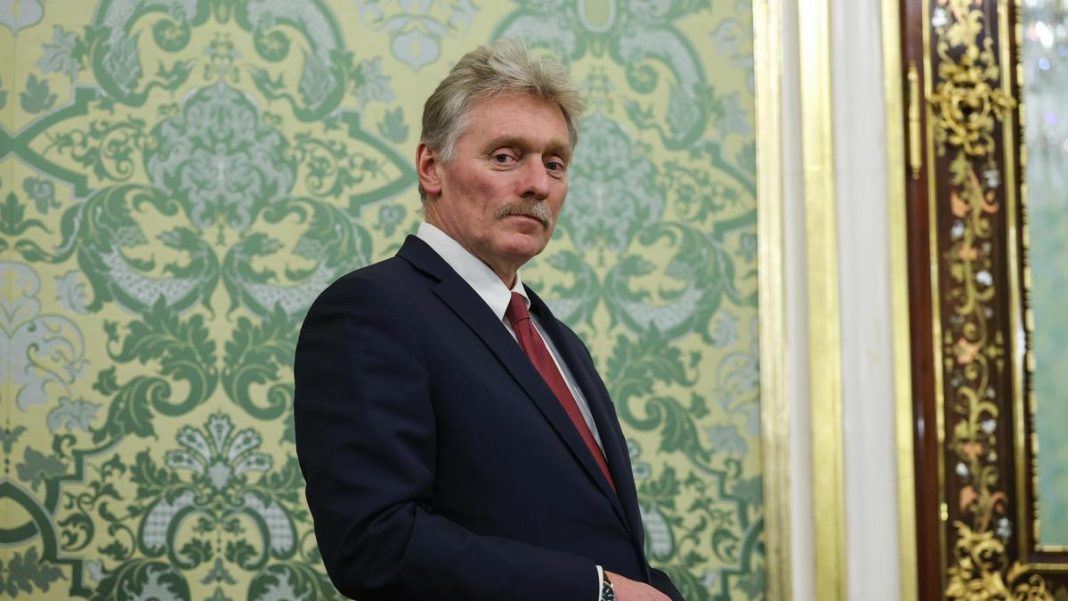
In an increasingly complex global economic landscape, Russia has reiterated its strong commitment to bolstering trade ties with India, despite facing what it terms ‘obstacles’ created by third countries. Kremlin Spokesperson Dmitry Peskov’s recent statement underscores a resolute intent from Moscow to deepen its economic engagement with New Delhi, a development closely watched by international observers and of particular relevance to India’s strategic autonomy and energy security.
Deepening Bilateral Trade Amidst Global Headwinds
The relationship between India and Russia has historically been characterised by strong strategic and defence cooperation. However, in the wake of geopolitical shifts, particularly since early 2022, economic ties have taken on a new dimension. Western sanctions imposed on Russia have prompted Moscow to pivot eastward, finding a willing and strategic partner in India, a nation steadfast in its commitment to a multi-polar world order and its own national interests.
India, as the world’s third-largest oil importer and consumer, found a crucial opportunity to secure discounted crude oil from Russia, significantly enhancing its energy security. This shift has led to Russia becoming India’s top oil supplier, a dramatic change from its pre-2022 standing. Beyond energy, the two nations have explored increased cooperation in sectors such as fertilisers, diamonds, pharmaceuticals, and defence equipment, reflecting a mutual desire to diversify their trade basket.
The ‘obstacles’ alluded to by Peskov are widely understood to be the indirect pressures and sanctions-related complexities emanating primarily from Western nations. These include challenges in payment mechanisms, shipping logistics, and insurance, which have compelled both India and Russia to devise innovative solutions. India’s adherence to its independent foreign policy has allowed it to navigate these pressures, prioritising its energy needs and economic growth over external dictates.
Navigating Challenges: Innovations in Economic Cooperation
To circumvent the hurdles posed by traditional financial systems, India and Russia have actively explored and implemented alternative payment mechanisms. Discussions around rupee-rouble trade, and the use of local currencies for transactions, have gained significant traction. While a universally smooth mechanism is still evolving, the intent to create resilient financial channels remains strong, aiming to reduce dependence on the U.S. dollar and other Western-controlled systems.
Logistical challenges, particularly for bulk commodities like oil, have also necessitated innovative approaches. Both countries are increasingly looking at enhancing the viability and usage of the International North-South Transport Corridor (INSTC), a multi-modal network of ship, rail, and road routes for moving freight between India, Russia, Iran, Europe, and Central Asia. This corridor holds the promise of significantly reducing transit times and costs, offering a more direct and sanctions-resilient trade route.
As Kremlin Spokesperson Dmitry Peskov recently underscored, “Despite the illegitimate pressure and obstacles created by third countries, Russia remains firmly committed to enhancing its economic cooperation with India. We are actively working with our Indian partners to develop robust, mutually beneficial trade mechanisms that bypass these artificial barriers.” This statement highlights Moscow’s determination to foster a long-term, sustainable economic partnership with India, built on mutual trust and strategic alignment.
For India, deepening trade with Russia is not merely about opportunistic buying but a strategic move to diversify its supply chains and maintain its foreign policy independence. It ensures access to critical resources and technology while opening new markets for Indian goods and services. The ongoing efforts reflect a pragmatic approach by both nations to strengthen their bilateral economic resilience against a backdrop of global volatility.
The unwavering focus from Moscow on expanding trade with New Delhi, despite the intricate challenges, signals a robust and evolving partnership. Both nations are demonstrating a clear intent to forge new pathways for economic engagement, reflecting a shared vision for a more diversified and independent global trade architecture. This collaboration is not just about overcoming current obstacles but laying the groundwork for a more resilient and integrated economic future for India and Russia.

