


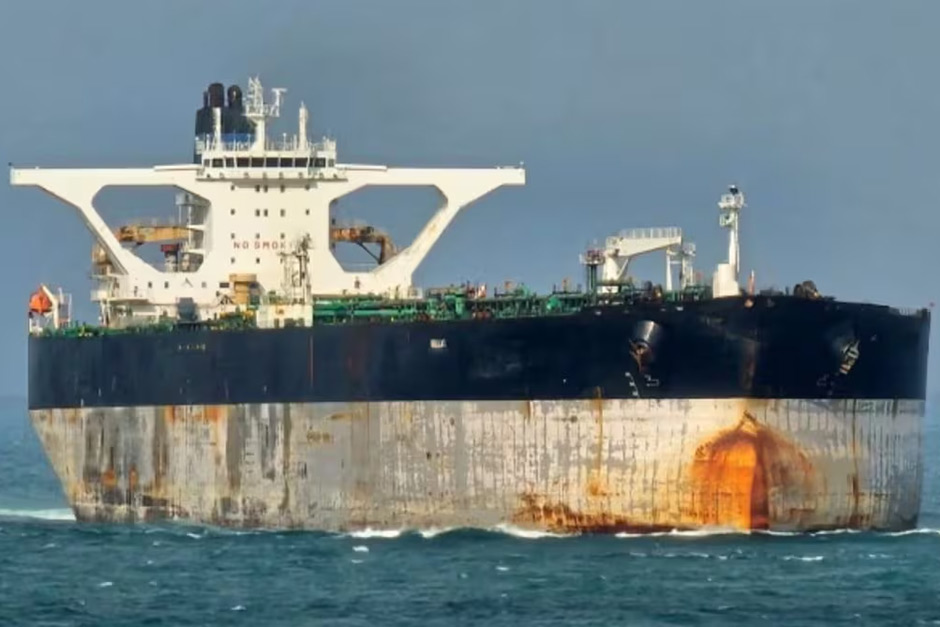
A recent development off the coast of Venezuela has once again brought global geopolitical tensions into sharp focus, showcasing a high-stakes maritime standoff between major powers. Reports indicate that Russia has deployed a submarine to escort an oil tanker, believed to be carrying Venezuelan crude, amidst surveillance and pursuit by U.S. naval assets. This intricate dance of naval power in the Caribbean highlights not only the enduring rivalry between Washington and Moscow but also the complex interplay of energy security, sanctions, and national sovereignty that reverberates across the international stage, including its implications for nations like India.
The Caribbean Chessboard: A New Maritime Confrontation
The incident unfolds against a backdrop of severe U.S. sanctions targeting Venezuela’s state-owned oil company, PDVSA, aimed at pressuring the government of President Nicolas Maduro. Russia, a staunch ally of Venezuela, has consistently supported Caracas, providing economic aid, military equipment, and political backing. The current situation involves a Russian nuclear-powered submarine, reportedly a Project 971 Shchuka-B (NATO reporting name: Akula-class), accompanying an oil tanker navigating international waters off the Venezuelan coast. This move is seen as a direct challenge to the U.S. efforts to isolate Venezuela economically and prevent its oil from reaching global markets.
The U.S. has maintained a robust naval presence in the Caribbean, citing counter-narcotics operations and freedom of navigation. However, the close shadowing of the Russian-escorted tanker by U.S. destroyers and surveillance aircraft clearly signals an intent to monitor and potentially interdict vessels violating sanctions. This deployment of a submarine by Russia, a significant show of force, elevates the encounter beyond mere surveillance, transforming it into a clear act of strategic signalling. It underscores Russia’s commitment to its allies and its willingness to project power far from its traditional spheres of influence, even in regions considered strategically vital by the United States.
For Russia, ensuring the delivery of Venezuelan oil, whether for its own consumption or for onward sale to other nations, is crucial for both economic and political reasons. It demonstrates Moscow’s ability to circumvent sanctions and support friendly regimes, while simultaneously asserting its naval capabilities on a global scale. The operation also serves as a reminder of Russia’s modernized military, capable of operating effectively in distant waters and presenting a credible challenge to Western naval dominance.
Geopolitical Undercurrents and Energy Stakes
This maritime confrontation is more than just an isolated incident; it’s a microcosm of broader geopolitical struggles. Venezuela possesses the world’s largest proven oil reserves, making its energy sector a critical battleground in international politics. U.S. sanctions aim to cut off the Maduro government’s primary source of revenue, while Russia’s support seeks to maintain a strategic foothold in Latin America and challenge U.S. hegemony.
The involvement of a submarine adds a layer of complexity and potential escalation. Submarines are designed for stealth and deterrence, making their overt deployment in an escort role a powerful message. It communicates a non-negotiable intent to protect assets and interests, potentially risking a direct confrontation should an attempt be made to interfere with the tanker. This creates a precarious situation, where miscalculation by either side could have unforeseen consequences for global stability and energy markets.
The implications for global energy markets are also significant. Any disruption to oil flows, even from a sanctioned nation like Venezuela, can impact supply dynamics and price stability. For major oil importers like India, such developments are closely watched. While India has its own complex relationship with Venezuelan oil, often navigating sanctions carefully, the principle of undisturbed maritime trade routes is paramount for its energy security.
India’s Gaze: Balancing Acts in a Volatile World
For India, this distant standoff carries relevant geopolitical implications. As a nation with significant strategic partnerships with both the United States and Russia, New Delhi often finds itself navigating a delicate balance. India’s energy security is heavily reliant on global oil supplies, making any event that could destabilize energy markets a matter of concern. Furthermore, as an emerging global power, India champions a rules-based international order and freedom of navigation, principles that are inherently challenged by such assertive naval deployments and sanction enforcement outside traditional legal frameworks.
The incident off Venezuela underscores the increasing complexities of a multipolar world, where traditional alliances are sometimes tested by evolving geopolitical realities. India’s approach typically advocates for peaceful resolution of disputes through dialogue and adherence to international law, rather than through military posturing.
“Such incidents in distant waters serve as a potent reminder of the fragility of global stability and the need for all parties to exercise restraint,” observes Dr. Priya Sharma, a New Delhi-based foreign policy analyst. “For countries like India, which depend heavily on a stable international environment for their economic growth and strategic interests, it underscores the importance of a diplomatic resolution to geopolitical rivalries and adherence to established norms of international law.”
The broader takeaway for India is the continuous need to diversify its strategic partnerships and energy sources, strengthening its resilience against external shocks. It also reinforces India’s role in advocating for a global order where adherence to international law and peaceful dispute resolution takes precedence over unilateral actions or coercive diplomacy.
The Russian submarine’s deployment to escort a tanker amidst U.S. pursuit off Venezuela is a vivid illustration of ongoing global power dynamics. It’s a high-stakes game of geopolitical chess with implications for international law, energy security, and the delicate balance of power. As the world watches, the outcome of this particular maneuver will undoubtedly shape future interactions in contested waters and further define the contours of the international order that nations like India are keen to influence towards stability and shared prosperity.

