


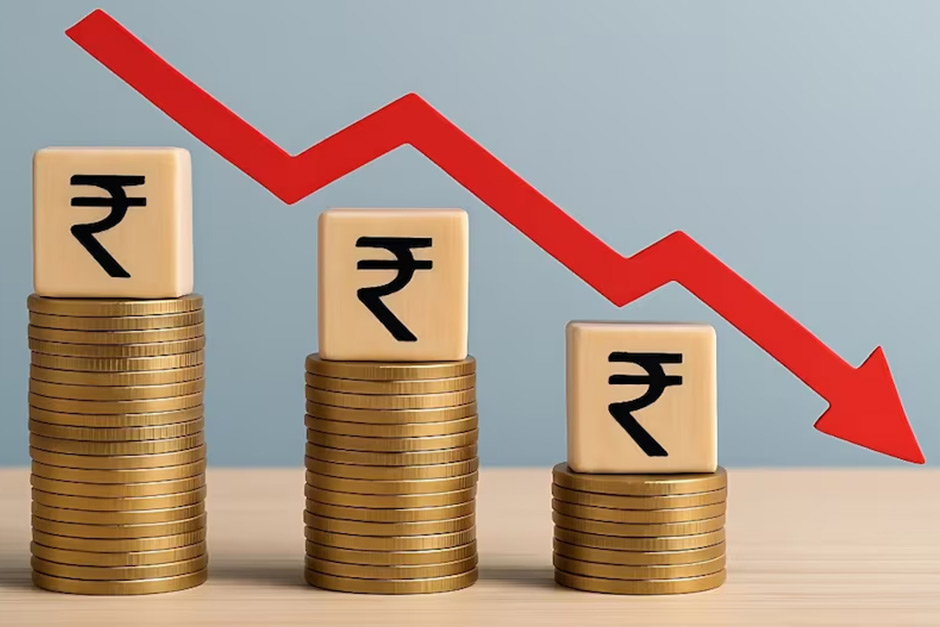
The Indian Rupee kicked off early trade on a weaker note, depreciating by 8 paisa against the US dollar. This movement saw the domestic currency settle at 90.98, reflecting immediate pressures in the foreign exchange market. While an 8-paisa movement might seem minor in absolute terms, it underscores the persistent volatility and the various global and domestic factors influencing the Rupee’s trajectory, particularly as it edges closer to the psychological 91-mark.
Understanding the Early Trade Dip
The early morning dip in the Rupee can be attributed to a confluence of factors that typically dictate currency movements. Primarily, a strengthening US dollar on the global front often puts pressure on emerging market currencies like the Rupee. The dollar index (DXY), which measures the greenback’s strength against a basket of six major currencies, is a crucial indicator to watch. Any upward momentum in the DXY, driven by robust US economic data or hawkish sentiments from the Federal Reserve, tends to translate into Rupee weakness.
Domestically, demand for dollars from importers, particularly oil marketing companies, often creates immediate selling pressure on the Rupee. India remains a significant importer of crude oil, and rising global oil prices necessitate more dollars to meet these import bills. Furthermore, any significant outflow of foreign institutional investment (FII) from Indian equity or debt markets can also lead to increased dollar demand and, consequently, Rupee depreciation. The early trade data often captures the market’s reaction to overnight global developments and the initial sentiment among traders and corporate treasuries.
Global Headwinds and Domestic Dynamics Shaping the Rupee
Beyond the immediate trade movements, the Rupee’s valuation is a complex interplay of broader global trends and India’s economic realities. Globally, the ‘higher for longer’ interest rate narrative from the US Federal Reserve continues to bolster the dollar, attracting capital away from riskier emerging markets. Geopolitical tensions, particularly in the Middle East and Eastern Europe, also tend to push investors towards safe-haven assets like the US dollar, further accentuating the pressure on currencies like the Rupee.
On the domestic front, India’s trade deficit remains a critical determinant. A widening gap between imports and exports means greater demand for foreign currency to pay for imported goods, putting downward pressure on the Rupee. While India’s robust economic growth narrative and strong foreign exchange reserves offer some resilience, sustained depreciation could pose challenges. The Reserve Bank of India (RBI) often intervenes in the forex market, selling dollars to stem sharp depreciatory moves, aiming to curb volatility rather than target a specific exchange rate.
“The Rupee’s current stance reflects a delicate balance between India’s domestic economic resilience and prevailing global uncertainties,” noted Dr. Anjali Sharma, an independent economist based in Mumbai. “While the RBI has ample reserves to manage excessive volatility, the long-term trajectory will depend significantly on global commodity prices, US monetary policy, and sustained capital inflows into India.”
Corporate dollar demand for capital goods imports and foreign debt repayments also contributes to the continuous need for the greenback, adding to the structural pressure on the Rupee.
Implications for India and the Road Ahead
A depreciating Rupee has multifaceted implications for the Indian economy. For one, it makes imports more expensive. This is particularly concerning for essential commodities like crude oil, edible oils, and electronics, which can lead to imported inflation, affecting household budgets and corporate input costs. Conversely, it theoretically makes Indian exports more competitive, as foreign buyers can purchase more goods with the same amount of their currency. However, this benefit is often tempered by weak global demand or other trade barriers.
Indian companies with unhedged foreign currency debt also face higher repayment costs in Rupee terms, potentially impacting their profitability and balance sheets. For foreign investors, a weakening Rupee erodes their returns when repatriating profits, potentially influencing future investment decisions.
Looking ahead, market participants will keenly watch several key indicators. The trajectory of global crude oil prices, decisions from the US Federal Reserve regarding interest rates, and the flow of foreign institutional investments into Indian markets will be paramount. Domestically, India’s inflation trajectory and the RBI’s monetary policy stance will also play a crucial role in shaping the Rupee’s movement. While 90.98 is the current benchmark, a breach of the 91-mark could trigger further technical selling, necessitating careful monitoring and potential intervention from the central bank to maintain stability.
The Rupee’s journey is a continuous reflection of these intricate global and domestic forces, demanding a vigilant approach from policymakers and market players alike to navigate its path effectively.

