


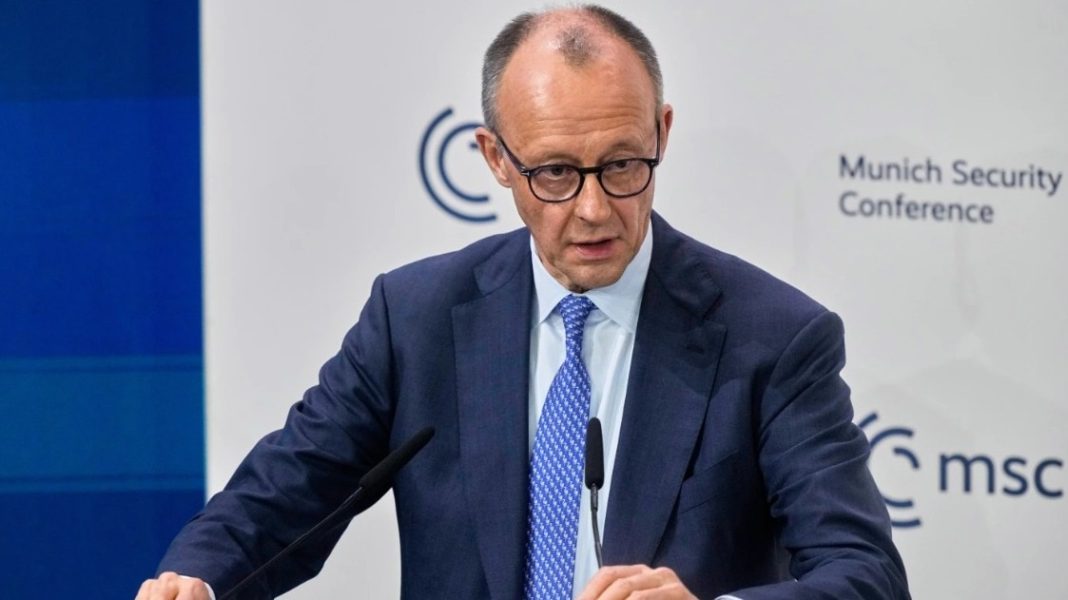
The global geopolitical landscape appears to be undergoing a profound transformation, with long-held assumptions about international relations increasingly challenged. Adding a significant voice to this evolving discourse, German Chancellor Friedrich Merz recently issued a stark warning, declaring that the “rules-based world order no longer exists.” This pronouncement, made amidst escalating international tensions and a discernible shift in global power dynamics, resonates particularly strongly in nations like India, which have historically championed multilateralism and a stable global framework.
For TrendLyric.com readers, Chancellor Merz’s statement is not merely a European observation but a reflection of a sentiment gaining traction worldwide. It suggests a departure from the post-Cold War era, where a relatively predictable international system, underpinned by established norms and institutions, guided state behaviour. The implications of such a fundamental shift are vast, touching upon everything from trade and security to climate action and human rights, requiring nations to reassess their foreign policy priorities and strategic engagements.
Chancellor Merz’s Stark Assessment
Chancellor Merz’s declaration underscores a growing perception that the foundational pillars of the international system are eroding. While he didn’t elaborate on specific incidents in his widely reported remarks, his perspective likely stems from a confluence of factors. The protracted conflict in Ukraine, for instance, has demonstrated the vulnerability of international law and sovereign borders to military aggression. Beyond this, the intensification of strategic competition between major powers, particularly the United States and China, has strained global institutions and fractured traditional alliances.
Furthermore, the rise of protectionist tendencies, challenges to global trade mechanisms like the WTO, and the weaponization of economic dependencies contribute to this sense of disorder. The COVID-19 pandemic also exposed significant gaps in global cooperation and highlighted national self-interest over collective action in times of crisis. Merz’s caution can be interpreted as a call to acknowledge a more raw, power-driven reality. As he reportedly stated, “The illusion of a stable, predictable global order built on shared values has been shattered. We are now in an era where power dynamics are reasserting themselves, demanding new approaches to security and diplomacy from all nations.” This sentiment signals an urgent need for adaptation in international policy.
Navigating a Disordered World: India’s Strategic Imperative
For India, a rising global power with significant strategic autonomy, Chancellor Merz’s warning presents both challenges and a reinforcement of existing foreign policy principles. India has consistently advocated for a multi-polar world, but one that is nevertheless governed by international law and a reformed multilateral system. The erosion of a rules-based order could complicate its efforts to maintain strategic balance and promote its national interests.
In this evolving environment, India’s emphasis on diversified partnerships, rather than exclusive alliances, becomes even more critical. Relationships with the Global South, its engagement with regional groupings like BIMSTEC and the SCO, and its sustained dialogue with major powers like the US, Russia, and the EU, reflect a pragmatic approach to navigating a less predictable world. Economically, the focus on supply chain resilience and reducing vulnerabilities is also paramount. India’s G20 presidency, which championed the voice of the Global South and sought consensus on pressing global issues, stands as a testament to its commitment to finding common ground even as the international system fractures.
Opportunities and Challenges for Global Governance
While Chancellor Merz’s statement paints a bleak picture, it also implicitly highlights the urgent need for renewed efforts in global governance. The absence of a clear rules-based order does not equate to the absence of the need for cooperation on shared challenges like climate change, pandemics, and nuclear proliferation. These issues transcend national borders and demand collective action, regardless of geopolitical rivalries.
For India, this environment offers an opportunity to play a more proactive role in shaping new norms and institutions, rather than merely adhering to old ones. Its unique position as a bridge between developed and developing nations, coupled with its democratic values and economic heft, places it in a strong position to advocate for a more equitable and inclusive global framework. The challenge, however, lies in forging consensus in an increasingly fragmented world, where trust is low and national interests often diverge sharply. Merz’s warning serves as a clarion call for introspection and proactive engagement from all responsible global actors to prevent a descent into unbridled chaos.
The global stage is undeniably shifting, and Chancellor Merz’s candid assessment underscores the gravity of the moment. For India, and indeed for the world, understanding and adapting to this new reality will be crucial for fostering stability and progress in the years ahead.

