


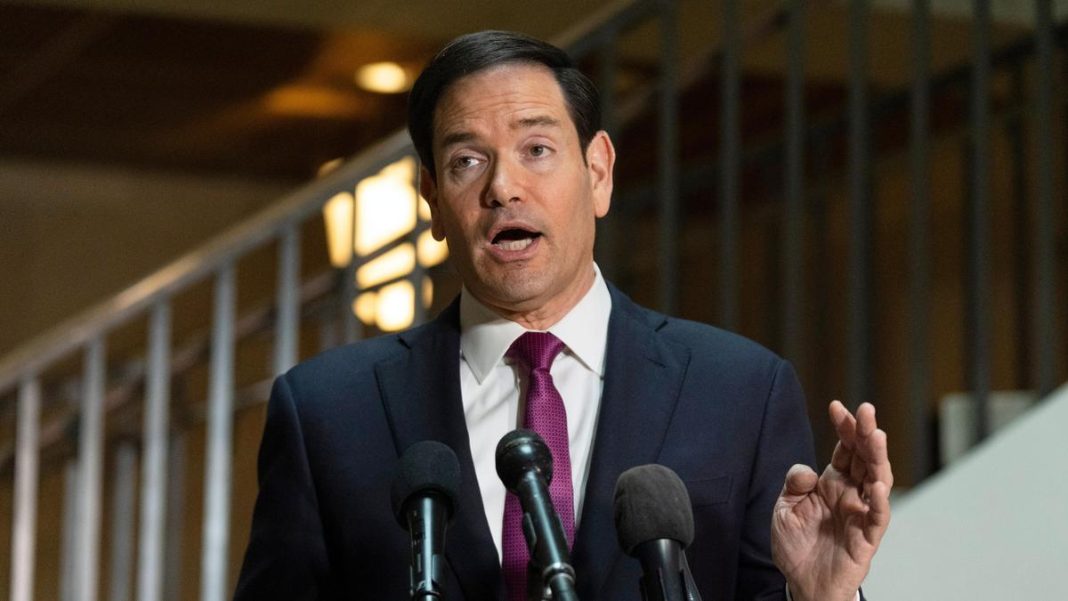
The Middle East, a crucible of geopolitical tension, routinely presents a complex tapestry of alliances and rivalries. For India, a nation with deep economic and strategic interests in the region, understanding these intricate dynamics is paramount. A recent assertion by U.S. Senator Marco Rubio has added another layer to this complexity, suggesting a direct causal link between Israel’s strategic planning and U.S. military actions directed at Iran. This claim underscores the intertwined destinies of key regional players and the global powers that shape their interactions, warranting close attention from New Delhi.
The Senator’s Assertion: Unpacking a Complex Claim
According to reports, Senator Marco Rubio, a prominent voice in U.S. foreign policy circles, has indicated that Israel’s strategic plans for a potential strike against Iranian facilities or assets played a significant role in triggering U.S. military responses or heightened confrontational postures towards Iran. While the precise nature of these “strike plans” and “U.S. attacks” requires careful contextualization, Rubio’s statement points to a scenario where U.S. actions were not solely independent retaliations but were influenced by a need to manage or preempt a broader conflict initiated by an Israeli move.
This perspective suggests that Washington, in an effort to either deter a larger regional war or to manage the consequences of an Israeli preemptive action against Iran’s nuclear program or its extensive network of proxies, found itself compelled to take specific measures against Tehran. The long-standing tensions between Israel and Iran, fueled by Iran’s nuclear ambitions, its ballistic missile program, and its support for groups like Hezbollah and Hamas, have frequently placed the region on edge. Israel views Iran as its existential threat, making any perceived progress in Iran’s military capabilities a red line. Such a volatile environment often leads to a complex web of strategic calculations, where the actions of one actor can directly or indirectly compel responses from others.
Senator Rubio’s remarks echo a sentiment of difficult choices and interconnected foreign policy. As he once stated regarding past diplomatic efforts, “We had to choose between an Israeli military strike and a bad nuclear deal.” This quote, though referring to a different context, captures the essence of how potential Israeli military action against Iran can dictate the parameters of U.S. engagement, whether through diplomacy or direct confrontation, to avoid a wider conflagration.
India’s Balancing Act: Stakes in Regional Stability
For India, the implications of such tightly coupled U.S.-Israeli actions concerning Iran are significant. India maintains robust diplomatic and economic ties with all major players in the Middle East, including the U.S., Israel, and Iran. This delicate balance is crucial given India’s extensive interests in the region.
Economically, India is heavily reliant on Middle Eastern oil and gas imports, making regional stability a cornerstone of its energy security. Any escalation, particularly one involving Iran, could disrupt crucial shipping lanes, drive up global crude prices, and severely impact India’s economy. Furthermore, millions of Indian expatriates work across the Gulf nations, sending vital remittances back home. Their safety and well-being are paramount, and any conflict could lead to mass evacuations and humanitarian crises, posing immense logistical and social challenges for India.
Strategically, India views the Chabahar Port in Iran as a gateway to Afghanistan and Central Asia, bypassing Pakistan and offering significant trade and connectivity advantages. The port’s development is a testament to India’s independent foreign policy and its commitment to regional connectivity. Tensions that escalate into military confrontation risk undermining these strategic investments and isolating India from key regional partners.
Implications for Future Diplomacy and De-escalation
Rubio’s assertion, if widely accepted, adds a layer of complexity to future diplomatic efforts to de-escalate tensions in the Middle East. It suggests that U.S. actions are not merely reactive but are also shaped by the perceived imperatives of its closest regional ally, Israel. This dynamic could make it harder for the U.S. to pursue an independent path of engagement or de-escalation with Iran without considering its ripple effects on Israeli security doctrines.
For the international community, including India, understanding these nuanced triggers is essential for advocating effective pathways to peace. New Delhi has consistently called for dialogue, diplomacy, and the peaceful resolution of disputes in the region. The interconnectedness highlighted by Rubio’s statement underscores the urgent need for comprehensive regional security frameworks that address the legitimate concerns of all stakeholders, promoting stability over confrontation.
Ultimately, the Middle East remains a geopolitical chessboard where every move has profound consequences. Senator Rubio’s claim serves as a stark reminder of the intricate linkages that bind the fates of nations, emphasizing the need for global powers to act with foresight and caution to prevent a cascading series of events that could plunge the region into deeper turmoil.

