


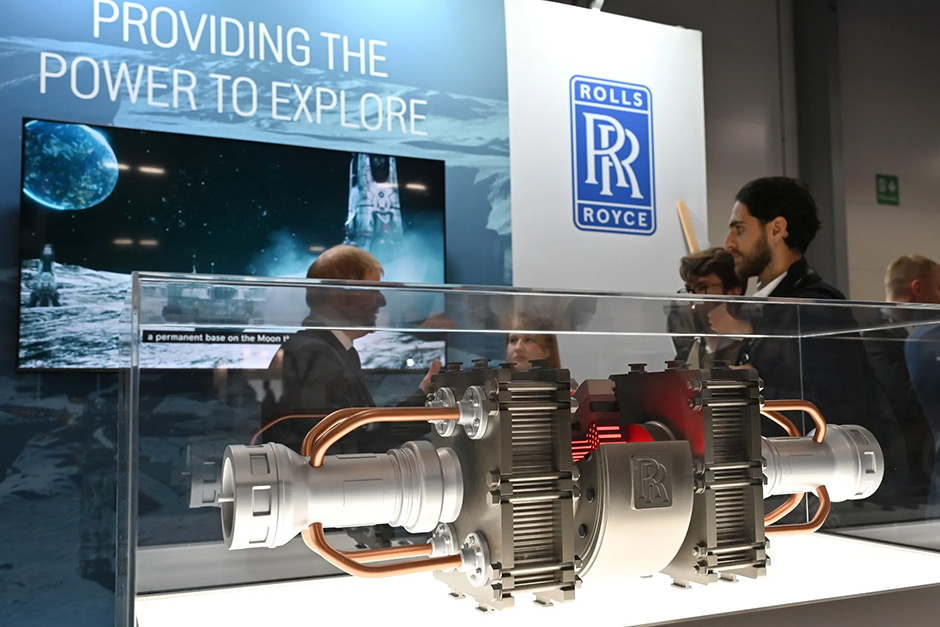
The ambitious dream of powering a permanent human presence on the Moon with a mini nuclear reactor, spearheaded by British engineering giant Rolls-Royce, has hit a significant snag, according to recent reports from The Telegraph. This development sends ripples across the international space community, highlighting the immense technological and financial hurdles that accompany the quest for lunar colonisation. For nations like India, with its rapidly accelerating space programme, such setbacks offer a valuable perspective on the complexities of deep-space endeavours.
The Vision of Lunar Power and Its Grounding Reality
For years, the concept of a self-sustaining lunar base has captivated scientists and futurists alike. A crucial component of this vision is a reliable, long-term power source. Rolls-Royce, renowned globally for its engineering prowess in aerospace and power systems, emerged as a key player in this pursuit. The company had been developing a micro-reactor designed to operate on the Moon, capable of generating continuous electricity vital for sustaining human outposts, charging rovers, and powering scientific experiments through the Moon’s prolonged, frigid nights.
The proposed reactor was envisioned to be compact, robust, and capable of operating autonomously in the harsh lunar environment. Such a system would offer a significant upgrade over existing solar power solutions, which are limited by lunar day-night cycles and susceptible to dust and extreme temperatures. Initial backing from the UK Space Agency, including a research grant of £2.9 million, signalled a strong governmental interest in positioning Britain at the forefront of lunar power technology.
However, The Telegraph now reports that this promising initiative has stalled. The primary reason cited appears to be a lack of further government commitment and funding beyond the initial research phase. Without sustained investment, the highly complex and capital-intensive project faces an uncertain future. This halt underscores the precarious nature of such frontier projects, where ambitious technological leaps often depend heavily on consistent, long-term financial and political support.
India’s Prudent Path in the Global Space Race
While Western nations grapple with funding and technological bottlenecks for such ambitious projects, India’s space agency, ISRO, has been steadily making its mark through a strategy often characterized by its cost-effectiveness and pragmatic approach. The success of missions like Chandrayaan-3, which achieved a historic soft landing near the Moon’s south pole in August 2023, has firmly established India as a serious contender in lunar exploration.
India’s approach has been incremental, focusing on demonstrating core capabilities before venturing into more complex, long-term habitation goals. While ISRO’s immediate plans do not include deploying a nuclear reactor on the Moon, the challenges faced by projects like Rolls-Royce’s offer crucial lessons. They highlight the sheer magnitude of the engineering and logistical hurdles involved in establishing a permanent human presence off-Earth, especially concerning energy generation.
The global race to the Moon is not just about planting flags; it’s about establishing sustained presence, which fundamentally relies on energy independence. This situation prompts reflections on various power solutions, from enhanced solar arrays with advanced storage to radioisotope thermoelectric generators (RTGs), which India could explore or contribute to in future collaborations. As Dr. Rakesh Singh, a Bengaluru-based aerospace analyst, commented on the broader implications, “The Moon is a harsh environment, and reliable power is non-negotiable for sustained human presence. While setbacks are part of pioneering work, they also push us to innovate and consider diverse solutions, perhaps even collaborative ones that leverage different nations’ strengths.”
Looking Ahead: The Enduring Quest for Lunar Sustenance
The stalling of Rolls-Royce’s lunar nuclear reactor project is undoubtedly a setback for those envisioning a nuclear-powered Moon. It is a stark reminder that even with immense technical expertise, pioneering space projects demand monumental resources and sustained political will. However, it does not diminish the ultimate goal of establishing a long-term human presence on our celestial neighbour.
The international space community will continue its pursuit of robust lunar power solutions. This could involve exploring alternative designs for micro-reactors, investing further in advanced solar and energy storage technologies, or fostering international partnerships to pool resources and expertise. For India, with its demonstrated prowess in cost-effective space missions and a growing ambition for human spaceflight, there is an opportunity to learn from these developments and potentially contribute to the global effort in finding sustainable power for the Moon. The journey to the stars, it seems, is still very much powered by earthly decisions and persistent innovation.

