


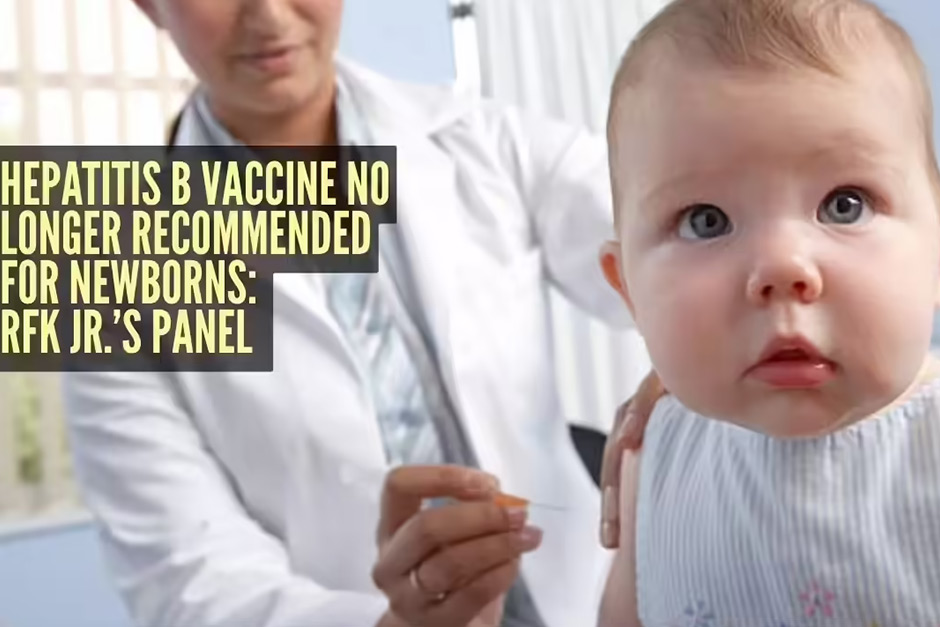
In the realm of global public health, vaccine recommendations are meticulously crafted based on extensive scientific research and epidemiological data. Any proposed shift often sparks significant discussion. Recently, Robert F. Kennedy Jr.’s Children’s Health Defense panel made headlines by advocating for an end to the routine Hepatitis B vaccine recommendation for newborns. This development, while stemming from an advocacy group rather than a mainstream public health body, prompts an important re-examination of what Hepatitis B is, why its vaccine is universally recommended for infants, and its particular significance in countries like India.
Understanding Hepatitis B: A Silent Threat in India
Hepatitis B is a viral infection that attacks the liver and can cause both acute and chronic disease. The virus is transmitted through contact with the blood or other body fluids of an infected person. In India, like many parts of the world, Hepatitis B poses a substantial public health challenge. The prevalence varies across states, but studies indicate a significant burden, with millions of carriers, many unknowingly living with the infection. Chronic Hepatitis B can lead to severe liver conditions, including cirrhosis, liver failure, and hepatocellular carcinoma (liver cancer), often decades after the initial infection.
One of the most concerning transmission routes, particularly relevant to the newborn vaccine discussion, is mother-to-child transmission (MTCT). An infected mother can transmit the virus to her baby during childbirth. Without intervention, up to 90% of infants born to Hepatitis B positive mothers will develop chronic infection. These babies often become asymptomatic carriers for life, silently spreading the virus and facing a high risk of developing severe liver disease later in adulthood. This makes birth-dose vaccination a critical intervention.
The Newborn Hepatitis B Vaccine: India’s Stance and Global Consensus
Globally, and emphatically in India, the Hepatitis B vaccine is considered a cornerstone of public health, especially for newborns. The World Health Organization (WHO) strongly recommends the administration of a birth dose of the Hepatitis B vaccine within 24 hours of birth, followed by a complete vaccination series. This recommendation is echoed by leading health organizations worldwide, including the U.S. Centers for Disease Control and Prevention (CDC) and India’s Indian Council of Medical Research (ICMR) and the Ministry of Health and Family Welfare.
In India, the Hepatitis B vaccine was introduced into the Universal Immunization Programme (UIP) in a phased manner starting in 2002 and was expanded nationwide by 2011. The birth dose is crucial because it provides immediate protection against mother-to-child transmission, which is responsible for a significant proportion of chronic infections. Even if a mother’s Hepatitis B status is unknown at the time of birth, administering the vaccine as a universal precaution ensures maximum protection. The vaccine is highly effective and has an excellent safety profile, having been administered to billions worldwide over several decades.
Dr. Rakesh Singh, a senior paediatrician in Delhi, emphasizes the vaccine’s importance: “The Hepatitis B birth dose is a non-negotiable step in preventing lifelong illness. We’ve seen a dramatic reduction in chronic Hepatitis B rates in children since its introduction. To suggest otherwise undermines decades of robust scientific evidence and puts future generations at undue risk, especially in regions like India where the disease burden remains significant.”
Decoding RFK Jr.’s Panel’s Stance: A Controversial Perspective
Robert F. Kennedy Jr., known for his advocacy against certain vaccine mandates and his leadership of the Children’s Health Defense, and his affiliated panel, have voiced opposition to the routine newborn Hepatitis B vaccine recommendation. Their arguments typically revolve around concerns about vaccine ingredients, the perceived lack of immediate necessity for all newborns (especially if the mother’s Hepatitis B status is negative), and a broader skepticism towards the current vaccination schedule. They often suggest that the vaccine can be delayed or administered selectively.
It is crucial to understand that this stance from RFK Jr.’s panel is not aligned with mainstream medical consensus or the established public health policies of virtually any national or international health authority. Public health experts counter these arguments by highlighting that the benefits of universal newborn vaccination far outweigh any theoretical risks. Testing every mother for Hepatitis B at birth is not always feasible, especially in diverse settings, and even with testing, delays in vaccination can lead to missed opportunities for critical protection. Furthermore, the vaccine’s safety has been rigorously established.
The global strategy to eliminate Hepatitis B relies heavily on high vaccination coverage, particularly the birth dose. Undermining this recommendation could have severe public health repercussions, potentially leading to a resurgence of the disease and an increase in chronic infections, liver disease, and liver cancer in future generations.
The Hepatitis B vaccine for newborns remains a vital public health intervention, particularly in countries like India with a notable disease burden. While discussions around public health policies are always valuable, it is imperative that such conversations are grounded in established scientific evidence and supported by recognized medical and public health bodies. For parents navigating a sea of information, trusting the recommendations from national health authorities like India’s Ministry of Health and Family Welfare, backed by global consensus, is paramount for ensuring the well-being of their children.

