


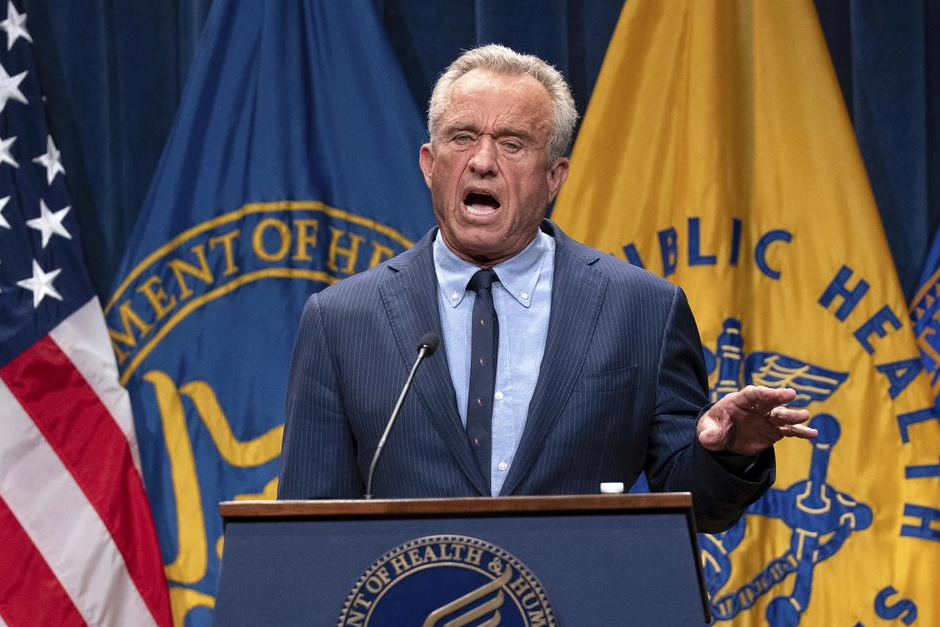
The very thought of Robert F. Kennedy Jr. at the helm of the Centers for Disease Control and Prevention (CDC) sends a shiver down the spine of many public health advocates, scientists, and even a significant portion of the general public. It’s a hypothetical scenario that, if it were to become reality, would undoubtedly unleash a seismic shift in how public health is perceived and practiced in America. The most immediate and profound concern? The massive, unprecedented platform it would inadvertently hand to the anti-vaccine movement.
The Bedrock of Public Health Science
The CDC’s mission is unequivocally rooted in science, data, and evidence-based recommendations. It’s the nation’s premier public health agency, tasked with protecting Americans from health threats, conducting critical research, and providing guidance that underpins national health policy. Its credibility rests on an unwavering commitment to scientific consensus and rigorous epidemiological study. Now, consider RFK Jr.’s public record: a long history of promoting vaccine skepticism, questioning the safety and efficacy of established vaccines, and propagating theories often debunked by the scientific community.
The fundamental incompatibility here isn’t just a difference of opinion; it’s a clash of worldviews at the most critical level. Placing someone with such a history in charge of an institution whose core function is to champion and disseminate scientific health information would be akin to appointing a climate change denier to lead the EPA. It wouldn’t merely be controversial; it would challenge the very principles upon which modern public health is built, sowing seeds of doubt where clarity and trust are paramount.
An Unprecedented Platform for Doubt
Imagine the headlines. Picture the ripple effect. If RFK Jr. were to lead the CDC, his personal views, previously confined to podcasts, interviews, and public rallies, would suddenly gain the imprimatur of the federal government’s leading health authority. This isn’t just about personal expression; it’s about official endorsement, whether intended or not. Every public statement, every policy shift, even every silence, would be interpreted through the lens of his well-documented skepticism.
This position would not only elevate his voice but would legitimize the entire anti-vaccine narrative in a way nothing else could. Millions of people, unsure of what to believe in an information-saturated world, might suddenly find their doubts amplified by the head of the very agency meant to dispel them. As one seasoned public health researcher privately put it, “It’s not just about a difference of opinion; it’s about potentially dismantling decades of public trust in vaccination programs from within. The implications for preventable diseases would be dire, not just for COVID-19, but for measles, polio, and so many others.”
Eroding Trust and Global Repercussions
The damage wouldn’t be limited to vaccine confidence. The erosion of trust would likely extend to other critical public health initiatives, from disease surveillance to environmental health, from dietary guidelines to emergency preparedness. If the CDC is perceived as compromised on a core scientific issue, why would the public trust its guidance on anything else? This loss of faith could have devastating long-term consequences for national health outcomes.
Furthermore, the CDC is a global leader, often guiding international health policy and emergency responses. An RFK Jr.-led CDC would undoubtedly diminish America’s standing in the global health community, complicating collaborative efforts and potentially creating dangerous inconsistencies in international health messaging. Other nations look to the CDC for scientific leadership; if that leadership is perceived as unmoored from scientific consensus, the ripple effect would extend far beyond our borders.
The hypothetical appointment of RFK Jr. to lead the CDC is more than just a political hot potato; it represents a profound threat to the integrity of public health science and the collective well-being of the nation. It would transform a trusted scientific institution into an unwilling amplifier of vaccine skepticism, with consequences that could resonate for generations.

