


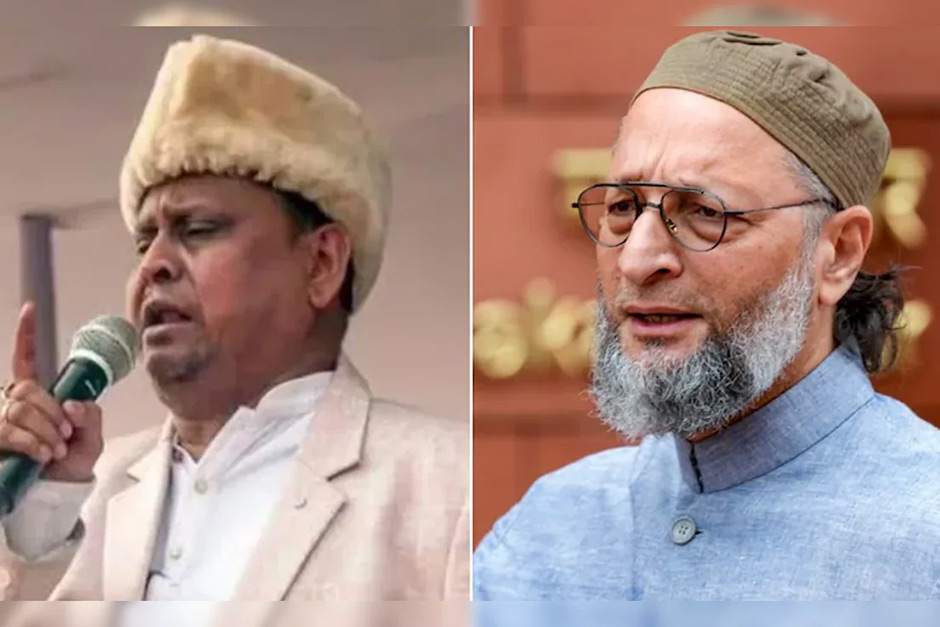
In a significant pre-election development poised to reshape the political landscape of West Bengal, the All India Majlis-e-Ittehadul Muslimeen (AIMIM), led by Asaduddin Owaisi, has announced the termination of its alliance with Humayun Kabir’s regional party. The decision, coming just ahead of crucial local elections, was accompanied by a pointed statement from Owaisi, asserting that “revelations show how vulnerable Bengal’s Muslims are,” signaling a strategic pivot for AIMIM in the state.
This abrupt dissolution of the nascent partnership underscores the volatile and highly competitive nature of West Bengal politics, particularly concerning the substantial Muslim electorate. Observers suggest the move reflects AIMIM’s broader ambition to establish itself as an independent and formidable political force, rather than operating through regional proxies.
The Unraveling Partnership: A Strategic Reassessment
The alliance between AIMIM and Humayun Kabir’s party, though relatively recent, was initially perceived as a strategic maneuver by Owaisi’s party to gain a foothold in West Bengal. With its considerable Muslim population, the state has long been a target for AIMIM, which seeks to consolidate minority votes under its banner. Humayun Kabir, a former Trinamool Congress (TMC) leader who has explored various political affiliations, aimed to leverage AIMIM’s national profile to bolster his local influence and appeal.
However, the partnership appears to have been fraught with internal disagreements or a fundamental mismatch in long-term objectives. While the specific “revelations” Owaisi referred to remain undisclosed, political analysts speculate they could pertain to unsatisfactory performance by Kabir’s party in representing Muslim interests, a lack of alignment on core issues, or perhaps a perceived inability of the local outfit to deliver the desired electoral impact. For AIMIM, known for its assertive stance on minority rights and identity politics, any compromise on its ideological commitments or electoral strategy could lead to a swift recalibration.
The breaking of the alliance suggests that AIMIM is unwilling to dilute its brand or vision by continuing a partnership it deems ineffective or not truly representative of its goals. This move empowers AIMIM to contest elections independently, projecting itself as the sole authentic voice for the Muslim community in the state, free from the constraints of local arrangements.
AIMIM’s Bengal Gambit: Positioning for Solo Flight
Asaduddin Owaisi’s statement – “Revelations show how vulnerable Bengal’s Muslims are” – is more than just a justification for ending an alliance; it is a declaration of AIMIM’s intent to position itself as the primary guardian of Muslim interests in West Bengal. This narrative directly challenges the traditional political dominance of parties like the TMC, which have historically relied on strong support from minority communities.
Bengal’s political landscape is complex, with a significant Muslim population often seen as a crucial vote bank. While the TMC has largely enjoyed their support, issues of economic development, social justice, and perceived political marginalization persist in some segments. AIMIM aims to tap into this sentiment, arguing that existing political formations have failed to adequately address the concerns of the Muslim community, leaving them vulnerable to various socio-political pressures.
By highlighting this perceived “vulnerability,” Owaisi attempts to create a vacuum that AIMIM can fill, presenting itself as a robust alternative capable of articulating and fighting for the rights of Muslims more effectively. This strategy mirrors AIMIM’s approach in other states, where it has sought to carve out an independent political space rather than playing a supporting role to larger parties.
Implications for the Upcoming Elections
The dissolution of the AIMIM-Kabir alliance has significant ramifications for the upcoming elections in West Bengal. Firstly, it could lead to further fragmentation of the Muslim vote, which has traditionally been a consolidated bloc. Should AIMIM decide to contest independently in a substantial number of seats, it could potentially draw votes away from the TMC, especially in Muslim-majority constituencies.
This fragmentation might inadvertently benefit the Bharatiya Janata Party (BJP), which has been aggressively campaigning in West Bengal and seeks to polarize the electorate. A split in the minority vote could reduce the winning margins for the TMC and the Left-Congress alliance, potentially leading to unexpected outcomes in closely contested battles.
For Humayun Kabir’s party, the termination of the alliance leaves it in a precarious position, potentially diminishing its electoral prospects without the backing of a nationally recognized party like AIMIM. The move also intensifies the political rhetoric surrounding minority representation, pushing other parties to re-evaluate their engagement with Muslim voters and address the issues raised by AIMIM.
As West Bengal braces for its electoral exercise, AIMIM’s decision to go solo signals a bold and calculated risk. It underscores the party’s ambition to become a central player in Indian politics, even if it means disrupting existing political equations and navigating the complexities of regional dynamics independently. The coming months will reveal whether Owaisi’s gamble pays off, fundamentally altering the political narrative and power balance in the state.

