


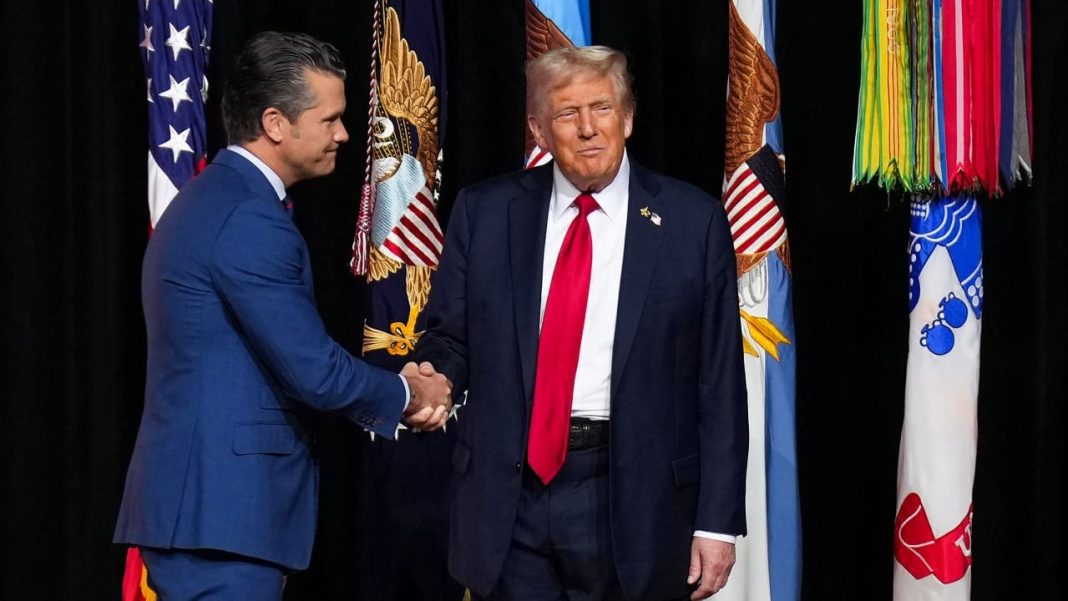
In a period already marked by unprecedented political drama following a contentious presidential election, the United States Pentagon found itself at the centre of an internal shake-up, triggering sharp international commentary. As President Donald Trump dismissed top defence officials, including Secretary Mark Esper, and replaced them with staunch loyalists, Iran seized the opportunity for a pointed barb. Tehran’s state media and officials mocked the developments as a “regime change,” a deeply ironic phrase often associated with US foreign policy interventions in other nations.
The swift reshuffle, occurring during a critical lame-duck period for the outgoing administration, has sent ripples across the globe, prompting allies and adversaries alike to scrutinise the implications for US national security and international relations. For India, a crucial strategic partner to the US, these developments are observed closely for any potential impact on Indo-Pacific stability and bilateral defence cooperation.
Pentagon Purge: A Lame-Duck Power Play
The seismic shifts within the Pentagon began with the unceremonious firing of Defence Secretary Mark Esper, announced via Twitter. Esper, who had reportedly clashed with President Trump on several issues, including the deployment of active-duty troops to quell protests, was replaced by Christopher C. Miller, director of the National Counterterrorism Center. This move was quickly followed by a cascade of resignations and dismissals among other high-ranking defence officials, including the Under Secretary of Defence for Policy James Anderson, and Esper’s chief of staff, Jen Stewart. Their replacements, such as Kash Patel and Ezra Cohen-Watnick, are known for their unwavering loyalty to the President and have been described as ideologically aligned with conservative media figures like Pete Hegseth, a prominent Fox News personality and informal advisor to Trump.
This coordinated overhaul in the final weeks of a presidency, especially one in dispute, raised concerns among critics about its potential to destabilise the military leadership during a sensitive transition. Critics argue that such moves could compromise national security by removing experienced, apolitical leaders at a time when global threats persist. The timing, just days after the US election, fuelled speculation that President Trump sought to consolidate power and perhaps pursue specific policy objectives, such as accelerated troop withdrawals, before the end of his term.
Iran’s Caustic Retort: “Regime Change” in Washington?
Amidst the domestic turmoil, Iran’s reaction stood out for its scathing irony. Iranian state media and officials wasted no time in drawing parallels between the internal US power shifts and America’s historical attempts to engineer “regime change” in countries like Iran. Kayhan, a hardline Iranian newspaper, ran a headline proclaiming “Regime Change in Washington!” underscoring the deep-seated resentment Tehran holds over past US interventions.
Foreign Minister Mohammad Javad Zarif, known for his sharp diplomatic rhetoric, echoed this sentiment. He Tweeted, “The US military is in chaos as the outgoing POTUS ousts his SecDef to ensure obedience. The world is watching to see how this ‘transition’ plays out. We hope for peace and democracy for all.” This remark, while seemingly innocuous, subtly twists the knife, reminding the international community of the US’s own democratic principles under stress and its history of external meddling. The Iranian mockery highlights not just the internal chaos but also attempts to project US hypocrisy onto the global stage, especially in the context of persistent US sanctions and pressures against Iran.
Implications for Global Stability and Strategic Alliances
The instability at the top of the US defence establishment inevitably raises questions about its impact on America’s foreign policy and its alliances. For nations like India, which maintains a robust strategic partnership with the US, observing such internal upheavals becomes crucial. India relies on a stable and predictable US foreign policy, particularly concerning regional security in the Indo-Pacific and counter-terrorism efforts.
A period of uncertainty at the Pentagon could potentially slow down decision-making processes, or even lead to abrupt policy shifts that might affect joint military exercises, intelligence sharing, and arms deals. While the broader contours of the US-India strategic relationship are deeply entrenched and bipartisan, any perceived vulnerability or distraction within the US national security apparatus is closely monitored. The world watches not just the immediate aftermath of these personnel changes, but also how they may shape the US’s posture on critical global issues, from China to counter-terrorism, in the coming months.
Ultimately, the “regime change” narrative from Iran serves as a potent reminder of the complex interplay between domestic politics and international perceptions. As the US navigates an unprecedented transition, the ripple effects of its internal stability will continue to be felt and scrutinised across the globe.

