


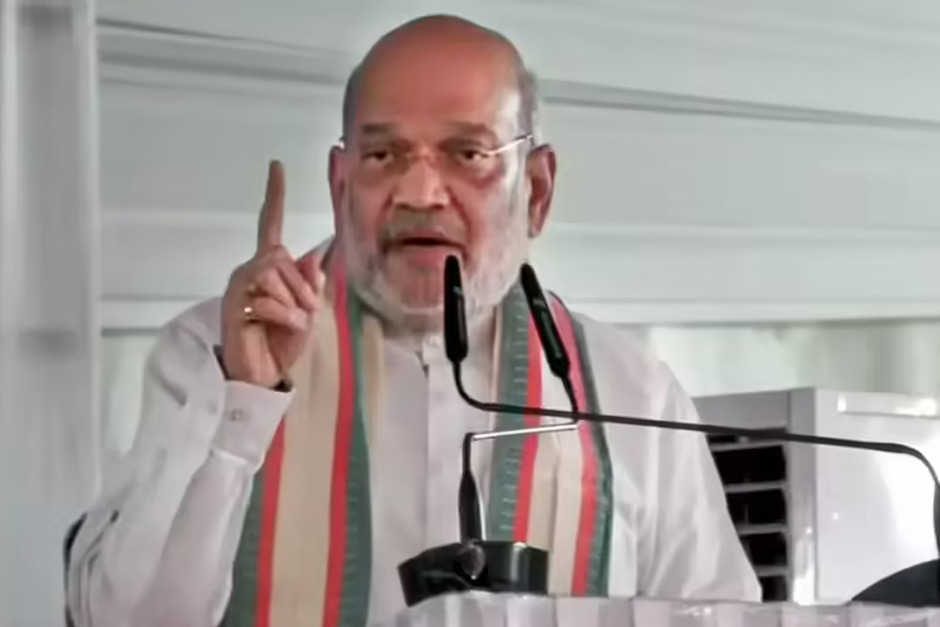
India’s long-standing battle against Left-Wing Extremism (LWE), often referred to as the Naxalite or Maoist insurgency, has seen various phases of intensified efforts and strategic shifts. This challenging issue, deeply rooted in socio-economic disparities and ideological grievances, primarily plagues a swathe of central and eastern India known as the ‘Red Corridor.’ Recently, a significant declaration from Union Home Minister Amit Shah has amplified the national focus on this critical security concern. Shah unequivocally stated that the ‘Red Corridor’ would be “crushed” by March 31, signalling an aggressive and resolute approach from the government.
Understanding the ‘Red Corridor’ Challenge
The ‘Red Corridor’ is a loose geographical term that encompasses regions across several Indian states, including Chhattisgarh, Jharkhand, Odisha, Bihar, West Bengal, Andhra Pradesh, Maharashtra, and Telangana, which have historically witnessed significant Naxalite or Maoist activity. These extremist groups, advocating for a communist revolution through armed struggle, have exploited grievances among tribal communities, landless labourers, and marginalized sections, promising them a better future free from exploitation.
The presence of LWE groups has severely hampered development in these resource-rich but economically backward regions. Infrastructure projects like roads, schools, and healthcare facilities often face sabotage or obstruction, perpetuating a cycle of poverty and underdevelopment. The violence perpetrated by these groups, including attacks on security forces and civilians, displacements, and extortion, has inflicted immense human suffering and economic losses, creating a climate of fear and insecurity that directly impacts the lives of millions.
For decades, successive governments have employed a dual strategy of intensified security operations coupled with development initiatives to counter the LWE menace. However, the rugged terrain, strong local networks of insurgents, and complex socio-economic dynamics have made it an exceptionally difficult challenge to overcome fully.
Shah’s Vision and Operational Strategy
Union Home Minister Amit Shah’s declaration about crushing the ‘Red Corridor’ by March 31, while ambitious, reflects a heightened sense of urgency and determination within the current administration. This isn’t merely a political statement but reportedly underpins a multi-pronged, coordinated operational strategy involving central paramilitary forces and state police.
The government’s approach appears to focus on several key pillars. Firstly, there’s an undeniable emphasis on robust security operations aimed at dismantling the organizational structure of LWE groups, eliminating their top leadership, and reducing their geographical footprint. This involves intelligence-led operations, deployment of specialized forces like the CoBRA battalion, and sustained pressure in their remaining strongholds.
Secondly, development remains a crucial counter-insurgency tool. The strategy recognizes that military solutions alone are insufficient. Efforts are being redoubled to accelerate infrastructure development – building roads, mobile towers, schools, and health centres – in remote, previously inaccessible areas. The aim is to integrate these regions into the national mainstream, provide alternative livelihoods, and address the root causes of disaffection that Maoists exploit. Enhanced access to basic services and economic opportunities is seen as vital to winning the ‘hearts and minds’ of the local populace.
Thirdly, there is a strong focus on intelligence gathering and inter-state coordination. Naxalite groups often operate across state borders, making seamless coordination between various state police forces and central agencies paramount. Advanced surveillance technology and human intelligence play a critical role in pre-empting attacks and locating hideouts. Furthermore, surrender and rehabilitation policies are being strengthened to encourage disillusioned cadres to lay down arms and rejoin mainstream society.
Home Minister Amit Shah recently underscored the government’s commitment, stating, “We are unwavering in our resolve to free these regions from the clutches of left-wing extremism. Development cannot truly flourish until the shadow of violence is lifted, and by March 31, we aim to ensure that.” This statement highlights the integral link between security and development, suggesting that the deadline is not just for military action but for creating a conducive environment for progress.
The Road Ahead: Challenges and Prospects
While the government’s resolve is clear, achieving such an ambitious target like ‘crushing’ the Red Corridor by March 31 presents formidable challenges. The resilience of LWE groups, their ability to adapt tactics, recruit new cadres, and leverage local grievances cannot be underestimated. The dense forests and challenging terrains of states like Chhattisgarh and Jharkhand provide natural cover, making security operations complex and risky.
Moreover, true success goes beyond mere military victories. It requires sustained political will, efficient governance, and continued investment in socio-economic development long after the deadline. Addressing the land rights issues, ensuring tribal welfare, and preventing local exploitation are ongoing processes that demand consistent attention from both central and state governments.
However, significant strides have already been made. Data from the Ministry of Home Affairs indicates a consistent decline in LWE-related violence and geographical spread over the past decade. The number of LWE-affected districts has shrunk considerably, and the intensity of violence has decreased. The declaration by the Home Minister can be seen as a culmination of these ongoing efforts, a push to deliver a decisive blow to the remaining strongholds.
If successful, the crushing of the ‘Red Corridor’ would mark a monumental achievement for India’s internal security landscape, unlocking vast potential for development in some of the nation’s most backward regions. It would signify a major victory for peace and progress, allowing millions to live free from the fear and disruption caused by extremist violence.
The coming months will be crucial in observing how this aggressive deadline translates into action and concrete results on the ground. The nation watches with anticipation, hopeful for an era of lasting peace and prosperity in these long-suffering regions.

