


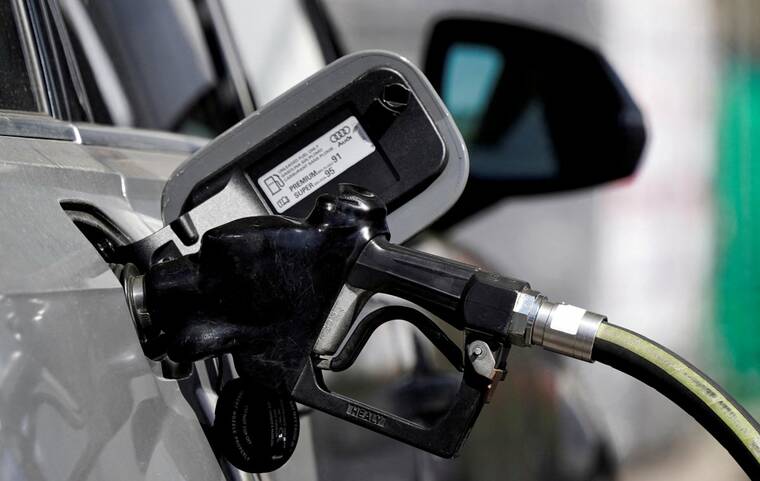
Ever feel like your wallet is getting lighter faster than usual? You’re not alone. That quick stop at the gas station, once a routine chore, has become a stark reminder of how much more our everyday lives are costing. It’s not just about the commute anymore; those surging numbers at the pump are having a domino effect, pushing up prices across the board and making that word “inflation” feel very, very real.
The Squeeze at the Pump and Beyond
For many of us, the car isn’t a luxury; it’s a necessity. Getting to work, taking kids to school, running errands – it all depends on fuel. When gas prices hit record highs, it immediately eats into household budgets. That extra $20, $30, or even $50 a week that used to be discretionary spending, or saved for something special, now just disappears into the fuel tank. This isn’t just an inconvenience; it’s a significant financial drain for families already balancing rising costs everywhere else.
Think about it: the grocery store. Your favorite loaf of bread, milk, fresh produce – how do those items get there? On trucks, fueled by… you guessed it, gasoline and diesel. So, when the cost of fuel skyrockets, so does the cost of transporting goods. It’s an inescapable equation, and it means we’re paying more for just about everything that ends up in our shopping carts. “It feels like a double whammy,” shared Maria Rodriguez, a busy mom of two from Ohio. “First, I pay more at the pump, and then I see higher prices on everything from cereal to diapers. It really makes you think twice about every purchase.”
The Ripple Effect: Businesses and Supply Chains
It’s not just individual consumers feeling the pinch. Businesses, particularly those reliant on transportation and logistics, are facing immense pressure. Small businesses, in particular, often operate on tighter margins. Increased fuel costs mean higher operating expenses, which they often have to pass on to consumers in the form of higher prices for goods and services, or absorb themselves, impacting profitability and growth.
Consider the entire supply chain, from raw materials being moved to factories, to finished products being delivered to retail shelves. Each step incurs a fuel cost. When those costs become exorbitant, they build up throughout the system. This cumulative effect is a major driver of the broader inflation we’re experiencing. It’s a complex web, but at its heart is the simple fact that energy is a fundamental input for almost every economic activity. When that input becomes drastically more expensive, everything else follows suit.
The stark reality is that record gas prices are more than just a line item on our monthly budget; they’re a powerful force shaping the economic landscape. They’re making groceries pricier, services more expensive, and stretching household budgets thinner than ever before. It’s a challenging period for many, reminding us how interconnected our daily lives are with global energy markets. As we navigate these choppy economic waters, understanding these connections is key to making sense of the evolving cost of living.

