


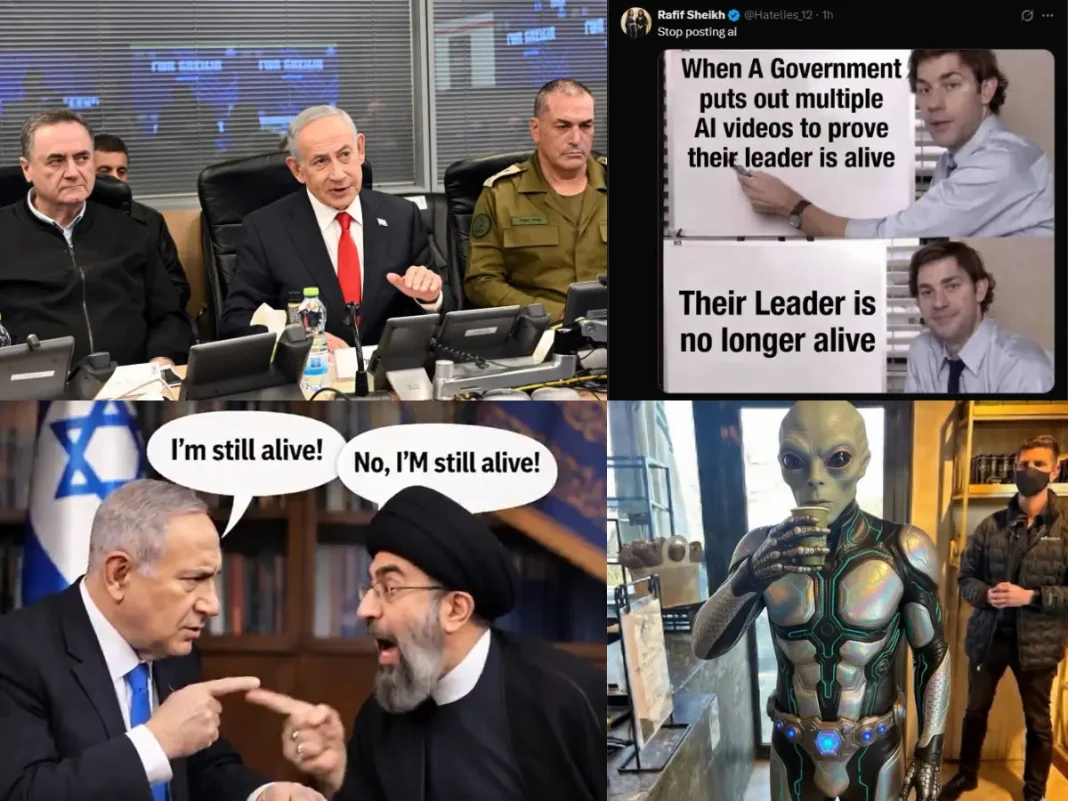
In the volatile geopolitical theatre of the Middle East, truth often contends with rumour and statecraft with information warfare. A recent video featuring Israeli Prime Minister Benjamin Netanyahu, reportedly from the Kirya war room, has ignited fresh debate on the authenticity of digital content and the intense psychological battle accompanying real-world conflicts. The video, released amidst swirling death rumours concerning the Israeli leader, served as a potent counter-narrative, particularly after a period marked by high-profile Israeli actions against Iranian officials and proxies, widely described by Israel as “terror chieftains.”
The Digital Battlefield: Reality, Rumour, and Deepfakes
The controversy began when various social media channels, some reportedly sympathetic to Iran or its allies, amplified unconfirmed reports of Netanyahu’s demise or severe incapacitation. Such rumours, often baseless, gain traction swiftly in a hyper-connected world, particularly when official communications are slow or perceived as lacking transparency. The Israeli Prime Minister’s office responded not with a lengthy statement, but with a brief video clip. In it, a seemingly healthy Netanyahu is shown in what appears to be the Kirya war room, engaged in discussions.
While the video was intended to quash the rumours definitively, it inadvertently opened another Pandora’s Box: the question of deepfakes. The remarkable advancement in artificial intelligence (AI) has made it increasingly difficult to distinguish genuine video and audio from sophisticated fabrications. Online commentators and even some analysts raised the possibility, however remote, that the video itself could be AI-generated, a testament to the pervasive scepticism surrounding digital media in an era of information manipulation. “In today’s digital age, every piece of content, especially from high-stakes geopolitical players, is subjected to intense scrutiny,” notes Dr. Priya Sharma, a cyber-security expert based in Bengaluru. “The line between fact and fiction is increasingly blurred, making critical media literacy more vital than ever.” This incident underscores a critical challenge for global leaders: how to communicate effectively and authentically when the very tools of communication can be weaponised against them.
Shadow Wars and Regional Repercussions
The context surrounding Netanyahu’s video is crucial. It follows a series of significant and aggressive operations attributed to Israel, targeting key figures within Iran’s Islamic Revolutionary Guard Corps (IRGC) and its allied militias across Syria and Lebanon. These strikes have eliminated several senior commanders and strategists, whom Israel consistently designates as orchestrators of regional instability and terror. These actions are perceived as a calculated escalation in the long-standing shadow war between Israel and Iran, moving beyond proxies to directly target high-value assets.
The elimination of these “terror chieftains,” as described by the Israeli establishment, is part of a broader strategy to degrade Iran’s ability to project power and influence through its network of regional proxies, including Hezbollah in Lebanon and various militia groups in Syria and Iraq. While Israel rarely officially confirms responsibility for such operations, the pattern of strikes and the targets selected strongly suggest an intensified campaign. This tit-for-tat escalation significantly heightens tensions across the Middle East, a region already grappling with immense instability. Each strike and counter-response risks spiralling into a broader, more direct confrontation, with profound implications for global energy markets and international diplomacy.
India’s Delicate Balancing Act
For India, a nation with significant strategic and economic interests in the Middle East, these escalating tensions present a complex challenge. India maintains historical ties and robust economic partnerships with both Israel and Iran. The stability of the region is paramount for India’s energy security, as a substantial portion of its crude oil imports traverses the Strait of Hormuz. Furthermore, the safety and well-being of millions of Indian diaspora workers residing in the Gulf states are a constant concern for New Delhi.
Any major conflict in the region could disrupt global supply chains, drive up oil prices, and potentially necessitate complex evacuation efforts. India has consistently advocated for de-escalation through diplomatic channels, urging all parties to exercise restraint and resolve differences peacefully. The blurring lines between real and fabricated information, exemplified by the Netanyahu video incident, further complicate the diplomatic landscape, making it harder to ascertain accurate ground realities and formulate effective foreign policy responses. New Delhi remains a keen observer, navigating these treacherous geopolitical waters with a focus on safeguarding its national interests and promoting regional peace.
The incident surrounding Benjamin Netanyahu’s video is more than just a momentary political spectacle. It is a microcosm of the multifaceted conflicts defining the 21st century: traditional warfare intertwined with advanced information operations and a constant battle for narrative control. As the Middle East continues to simmer, the world watches, trying to discern what is real and what is merely a digital shadow in a complex and dangerous game.

