


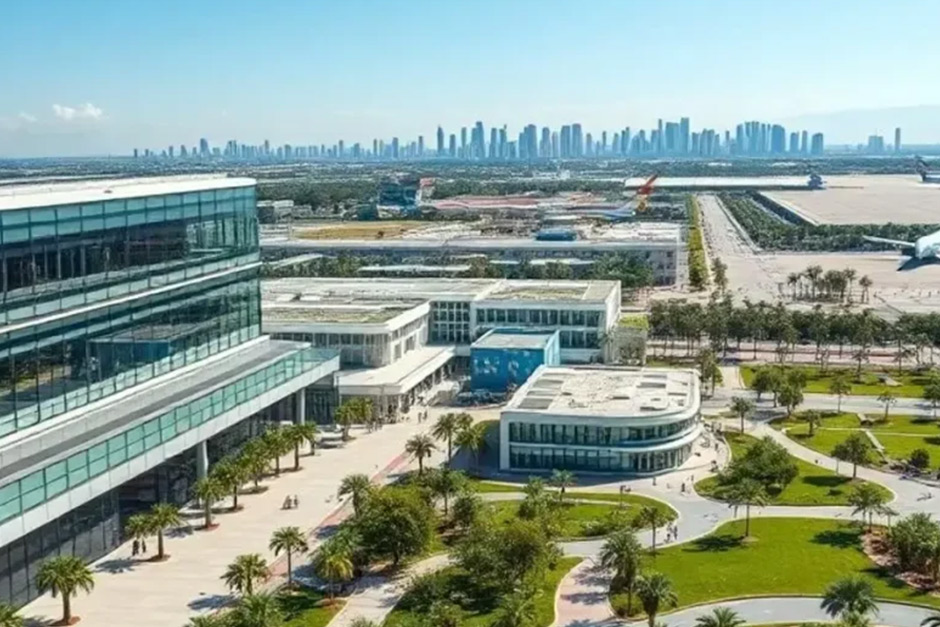
The sprawling runways and bustling terminals of India’s major airports are often seen as gateways to the sky. For the Adani Group, however, they represent something more expansive: vast commercial ecosystems where the real profits extend far beyond the mere takeoff and landing of aircraft. Having rapidly ascended to become India’s largest private airport operator, Adani’s strategy clearly signals that the financial heartbeat of modern aviation infrastructure increasingly lies off the runway.
With an aggressive acquisition spree, including the takeover of Mumbai International Airport Limited (MIAL) and the privatization bids for six other AAI-managed airports (Ahmedabad, Lucknow, Mangaluru, Guwahati, Thiruvananthapuram, and Jaipur), the conglomerate now manages a significant portion of India’s air passenger traffic. This strategic consolidation isn’t just about managing flights; it’s about harnessing the immense, often untapped, commercial potential embedded within and around these vital hubs.
The Ascent to Airport Dominance
Adani’s foray into the airport sector was a bold pivot, moving from its traditional strengths in ports, power, and commodities. The initial privatization bids for six non-metro airports underscored a clear intent to diversify and capture a critical piece of India’s burgeoning infrastructure pie. The subsequent acquisition of MIAL, a major gateway and one of the busiest airports globally, cemented its position as a formidable player. This rapid expansion wasn’t just about gaining control; it was about acquiring the strategic assets and operational expertise necessary to implement a long-term vision.
The group’s approach has been to integrate these diverse assets under a unified operational philosophy. By leveraging its vast experience in large-scale infrastructure projects, Adani Airports aims to transform these individual facilities into world-class travel and commercial destinations. This involves significant capital investment in modernizing terminals, expanding capacity, and streamlining operations, all while laying the groundwork for more lucrative, non-aeronautical revenue streams.
Beyond the Ticket Counter: The Non-Aeronautical Goldmine
The traditional airport revenue model primarily focused on aeronautical charges – landing fees, parking fees, air traffic control services, and passenger service fees. While essential, these revenues are often subject to stringent regulation and are less agile in their growth potential. Adani’s playbook, mirroring global best practices, places a far greater emphasis on non-aeronautical income. This encompasses a broad spectrum of commercial activities that cater to passengers, visitors, and the broader community.
Think beyond just a duty-free shop. Non-aeronautical revenue includes diverse streams like retail outlets, food and beverage concessions, advertising spaces, car parking, ground handling services, hotels within or near the airport premises, logistics and warehousing facilities, and even real estate development in the surrounding “aerocity” zones. These sectors offer higher margins, greater operational flexibility, and are less susceptible to direct regulatory caps. With India’s rapidly growing middle class and increasing propensity for air travel, the captive audience at airports represents a substantial commercial opportunity.
As Anil Menon, an independent aviation analyst, succinctly puts it, “Modern airports are no longer just transit points; they are complex commercial enterprises. The savvy operator understands that the passenger journey, from arrival to departure, is an opportunity to generate diverse revenue. Adani’s strategy acknowledges that the sustainable growth lies in maximizing every square foot of an airport’s commercial real estate, not just its runways.”
Building Aerocities: The Future Trajectory
Adani’s long-term vision extends to developing integrated airport ecosystems, often referred to as ‘aerocities’ or ‘airport cities’. These are self-sustaining urban zones built around the airport, featuring hotels, convention centers, logistics parks, entertainment hubs, and commercial offices. By unlocking the vast land banks available around many of these airports, the group aims to create multi-modal logistics hubs and business districts that serve both the immediate needs of air travel and the broader economic development of the region.
This strategy not only diversifies revenue but also enhances the overall passenger experience and operational efficiency of the airports. Challenges, of course, remain – including significant capital expenditure requirements, navigating complex regulatory frameworks, and intense competition. However, given India’s projected growth in air traffic and the Adani Group’s demonstrated execution capability in large infrastructure projects, their airport playbook appears well-positioned to capitalize on the evolving landscape of Indian aviation, proving that the real money is indeed off the runway.

